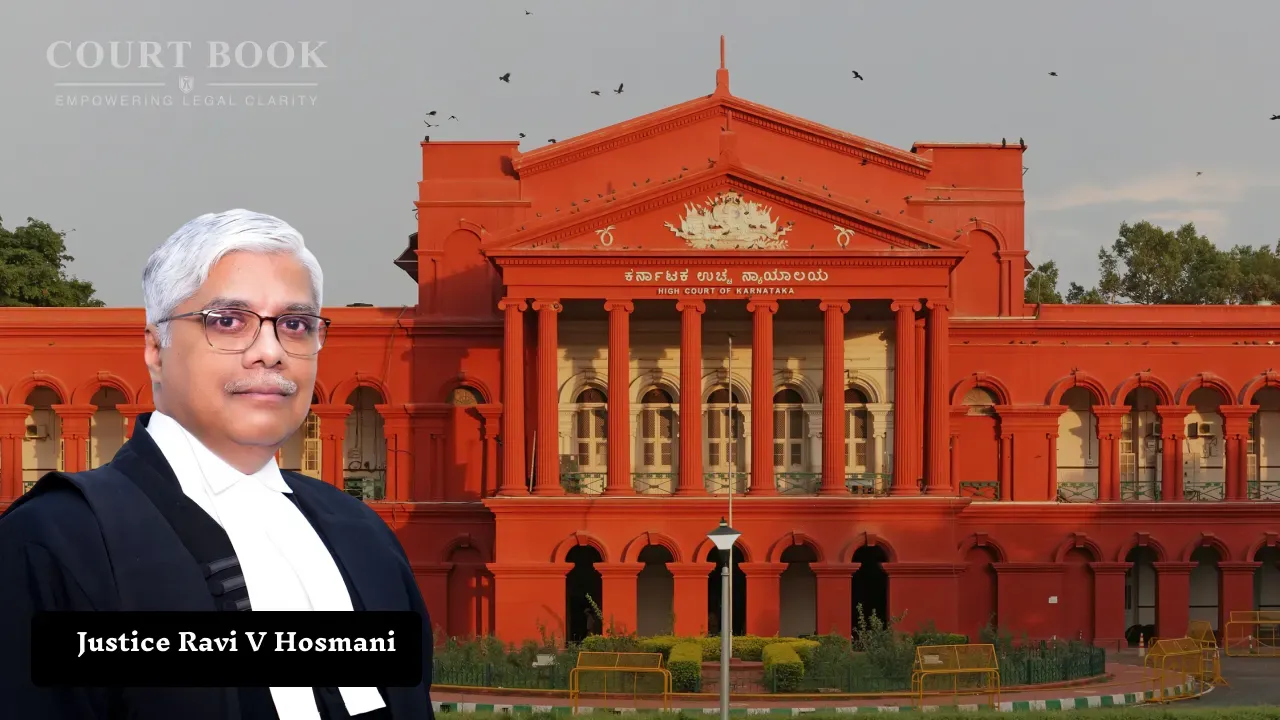
The Karnataka High Court has set aside an order dismissing a compensation claim after finding that the mere smell of alcohol noted in a post-mortem report could not, by itself, establish that a deceased workman was under the influence of alcohol when the accident occurred.
Justice Ravi V Hosmani delivered the judgment on September 8, 2026, in MFA No. 2825 of 2016, filed by the legal representatives of a deceased workman. The Court remitted the matter to the Tribunal for fresh disposal.
The deceased workman was working as a driver of a lorry belonging to his employer. According to the claimants, he was earning Rs.6,000 per month and was driving the vehicle from Bengaluru towards Hassan on the employer's instructions on November 22, 2007.
The lorry met with an accident near Kenchahally at around 5:30 p.m., in which the workman sustained fatal injuries and died. His wife, children and parents subsequently approached the Tribunal seeking compensation under Section 22 of the Employees Compensation Act, 1923.
The Motor Accident Claims Tribunal dismissed the claim. It relied on the post-mortem report, which recorded that the contents of the intestine smelled of alcohol, and treated this as attracting Section 3(1)(b)(i) of the Employees Compensation Act.
The claimants challenged the finding before the High Court, arguing that there was no material to establish that the deceased workman was under the influence of alcohol while driving the vehicle.
Justice Ravi V Hosmani examined the distinction between consuming alcohol and being under its influence. The Court noted that Section 3(1)(b)(i) provides for discharge of the employer's liability where an accident occurs while a workman is under the influence of alcohol or drugs.
The Court observed:
"However, consumption of alcohol and being under influence of alcohol are too wholly different aspects. Based only on smell of alcohol, it cannot be implied that such person had consumed alcohol was under its influence."
The Court also referred to the prescribed alcohol limit under Section 185 of the Motor Vehicles Act, 1988, while explaining the distinction.
The High Court noted that the workman had died in the accident and no other eyewitness to the accident had been examined. Only material to substantiate contention of respondent is borne out of Ex.P-5, Post Mortem report.
The Court further noted that half-digested food may smell of alcohol because of fermentation. According to the judgment, this possibility had not been ruled out in the evidence of the doctor who conducted the post-mortem examination.
In these circumstances, the Court held that the Tribunal's conclusion that the workman was under the influence of alcohol, based on the post-mortem report and the doctor's evidence, was contrary to the material on record.
The Karnataka High Court answered the substantial question of law in the affirmative and held that the Tribunal's finding suffered from perversity.
The Court allowed the appeal and set aside the judgment and award dated August 6, 2015, passed by the Motor Accident Claims Tribunal at Bangalore (SCCH-8) in E.C.A. No.153/2014. The matter was remitted to the Tribunal for fresh disposal.
The parties were directed to appear before the Tribunal on October 27, 2026, without requiring fresh notice. They were also given liberty to lead further evidence, if any.
Case Title: Salma & Others v. United India Insurance Co. Ltd. & Another
Case Number: MFA No. 2825 of 2016 (WC)
Judge: Hon'ble Mr. Justice Ravi V Hosmani
Decision Date: September 8, 2026