

The Supreme Court has clarified that its February 2026 judgment granting disability pension benefits and arrears to certain ex-servicemen cannot be applied automatically to every pension dispute. The Court said each claim must be examined on its own merits, taking into account the facts of the individual case.
The clarification came in a miscellaneous application filed by the Union of India seeking an explanation of the Court’s earlier ruling in a batch of civil appeals concerning disability pension and the benefit of broad banding, which adjusts the disability percentage for calculating pension benefits.
Background
In its common judgment dated February 12, 2026, the Supreme Court dismissed appeals filed by the Union of India and allowed appeals brought by ex-servicemen. The judgment recognised their entitlement to disability pension, including broad banding benefits from January 1, 1996, or January 1, 2006, as applicable, with interest at 6% per annum. The Union’s objections based on limitation, delay and laches were rejected.
The Union subsequently approached the Court after concerns arose over how the ruling was being applied in other proceedings before High Courts and the Armed Forces Tribunal (AFT). It referred to 23 Air Force cases and 26 Army cases that had either been decided or remained pending after the February judgment.
Additional Solicitor General Archana Pathak Dave argued that the earlier appeals concerned ex-servicemen who were already receiving disability pension and were seeking only the recalculation of their benefits through broad banding. According to the Union, the ruling was not intended to reopen every delayed pension claim or disturb decisions that had already attained finality.
The Union submitted that extending the judgment mechanically to cases where the underlying entitlement to disability pension was itself disputed could have wider administrative and financial consequences. It therefore sought clarification that the earlier ruling should remain confined to its factual context.
Counsel for the respondents, M.V.R. Mukunda, acknowledged that the earlier judgment dealt with ex-servicemen already receiving disability pension who sought its recomputation. However, he argued that delay must be assessed in light of the circumstances, including the conduct of the Union.
He cited an Allahabad High Court matter involving an ex-serviceman who retired on October 31, 2011, and appealed on November 30, 2011. The appeal was decided in February 2017, while the original application before the Tribunal was filed in April 2018. The respondents relied on this sequence to argue that the application was within time and that the Union could not disregard its own delay.
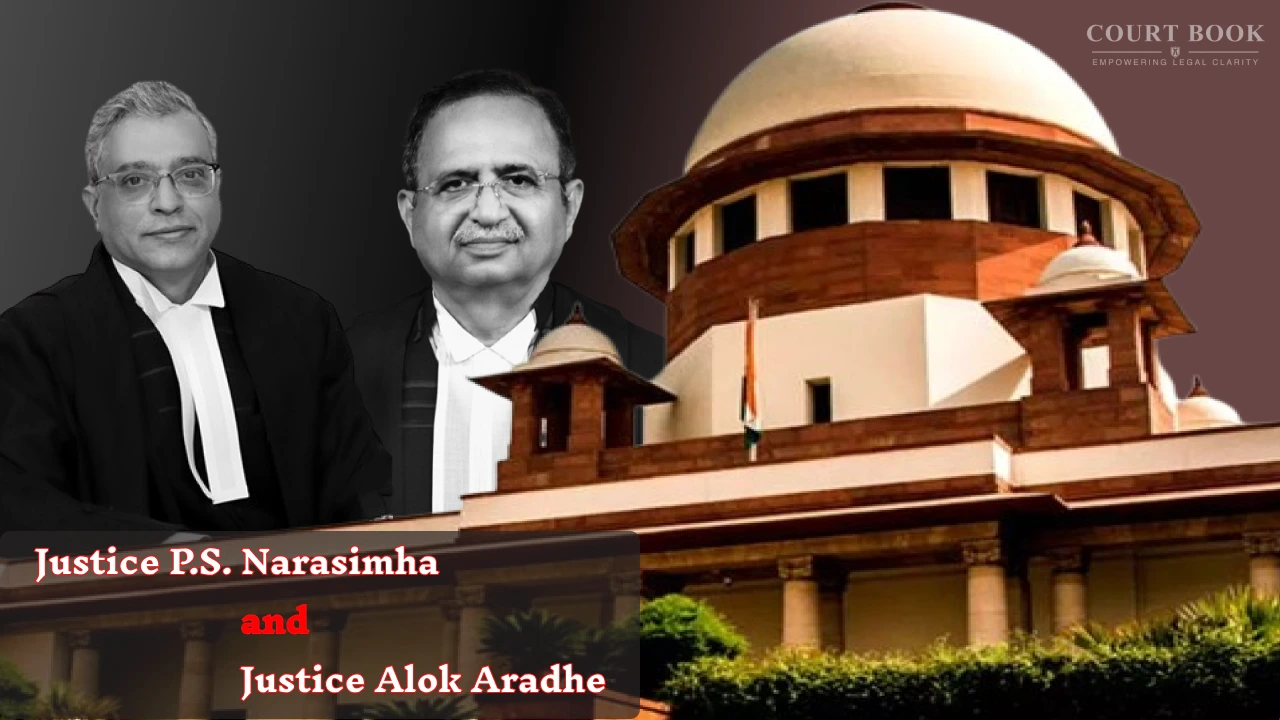
A Bench comprising Justice P S Narasimha and Justice Alok Aradhe emphasised that judicial observations must be understood in the context of the facts before the Court.
The Bench observed:
“A difference in facts may make a material difference to the precedential value of a decision.”
The Court also clarified the scope of its February ruling, stating:
“the common judgment dated 12.02.2026 passed in Civil Appeal Nos. 6820-6824 of 2018 cannot be construed to mean that on the basis of said judgment grant of disability pension with arrears can be claimed in every case.”
The Supreme Court disposed of the Union of India’s miscellaneous application, clarifying that the earlier judgment does not automatically establish entitlement to disability pension arrears in every case.
It expressly stated that each claim must be decided on its own merits.


