

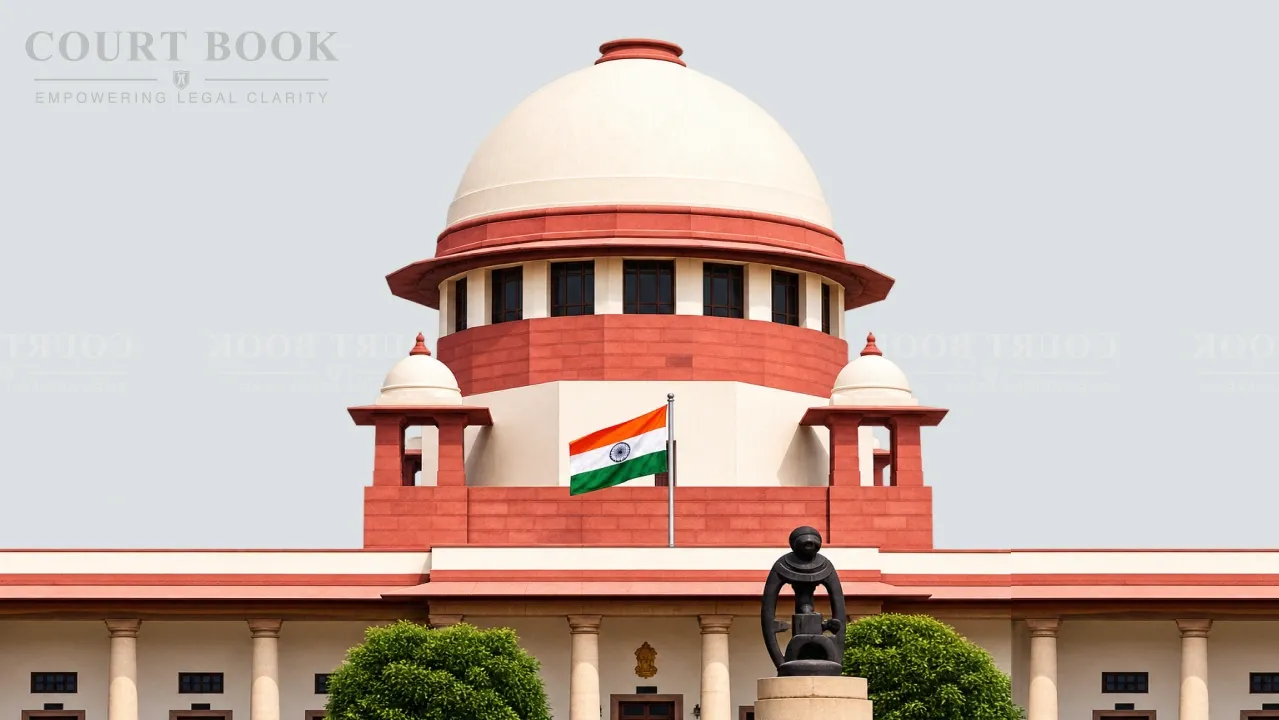
The Supreme Court on October 6, closed a long-pending seven-judge Constitution Bench reference concerning the scope of legislative privilege and its relationship with freedom of speech and expression. The Court found that the dispute had become infructuous because the Tamil Nadu Legislative Assembly had already withdrawn the resolution that triggered the proceedings in 2003.
A bench headed by Chief Justice Surya Kant and comprising Justices Aravind Kumar, Prashant Kumar Mishra, Joymalya Bagchi, Vipul M. Pancholi, Shree Chandrashekhar and V. Mohana disposed of the petitions without deciding the larger constitutional questions.
Background
The proceedings originated in 2003 after the Tamil Nadu Legislative Assembly initiated privilege proceedings against journalists associated with The Hindu over an editorial critical of the then State government. On November 7, 2003, the Assembly passed a resolution imposing 15 days' simple imprisonment on five journalists, including N. Ravi, then Editor of The Hindu. The journalists subsequently approached the Supreme Court, which stayed the proposed arrests.
The dispute raised wider constitutional questions concerning Article 194(3), which deals with legislative privileges, and its relationship with the fundamental right to freedom of speech under Article 19(1)(a), along with Article 21. The matter was first referred to a five-judge Constitution Bench and later sent to a seven-judge Bench after concerns emerged regarding conflicting judicial views.
During the hearing, the Court noted that the Tamil Nadu Assembly had unanimously passed another resolution on July 30, 2004, withdrawing its earlier November 7, 2003 resolution. The Court observed that this important subsequent development had not been specifically brought to its notice when the matter was referred for consideration by a larger Bench.
The Court recorded:
"It seems that the most relevant subsequent event, namely the resolution dated 30th July 2004, whereby the Legislative Assembly unanimously resolved to withdraw its previous resolution dated 7th November 2003 passed against the petitioners, was not specifically brought to the notice of this Court. It also escaped notice."
With the earlier resolution withdrawn, the immediate dispute no longer survived for adjudication. However, the Bench agreed that the broader questions of constitutional law should not be treated as finally decided merely because the present proceedings had become infructuous.
The Supreme Court accordingly disposed of the writ petitions as infructuous while expressly keeping the questions of law open for consideration in an appropriate future proceeding. The Bench therefore did not rule on whether legislative privileges can prevail over fundamental rights or the freedom of speech and expression.
The Court ordered:
"The writ petitions are disposed of as having become infructuous. However, the questions of law are kept open to be pursued in future in appropriate proceedings."
Case Title: N. Ravi & Ors. v. Speaker, Legislative Assembly, Chennai & Ors.
Case Number: W.P. (Crl.) Nos. 206–210 of 2003


