

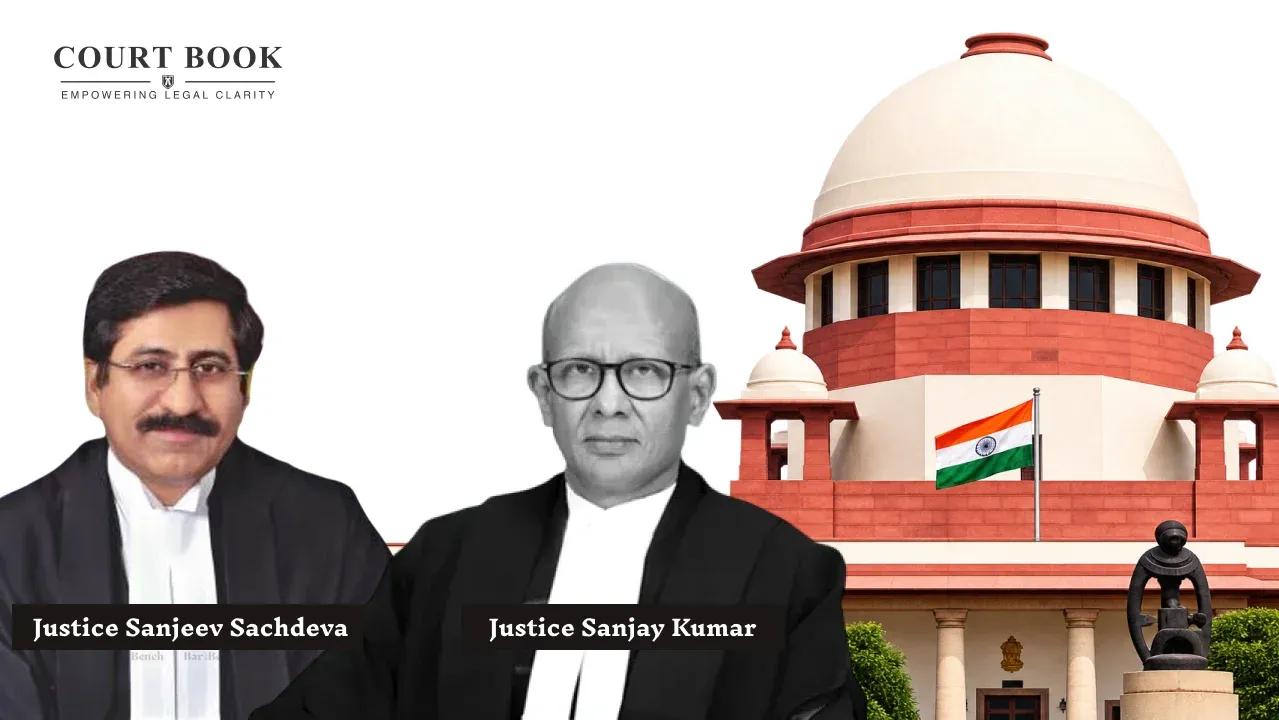
The Supreme Court has allowed an appeal by the legal representatives of the late Balakrishna and set aside a Karnataka High Court judgment over Site No. 261 in Munnekolala New Extension, Bengaluru. A Bench of Justice Sanjay Kumar and Justice Sanjeev Sachdeva delivered the ruling on October 26, 2026.
Background
In 1987, G.N. Kanniah Naidu sued Srikanta Rao, claiming the site had been granted to him in 1972 through a Hakkupatra, a government land grant document. He produced only a photocopy, saying the Tahsildar had taken back the original. In 1999, the Trial Court decreed the suit, noting that Srikanta Rao could not show any paper to support his own claim.
During execution of the decree, Balakrishna filed an application under Order XXI, Rules 97 to 101 of the Code of Civil Procedure. These provisions let a person who resists delivery of possession have his claim decided. He said the site was granted to him by a Hakkupatra of the same date, and that he had built a house and three rented shops there. The Executing Court dismissed his plea in 2008, and the High Court upheld that order in 2011.
The Bench found several errors in the earlier findings. It said a person cannot be blamed for not challenging a suit he was never made a party to. It also called the High Court’s view that the Executing Court had only limited jurisdiction a failure to understand the scheme of the provisions. Such an application, the Court said, is treated like a regular suit, and Rule 101 bars a separate suit.


On the evidence, the Court noted that Balakrishna’s son, Ananda, had produced the original Hakkupatra, while the decree holder relied on a photocopy. Naidu had also admitted in cross-examination that Balakrishna built a two-storey house and let out the ground-floor shops. The Court observed:
“More damaging to his case is the fact that he had no document of title to support his claim in IA No. ‘A’, as the certified copy of the photocopy, that was produced by him during the suit proceedings, was not allowed to be marked in evidence therein. Significantly, he did not take any further steps when his attempt to do so came to naught. On the other hand, Balakrishna’s original Hakkupatra dated 05.01.1972 was placed on record by Ananda, his son.”
On the tax receipts relied upon by the lower courts, the Bench said:
“We find that taxes were paid intermittently by both parties in relation to the suit site. Tax payments, at best, could lead to an inference only as to possession but not title. In any event, the reliance placed by the Executing Court and the High Court upon such sporadic tax payments by the parties, so as to infer title and ownership, was wholly uncalled for as the original title document was produced by Balakrishna, one of the rival claimants. The claim to title and ownership by Balakrishna stood settled in his favour by the original Hakkupatra dated 05.01.1972.”
The Court set aside the High Court judgment, the Executing Court’s order, and the 1999 decree in O.S. No. 2198 of 1987.
It declared Balakrishna’s legal representatives the lawful owners and possessors of the site, with each side bearing its own costs.




