

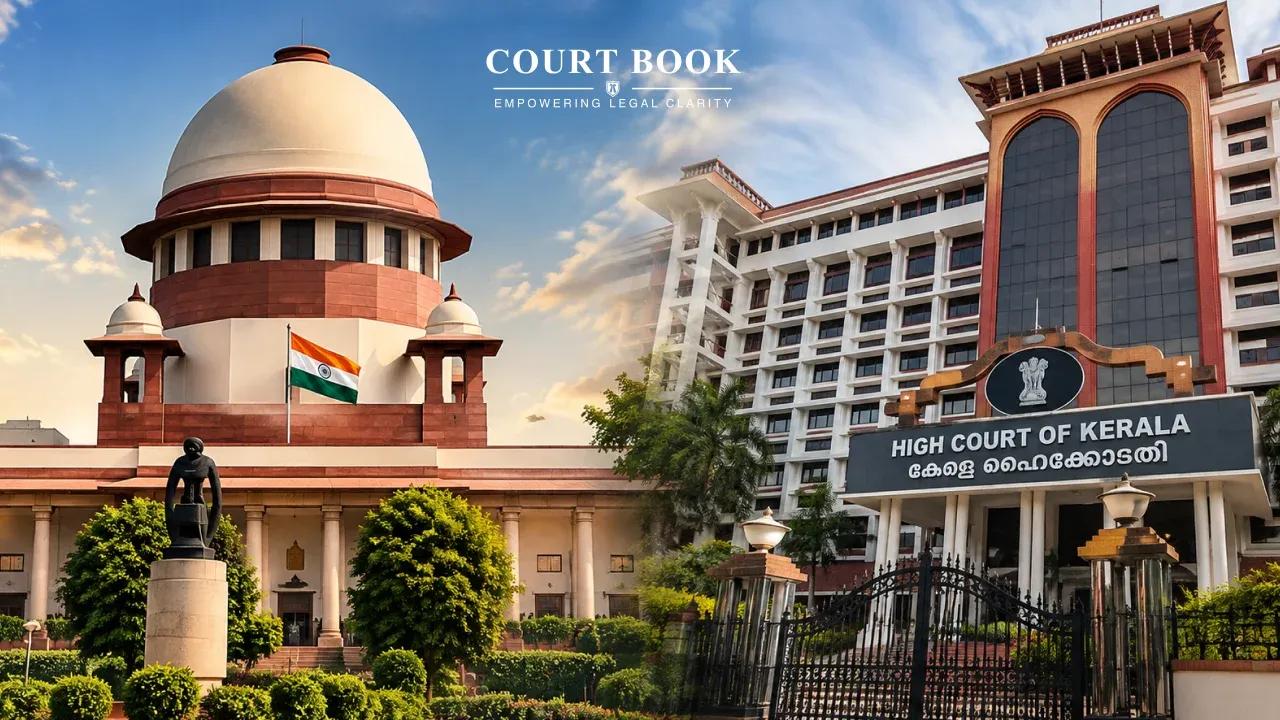
The Supreme Court on October 16, issued notice on a plea by the Kerala High Court Advocates’ Association (KHCAA) challenging the validity of imposing ad valorem court fees without an upper limit. The Court agreed to examine whether such uncapped fees could amount to taxation rather than a legitimate charge for judicial services.
A Bench comprising Chief Justice of India Surya Kant and Justice Joymalya Bagchi limited its consideration to the issue of court fees imposed without a ceiling. The Association’s broader challenge concerns the substantial increase in court fees introduced in Kerala in 2025 and the exemption granted to the State government from paying such fees.
Senior Advocate K. Parameshwar, appearing for the Association, argued that court fees linked to the monetary value of a dispute must have a reasonable upper limit. He submitted that an excessive levy without a ceiling could take the character of a tax, particularly where the amount bears no reasonable relationship to the cost of administering justice.
During the hearing, Chief Justice Surya Kant questioned the relationship between expenditure on judicial administration and the revenue collected through court fees.


“Have you seen the gap between the quantum of expenditure for judicial administration and the quantum of recovery of court fees?” the Chief Justice asked.
Parameshwar responded by highlighting the exemption available to the State government under the Kerala Court Fees and Suits Valuation Act, 1959.
“They have exempted the State from court fees completely,” the senior advocate submitted.
The Chief Justice remarked,
“That would be like the right hand will be paying the left hand.”
Justice Joymalya Bagchi observed that court fees in commercial disputes should reflect the value of the litigation and the judicial time required to resolve it. He noted that courts devote substantial time to disputes connected with commercial activity.
“There is today a classification in judicial time being taken away for disputes of a commercial nature for the purpose of doing business, and that is the purpose for which the judiciary has to cater. It must come at a price,” Justice Bagchi observed.
The remarks came as the Bench considered the Association’s arguments concerning the justification and limits of value-based court fees.
The KHCAA challenged amendments introduced through the Kerala Finance Act, 2025, to the Kerala Court Fees and Suits Valuation Act, 1959. It contended that the revised fees resulted in increases ranging from approximately 400% to 9,900% in certain categories, placing an unreasonable burden on litigants and potentially restricting access to justice.
The Association has also questioned uncapped fees in compensation proceedings, including cases involving victims of crimes. Separately, it challenged Section 73A of the Act, which exempts the State government and its functionaries from paying court fees.
The Kerala High Court dismissed the Association’s challenge on October 31, 2025, upholding the amendments. The KHCAA subsequently approached the Supreme Court.
The Supreme Court issued notice on the limited question of whether ad valorem court fees can validly be imposed without an upper ceiling.
The matter is listed for further hearing on November 2, 2026.



