The Supreme Court of India has granted bail to Sanjay Sureka, also known as Sanjay Kumar Sureka, in a money laundering case involving alleged proceeds of crime worth ₹6,210.72 crore. The Court held that the scale of the proceedings and the likelihood of a prolonged trial could not justify keeping him in custody indefinitely after he had spent more than 20 months in jail.
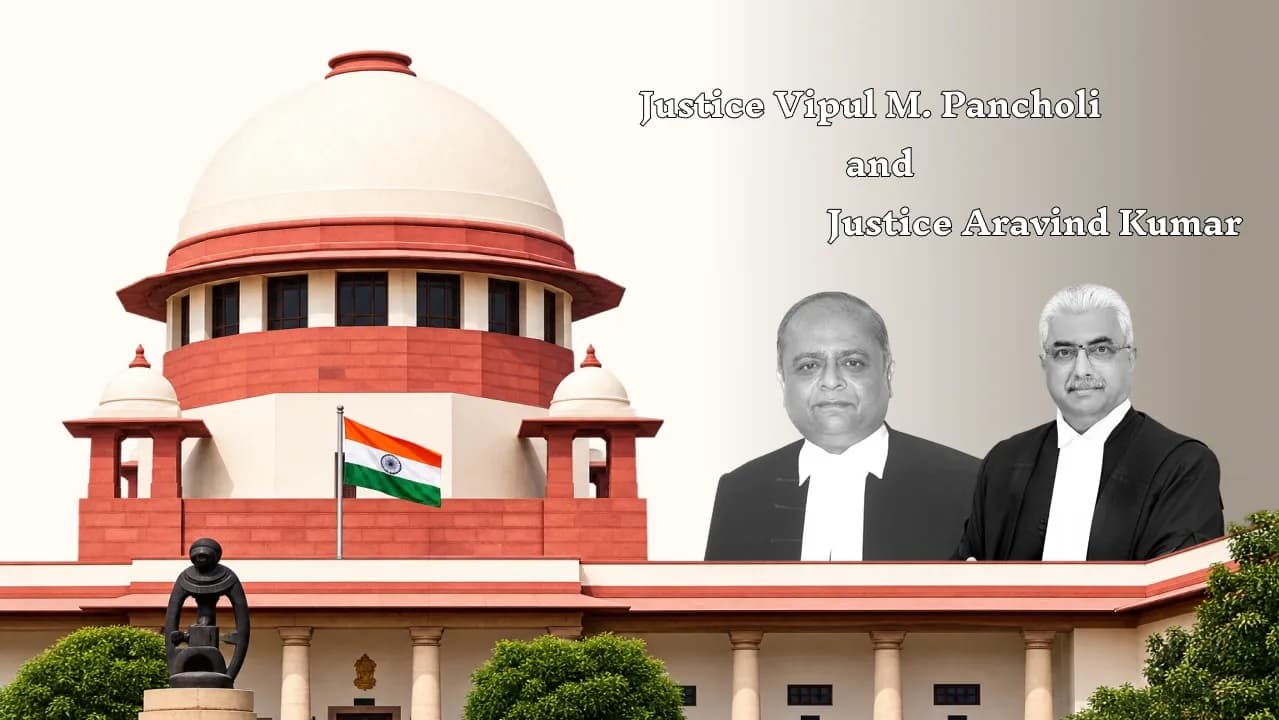
A Bench of Justice Aravind Kumar and Justice Vipul M. Pancholi allowed his appeal against the Calcutta High Court's November 14, 2025, order rejecting regular bail. The Court also rejected his argument that a five-day delay in forwarding arrest-related material to the adjudicating authority had invalidated his arrest.
Background
The proceedings originated from allegations concerning the financial affairs of Concast Steel and Power Limited, which entered the corporate insolvency resolution process in November 2017 and subsequently went into liquidation. An application alleging fraudulent and avoidable transactions was dismissed by the National Company Law Tribunal, and that order was not challenged.
The Central Bureau of Investigation registered an FIR in September 2022, followed by an Enforcement Case Information Report under the Prevention of Money Laundering Act (PMLA) in March 2023. The prosecution alleged that financial transactions involving multiple companies were used to inflate turnover, obtain bank credit and divert funds. Sureka was arrested by the Enforcement Directorate on December 18, 2024.
The appellant argued that the arrest procedure under Section 19 of the PMLA had not been properly followed and that the extensive evidence would delay the trial. The Enforcement Directorate opposed bail, relying on the scale of the alleged financial wrongdoing and the statutory restrictions on bail.
On the five-day delay in forwarding arrest-related material, the Court found no automatic invalidation of the arrest. It explained that the law requires the material to be forwarded immediately but does not prescribe a fixed 24-hour deadline.
The Court observed:
"In a bail matter, especially in serious offences, the job of a Court is to balance the rights of the State with those of the Arrestee. In special laws such as PMLA, 2002, the conditions for granting bail are stringent, and the circumstances in which bail can be granted are rare."
However, the Bench emphasised that lengthy custody must also be assessed against the constitutional right to a speedy trial. The prosecution complaints involved thousands of pages of documents and numerous witnesses, while the investigation concerning the appellant had been completed.
The judgment further stated:
"Process must not be turned into a punishment unto itself."
The Court also reiterated that the stringent bail conditions under Section 45 of the PMLA cannot override the constitutional safeguards under Article 21.
Allowing the appeal, the Supreme Court directed that the appellant be released on bail on terms and conditions imposed by the trial court. He must deposit his passport with the trial court and cannot leave India without its prior permission. He must not influence witnesses or tamper with evidence; violation of these conditions may lead to cancellation of bail.
The Court clarified that its observations would not be treated as findings on the merits of the case.



-300x169.webp&w=2048&q=75)