

The Supreme Court has held that a government employee who obtained his degree through distance education could not be denied consideration for promotion merely because the degree was not obtained through a regular physical course.
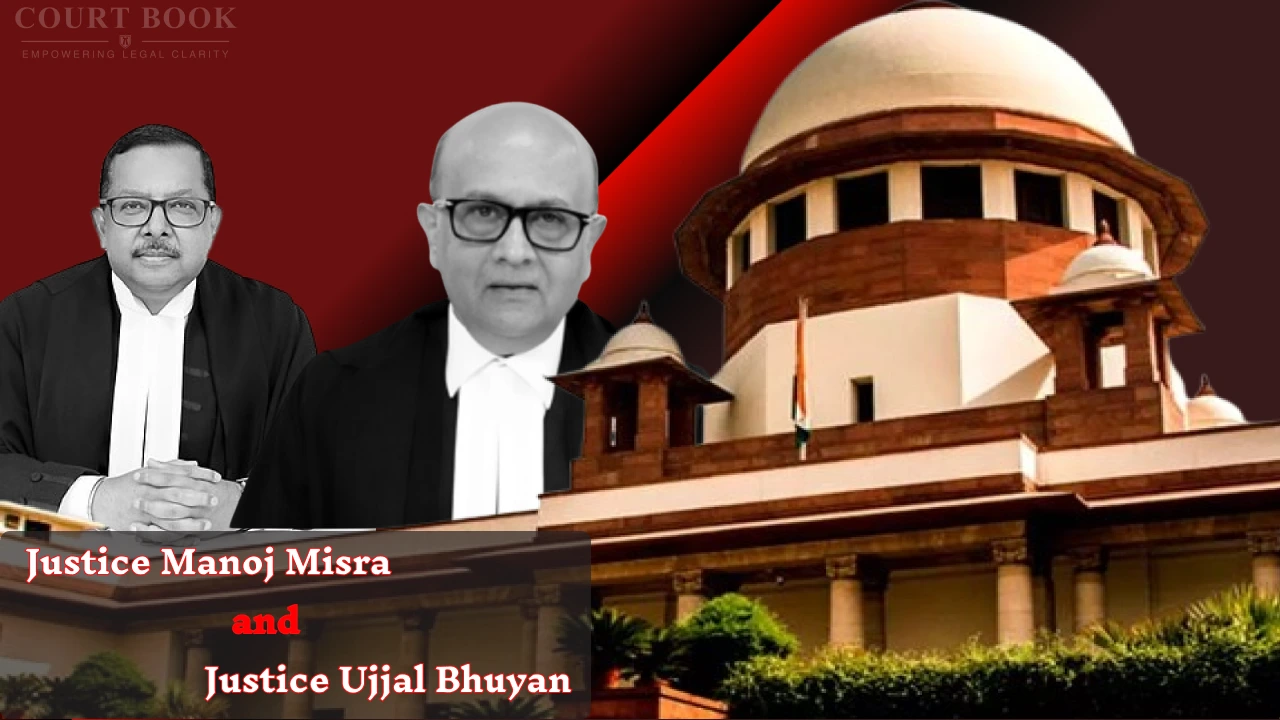
A Bench of Justice Manoj Misra and Justice Ujjal Bhuyan also held that the eligibility of the employee to hold the post of Tourist Officer could not be reopened when his earlier promotion had never been challenged.
The Court delivered the judgment on August 22, 2026, in R.J. Gajendra Kumar v. Government of Tamil Nadu & Anr.
Background of the Case
R.J. Gajendra Kumar joined the Tamil Nadu Tourism Department on compassionate grounds in 1983 after the death of his father, who was serving in the department.
He later completed a foundation course through Madurai Kamaraj Open University and obtained a B.Com degree through distance education in 1987. He subsequently earned an M.Com degree and a postgraduate diploma in Tourism.
In 2011, Kumar was temporarily promoted as Tourist Officer, and his service in the post was later regularized with effect from August 5, 2011.
After serving as Tourist Officer for several years, he sought promotion to the post of Assistant Director of Tourism. The Government rejected his request in 2020, taking the view that his educational qualification did not satisfy the prescribed requirements.
The Madras High Court's Single Judge initially ruled in Kumar's favour. However, the Division Bench reversed that decision, and the review petition was also dismissed.
Supreme Court's Observations
The Supreme Court found that the High Court had moved away from the actual issue before it.
The Court noted that the question was whether Kumar was eligible to be considered for promotion as Assistant Director of Tourism, rather than whether he was eligible to hold the post of Tourist Officer, which he had already occupied for more than 15 years without his promotion being challenged.
The Bench observed:
“Nobody had challenged appellant’s promotion to the post of Tourist Officer in which post he has rendered service for more than 15 years now.”
The Court further examined the Tamil Nadu Government's rules governing promotion. It found that promotion to Assistant Director of Tourism required a degree from a recognized university, passing the accounts test for executive officers, and one year of experience as a Tourist Officer outside Tamil Nadu.
Importantly, the Court held that Section 25 of the Tamil Nadu Government Servants (Conditions of Service) Act, 2016 did not require the degree to have been obtained through regular physical education. The provision also contained a saving clause protecting existing service members from adverse changes in the applicable rules.
The Court stated:
“Nowhere does Explanation 1(b) to Section 25 say that the degree obtained should be through the regular physical course and not through the distance education mode.”
Decision of the Supreme Court
The Supreme Court also approved the reasoning of the Madras High Court in P. Thavam, holding that the invalidity attached to pre-foundation and foundation courses could operate only prospectively from November 20, 2017.
The Bench concluded that Kumar satisfied the applicable eligibility criteria for consideration for promotion to Assistant Director of Tourism.
It therefore set aside the Madras High Court Division Bench judgment dated June 6, 2023, and the Review Bench order dated November 18, 2024, restoring the Single Judge's order dated August 16, 2021.
The Court directed that Kumar's case be considered for promotion in accordance with law. The civil appeals were accordingly allowed, with no order as to costs.
Case Details
Case Title: R.J. Gajendra Kumar v. Government of Tamil Nadu & Anr.
Case Number: Civil Appeal Nos. ..... of 2026, arising out of SLP (Civil) Nos. 23378-79 of 2025
Court: Supreme Court of India
Judge(s): Justice Manoj Misra and Justice Ujjal Bhuyan
Decision Date: August 22, 2026


