

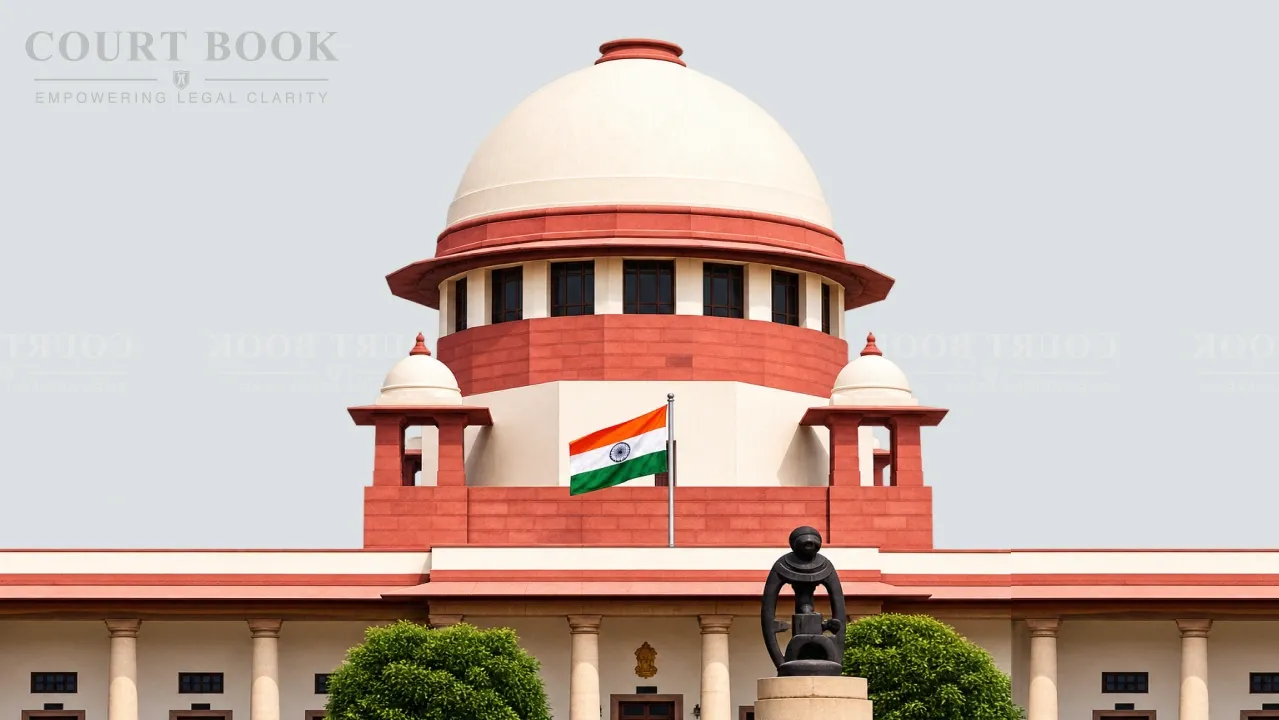
The Supreme Court has set aside a Delhi High Court order appointing an arbitrator in a dispute between Arcis Clean Energy Pvt. Ltd. and Parshva Innovation, holding that Goa was the juridical seat of arbitration under their agreement. The Court ruled that the Delhi High Court lacked jurisdiction to entertain the appointment application under Section 11(6) of the Arbitration and Conciliation Act, 1996.
Background
The dispute arose from a Franchise Agreement dated August 3, 2023. Its arbitration clause, Clause 32, provided for dispute resolution through arbitration if negotiations failed within 30 days. However, the agreement referred to both Delhi and Goa in connection with the proceedings.
Clause 32.4 mentioned Delhi as the location for arbitration, while Clause 32.5 stated that arbitration proceedings would be held in Goa. Separately, Clause 38 provided that the agreement would be governed by Indian law and that the parties would submit to the exclusive jurisdiction of competent courts in Goa.
On March 25, 2025, Parshva Innovation proposed the appointment of a sole arbitrator. Arcis Clean Energy rejected the proposal on April 19, 2025. Parshva Innovation subsequently approached the Delhi High Court, which appointed an arbitrator by an order dated November 11, 2025.
Arcis Clean Energy challenged that order before the Supreme Court, arguing that the contractual terms placed the juridical seat of arbitration in Goa, leaving the Delhi High Court without jurisdiction.
A Bench comprising Justice Manoj Misra and Justice Vijay Bishnoi examined the arbitration clause alongside the agreement’s governing law and jurisdiction clause. The Court explained that the place where hearings are conducted is not necessarily the juridical seat, which determines the courts exercising supervisory jurisdiction over arbitration.
Relying on earlier decisions, including Arif Azim Company Limited v. Micromax Informatics FZE and BGS SGS SOMA JV v. NHPC Limited, the Court considered whether Delhi could be treated as the seat despite the agreement also specifying Goa.
The judgment observed:
“The aforesaid decisions make it clear that parties, by agreement, can choose their own place for arbitration and may confer exclusive jurisdiction upon court(s) located at a particular place for the purpose of regulating the arbitral proceedings arising out of the agreement between the parties regardless of any part of cause of action arising within its territorial jurisdiction.”
The Court noted that the agreement identified two places in its arbitration clause, making it necessary to read the relevant provisions together rather than treating Delhi as the automatic seat.
The Court found that Clause 32.4 referred to Delhi, whereas Clause 32.5 specified Goa for the arbitration proceedings. Clause 38 further granted exclusive jurisdiction to courts in Goa. Read together, these provisions showed that Goa was intended to be the juridical seat, while Delhi was merely a venue.
The Bench also rejected the argument that the arbitration agreement’s independent character meant the governing law and jurisdiction clause could be disregarded. Since the arbitration clause itself mentioned both locations, the Court considered the entire agreement necessary to determine the parties’ intention.
The Supreme Court concluded that Goa was the juridical seat of arbitration and that the Delhi High Court lacked jurisdiction to appoint the arbitrator under Section 11(6) of the 1996 Act. It allowed the appeal and set aside the High Court’s November 11, 2025 order.
The parties were granted liberty to pursue appropriate proceedings before the jurisdictional High Court. Any pending applications were also disposed of.
Case Details
- Case Title: Arcis Clean Energy Pvt. Ltd. v. Parshva Innovation
- Case Number: Civil Appeal arising out of SLP (C) No. 35915 of 2025
- Judges: Justice Manoj Misra and Justice Vijay Bishnoi
- Decision Date: October 12, 2026


