

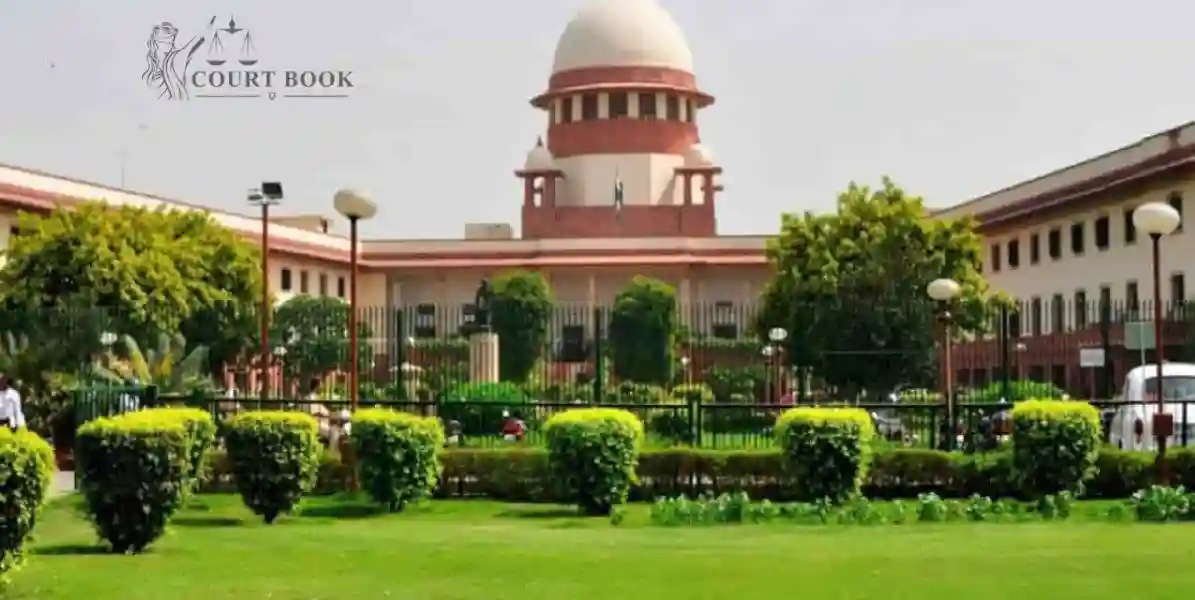
The Supreme Court has dismissed a long-pending petition filed by two retired judicial officers who, after being re-employed as Presiding Officers of Central Government Industrial Tribunals, wanted their salaries fixed as per the 6th Pay Commission scales instead of the pay structure linked to District Judges.
A bench of Justice S.V.N. Bhatti and Justice N.V. Anjaria held that the classification was reasonable and refused to interfere with what it called an executive domain.
Background of the Case
The petitioners, R.K. Yadav and another retired judicial officer, had worked as Presiding Officers of Central Government Industrial Tribunal-cum-Labour Courts in New Delhi and Hyderabad. Both were re-employed after superannuation, one having earlier served with the Delhi Judicial Service.
Their grievance went back years. They argued that their tribunals were constitutional bodies under Article 247 read with Article 323-B, just like the Central Administrative Tribunal or the Income Tax Appellate Tribunal - bodies that did get 6th Pay Commission benefits. Instead, the government had linked their pay to scales recommended by the Justice E. Padmanabhan Committee, the same scales given to District Judges across the states. This, the petitioners said, amounted to treating unequals as equals and violated Articles 14 and 16 of the Constitution.
The Union of India pushed back. It explained that the pay revision traced back to the Shetty Commission, India's first National Judicial Pay Commission, whose recommendations were adopted in 2005 to align CGIT-cum-LC presiding officers with District Judges. Later, the Padmanabhan Committee refined this further. The government also pointed out a separate, crucial fact - the petitioners were re-employed pensioners, and under the 1986 Central Civil Services rules governing re-employed staff, they were not entitled to carry forward pay protections or claim parity with regularly serving officers.
Court's Observations
Justice Anjaria, writing the judgment, went through the statutory history in detail — from the 2005 Shetty Commission letter to the 2015, 2017, 2020 and 2021 Rules that progressively revised pay for tribunal presiding officers, eventually placing them at Pay Level 14 under the 7th Pay Commission. The Court noted this showed a continuous, rule-based revision process, not arbitrary neglect.
On the core argument, the bench relied on earlier rulings, including State of U.P. v. J.P. Chaurasia and Union of India v. T.V.L.N. Mallikarjuna Rao, to reaffirm that pay fixation is fundamentally an executive function best left to expert bodies. The Court observed that classification of posts and pay structures falls within the executive's domain, and courts should be slow to override such decisions unless mala fides or clear anomalies are shown.
The bench specifically addressed the re-employment angle. It stated that the category of re-employed officers stands with substantial distinction against regular officers in government employment, and that this class could be reasonably classified separately for pay purposes.
The Court added that industrial tribunals functioning within states could reasonably be equated with District Judiciary, except for National Tribunals at Mumbai and Kolkata, which are headed by High Court judges.
Decision
The Supreme Court held that the pay structure given to the petitioners, based on expert committee recommendations, did not violate Articles 14 or 16. It ruled that grouping re-employed presiding officers with District Judiciary for pay purposes was a valid and reasonable classification.
Finding no merit in the petition, the Court dismissed Writ Petition (C) No. 193 of 2012.
Case Details
Case Title: R.K. Yadav & Anr. vs. Union of India and Others
Case Number: Writ Petition (C) No. 193 of 2012
Judge: Justices S.V.N. Bhatti and N.V. Anjaria
Decision Date: August 12, 2026


