

New Delhi: The Supreme Court on Wednesday (November 4, 2026) declined to interfere with an Allahabad High Court judgment upholding the constitutional validity of Section 9(1)(c) of the Delimitation Act, 2002. The Court rejected a plea seeking mandatory rotation of constituencies reserved for Scheduled Castes (SCs) and Scheduled Tribes (STs) in Parliament and State Legislative Assemblies, observing that introducing such a system falls within the domain of Parliament.
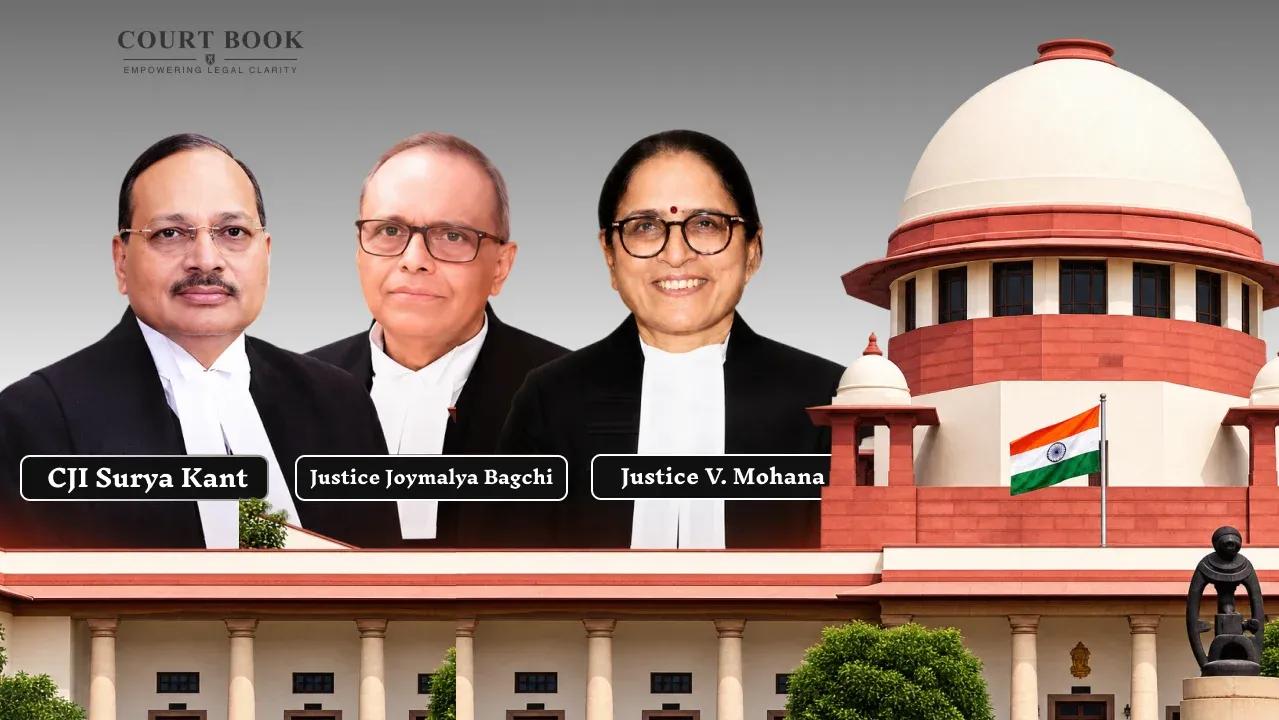
A Bench comprising Chief Justice of India Surya Kant, Justice Joymalya Bagchi and Justice V. Mohana held that courts cannot introduce a rotation requirement that is not provided under the existing constitutional and statutory framework. However, the Bench permitted the petitioner to approach elected representatives to seek support for the proposed change.
Background
The petition was filed by Jagdish Singh, an elector of the 191-Kadipur Assembly constituency in Sultanpur district, Uttar Pradesh. He challenged the continued reservation of the constituency for Scheduled Caste candidates, arguing that it had remained reserved for nearly seven decades without any rotation.
The petitioner questioned Section 9(1)(c) of the Delimitation Act, 2002, which provides for identifying reserved constituencies in areas where the proportion of SC/ST population is comparatively high. He argued that the absence of rotation was arbitrary and violated Articles 14, 15 and 19 of the Constitution.


He also sought a rotation mechanism similar to the one prescribed for Panchayats and Municipalities under Articles 243D and 243T of the Constitution.
The Allahabad High Court had dismissed his petition on June 22, 2026, holding that the existing provision was constitutionally valid and that courts could not direct Parliament to introduce rotation. Singh subsequently approached the Supreme Court.
During the hearing, Justice Joymalya Bagchi questioned the petitioner's argument that prolonged reservation in particular constituencies restricted democratic choice. He observed that voters were free to choose candidates based on political ideology rather than caste or religion.
The Bench also distinguished between the right to vote and the right to contest from a particular constituency, observing that candidates could contest from constituencies that were not reserved.
Justice Bagchi remarked:
"In a political democracy, there are multiple political parties having different ideologies. The voters are expected to vote for the party, not for the religion. You may like or dislike a particular political ideology. Who is representing that ideology becomes irrelevant. You vote for that ideology. So that also defeats your argument."
The petitioner's counsel argued that keeping the same constituencies reserved for decades could concentrate electoral opportunities among a limited number of families rather than benefiting the wider community.
Responding to the submission, Justice Bagchi observed that whether the existing arrangement created social divisions or required reconsideration was a matter for the legislature. He further clarified that disagreement with the criteria used to identify reserved constituencies did not automatically make the provision unconstitutional.
The Chief Justice also remarked that the petitioner was approaching the wrong forum for seeking the introduction of rotation, suggesting that the issue should be raised before Parliament.
The Bench ultimately found no reason to interfere with the Allahabad High Court's decision. It declined to introduce mandatory rotation through judicial directions, holding that the matter required legislative consideration.
In its order, the Court stated:
"The High Court has turned down the case observing that although ideally rotation ought to be followed, such a recourse cannot be directed by the court and it is in the ambit of the Parliament. We see no ground to take a different view."
The Court further permitted the petitioner to approach public representatives and build consensus for adopting the rotation principle.
Accordingly, the Supreme Court declined to interfere with the High Court judgment and rejected the plea seeking mandatory rotation of SC/ST-reserved constituencies.



