

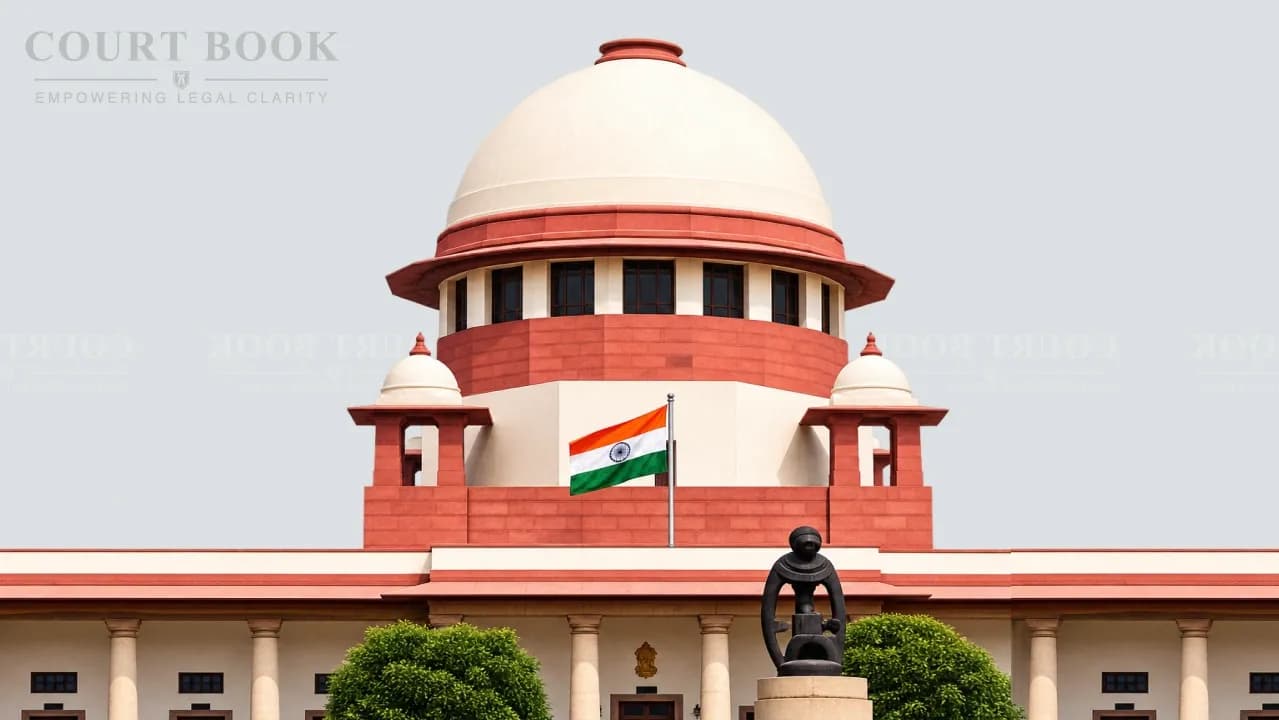
The Supreme Court has clarified that its directions for removing unauthorised encroachments along National Highways cannot be treated as permission to demolish disputed structures without following the procedure established by law. The Court has directed affected property owners to approach their respective jurisdictional High Courts and ordered interim protection against demolition until those proceedings are decided.
Background
The proceedings arose from the Supreme Court's suo motu intervention following road accidents at Phalodi in Rajasthan and other places, raising concerns about road safety and unauthorised encroachments along National Highways.
On April 13, 2026, the Court issued several directions requiring highway authorities to identify and remove unauthorised structures, including commercial establishments, within the Right of Way of National Highways.
Following these directions, the National Highways Authority of India (NHAI) and other authorities initiated removal proceedings against structures allegedly falling within highway land.


Several property owners approached the Supreme Court, claiming that their structures stood on privately owned land. They disputed the measurements and demarcation carried out by NHAI and questioned whether the authorities had followed the procedure prescribed under the Control of National Highways (Land and Traffic) Act, 2002.
Some applicants also sought protection against demolition and compensation wherever their land was required for highway-related purposes.
A Bench of Justice Vikram Nath and Justice Aparesh Kumar Singh examined the competing submissions and clarified that the earlier directions concerning highway safety did not determine the ownership or legal status of individual properties.
The Court emphasised that a general direction to remove encroachments could not replace the legal process required to establish whether a particular structure actually constituted an unauthorised occupation of highway land.
The Bench observed:
"The distinction between a general direction to remove encroachments and the determination of whether a particular property constitutes an encroachment is of considerable significance. The former cannot, by itself, be treated as a conclusive adjudication of the latter."
The Court further referred to Section 26 of the 2002 Act, which provides for notice, an opportunity to submit representations and consideration of the affected person's explanation before removal proceedings.
It also clarified that the authorities could not rely solely on the Supreme Court's earlier directions to bypass statutory requirements.
The Bench observed:
"Equally, the mere assertion by the authorities that a particular structure falls within the Right of Way cannot be treated as a substitute for the determination required under law, where the very basis of such assertion is disputed."
The Supreme Court held that individual disputes involving ownership, land acquisition, highway boundaries and demarcation should be examined by the respective jurisdictional High Courts.
Accordingly, it granted liberty to the applicants to approach the concerned High Courts. It directed that existing interim protection would continue until disposal of the respective proceedings. Where no protection had previously been granted, NHAI and the concerned authorities were restrained from demolishing or removing the disputed structures or taking other coercive action pursuant to the impugned notices until those proceedings were decided.
The Court clarified that the protection would apply only to the structures involved in these applications and would not authorise fresh construction or encroachment.
The April 13, 2026 directions would otherwise remain in force.



