

The Supreme Court has held that while selection by a Public Service Commission does not by itself create an absolute right to appointment, an appointing authority cannot independently reopen and extensively reassess a candidate’s eligibility when the governing rules make the Commission’s eligibility decision final.
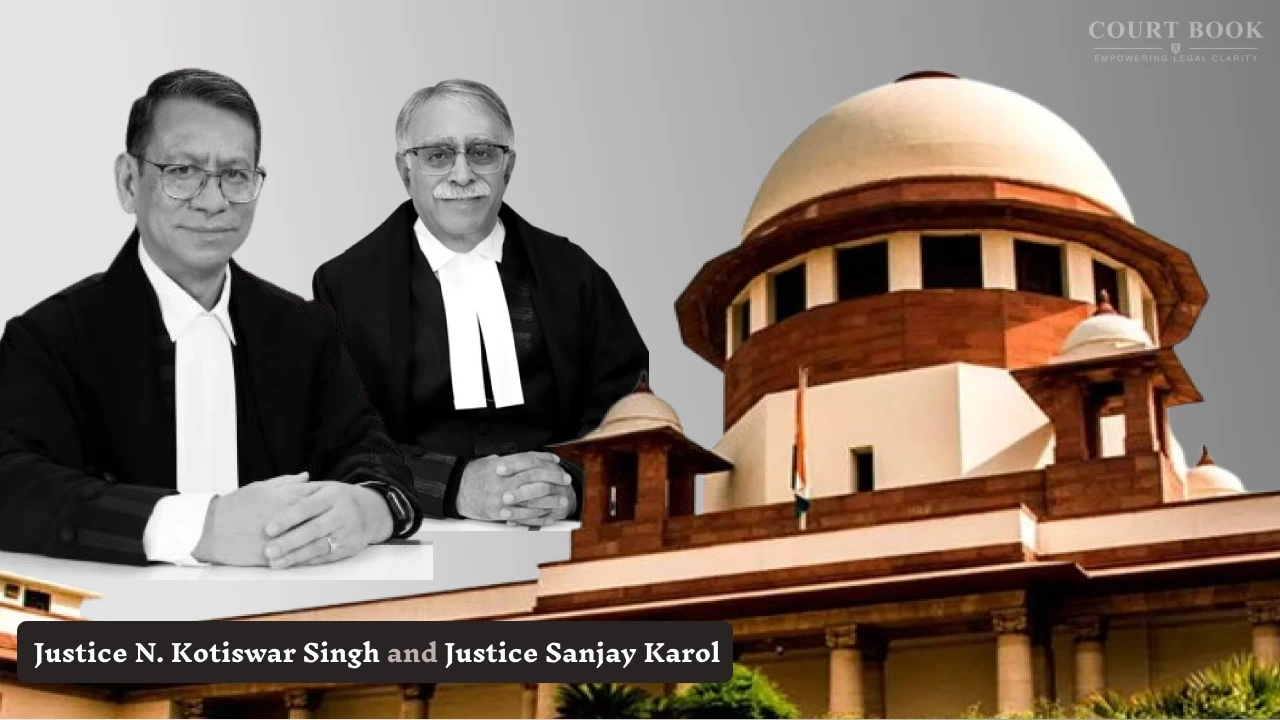
A Bench of Justice Sanjay Karol and Justice Nongmeikapam Kotiswar Singh delivered the judgment on August 20, 2026, in a dispute concerning appointment to the post of Registrar in Chhattisgarh State Universities.
Background of the Case
The appellant, Dr. Shailendra Kumar Patel, had participated in the recruitment process conducted by the Chhattisgarh Public Service Commission pursuant to an advertisement dated February 9, 2021, for Registrar posts in State Universities.
The Commission examined his qualifications and experience with the assistance of subject experts. He was subsequently selected and stood first in the OBC category in the final select list published on September 30, 2021. The Commission recommended his appointment to the State Government, subject to verification of original documents.
However, the State did not issue his final appointment order. Instead, it constituted an expert committee to examine his eligibility. The committee concluded that he did not possess the required experience and the State Government declared him ineligible on October 31, 2022.
The dispute reached the High Court of Chhattisgarh. Both the Single Judge and the Division Bench upheld the State's decision, leading to the present appeal before the Supreme Court.
Supreme Court Examines PSC and Government's Powers
The Supreme Court first clarified that selection and recommendation by a Public Service Commission do not give a candidate an indefeasible, or absolute, right to appointment.
At the same time, the Court stressed that the government's discretion cannot be exercised arbitrarily.
The Court observed:
“The Commission's recommendation does not create any vested right in the recommended candidates to claim appointment. However, in a society based on the rule of law, discretion of the Appointing Authority cannot be absolute or arbitrary; it must be informed by valid and germane reasons and based on the relevant statutory rules.”
The Court then turned to Rule 10 of the Chhattisgarh State Universities Service Rules, 1983. The provision states that the Commission's decision regarding a candidate's eligibility is final.
State Cannot Conduct a Fresh Eligibility Inquiry
The Supreme Court found that the Commission had already examined Dr. Patel's qualifications and experience with the assistance of experts before permitting him to participate in the selection process.
The Court held that Rule 10 prevented the State Government from conducting its own detailed inquiry into the substantive question of eligibility and reaching a different conclusion.
“The Commission's determination as to the candidate's eligibility, which was done with the help of experts, is final and binding, as mandated by Rule 10.”
The Bench explained that the State could still verify the genuineness of documents or identify an obvious and demonstrable deficiency. If a serious doubt arose, the matter could be referred back to the Commission.
But the appointing authority could not itself conduct an exhaustive reassessment of eligibility.
The Court also rejected the State's reliance on the Commission's communication requiring document verification before appointment. It held that such verification had to be read consistently with Rule 10 and could not dilute the statutory finality attached to the Commission's eligibility determination.
Inquiry Committee Report Cannot Be Relied Upon
The Bench held that the State's expert committee had undertaken a detailed reassessment of material that had already been examined by the Commission.
Since there was no demonstrated fundamental error in the Commission's assessment and no new material clearly establishing ineligibility, the Court held that the committee's report could not legally be used to reject the appellant's candidature.
The Supreme Court ultimately accepted the Commission's view that Dr. Patel was eligible for the post.
Supreme Court's Decision
The Court declared Dr. Patel eligible for appointment as Registrar under the February 9, 2021 advertisement and set aside the State Government's October 31, 2022 order declaring him ineligible.
It directed the State Department to issue his appointment order as Registrar in any State University of Chhattisgarh within three weeks.
The Court further held that he would be entitled to appointment from the date on which other candidates selected and recommended along with him were appointed, along with consequential service benefits. However, no arrears of pay would be payable for the period after his provisional appointment on April 10, 2023, and his seniority would be determined according to the applicable service rules.
The Supreme Court accordingly allowed the appeal, set aside the Division Bench judgment of the Chhattisgarh High Court, allowed the connected writ petitions, and disposed of the contempt petition.
Case Details
Case Title: Shailendra Kumar Patel v. State of Chhattisgarh & Ors.
Case Number: Civil Appeal No. 238 of 2026 (@ SLP (C) No. 23061 of 2025)
Judge: Justice Sanjay Karol and Justice Nongmeikapam Kotiswar Singh
Decision Date: August 20, 2026


