

The Supreme Court exercised its extraordinary powers under Article 142 of the Constitution to set aside a conviction under the Protection of Children from Sexual Offences (POCSO) Act, taking note of subsequent developments between the parties, including their marriage and the victim's repeated statements expressing her desire to bring the litigation to an end.
The Court, however, made it clear that the decision was based on the peculiar facts of the case and should not be treated as a precedent for other matters.
Background of the Case
The appellant, Maruthupandi, had been convicted by the Fast Track Mahila Court at Dharmapuri in 2019 under Section 5(1) read with Section 6 of the POCSO Act and was sentenced to ten years' imprisonment along with a fine. His appeal against the conviction was pending before the Madras High Court, and his sentence had been suspended during the pendency of the proceedings.
During the appellate proceedings, the victim sought permission to place additional evidence before the court, stating that she wished to disclose what she described as the "untold truth." She filed an affidavit claiming that she and the appellant had settled their differences and wanted to live peacefully. However, the High Court declined the request, leading to further proceedings before the Supreme Court.
Over the course of the proceedings, the Supreme Court directed that the victim's statements be recorded before a Judicial Magistrate.
In her first statement recorded in December 2022, the woman narrated the circumstances leading to the criminal case and stated that she had lodged the complaint after the appellant allegedly refused to marry her. She also disclosed that a later marriage arranged with another person had failed.
Subsequently, in a statement recorded in February 2025, she informed the Magistrate that she and the appellant had married on December 5, 2024, and were living together. She further stated that her life had been affected by the earlier events and that the marriage had taken place after discussions involving family members and villagers.
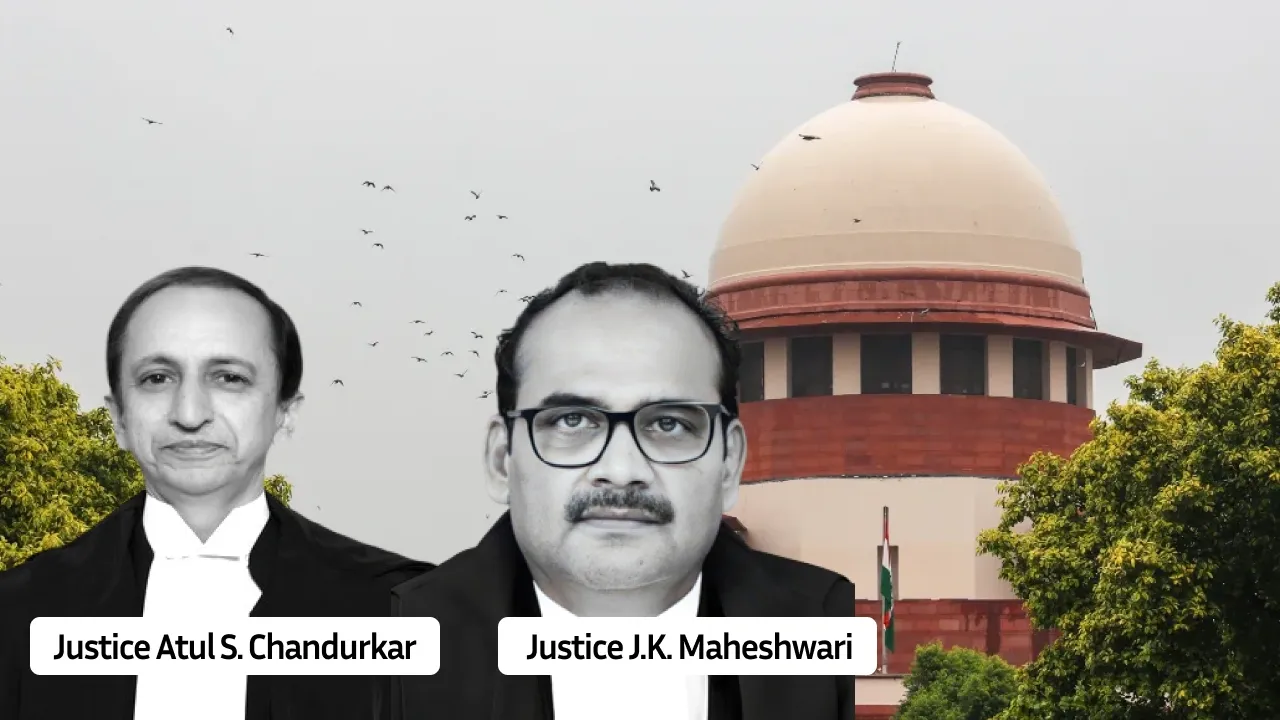
The division bench of Justice J.K. Maheshwari and Justice Atul S. Chandurkar carefully examined the victim's multiple statements, the circumstances that emerged after the conviction, and the submissions made by all parties.
The Court noted that the victim had attained majority, had subsequently married the appellant, and had repeatedly expressed her wish to end the litigation. It also recorded that the appellant had paid ₹10 lakh to the victim, which she acknowledged receiving before the Court.
Referring to the unusual factual background, the bench observed that it was appropriate to invoke its plenary powers under Article 142 of the Constitution.
The Court stated that, "without entering into the merits of the case," and considering the peculiar circumstances that had arisen after the conviction, it found it appropriate to set aside the conviction and sentence.
The State informed the Court that it did not dispute the factual developments placed on record. While leaving the matter to the Court's discretion, it emphasized that any relief granted should not be treated as a precedent for future cases.
Allowing the appeals, the Supreme Court set aside the conviction and sentence imposed on the appellant and acquitted him of the charge. The Court held that the order was being passed in view of the subsequent events and the unique facts of the case.
The bench expressly clarified that the ruling should not be relied upon as a precedent in any other matter. It further directed that, since the appellant's sentence had already been suspended during the pendency of the proceedings, he would not be required to surrender, and his bail bonds stood discharged.
Case Details
Case Title: Maruthupandi v. State Represented by the Inspector of Police & Anr.
Case Number: Criminal Appeal arising out of SLP (Crl.) No. 2782 of 2021 and SLP (Crl.) No. 4907 of 2021
Bench: Justice J.K. Maheshwari and Justice Atul S. Chandurkar
Decision Date: May 26, 2026


