

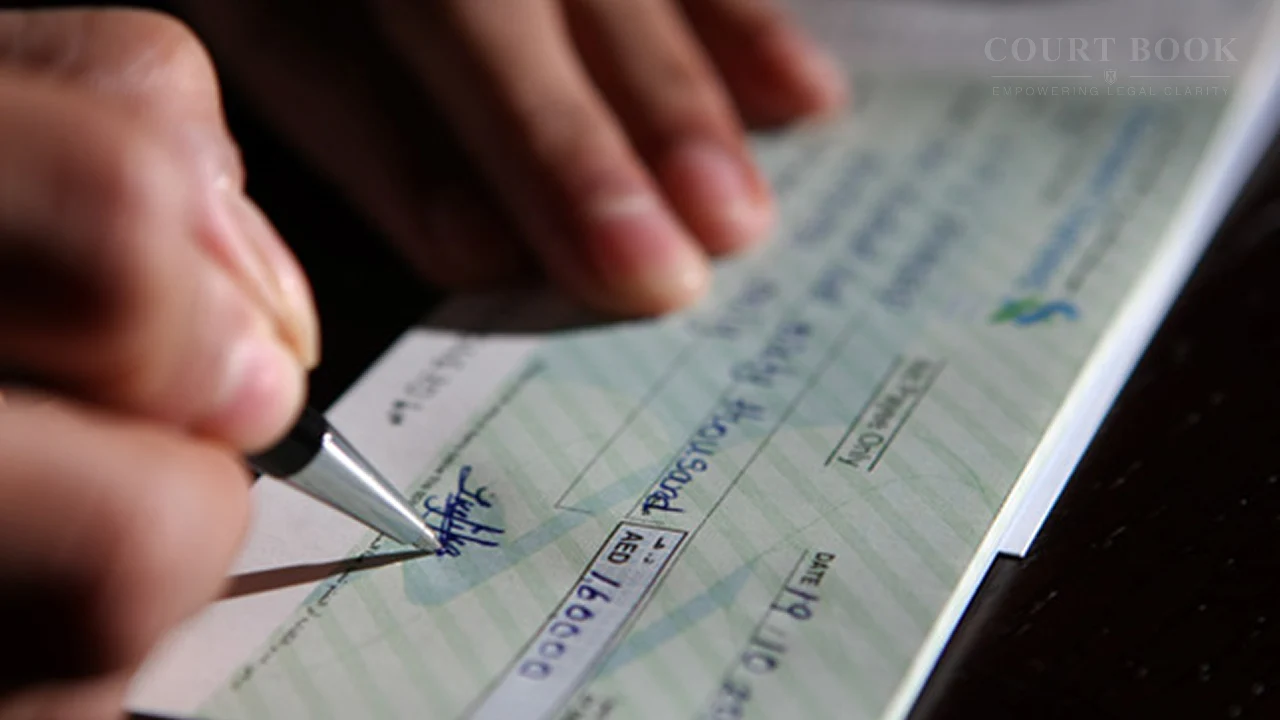
The Kerala High Court has held that a cheque cannot be rejected merely because it is typewritten, provided the complainant proves that it was issued towards a legally enforceable debt. Reversing a trial court's acquittal, the High Court convicted the accused in a cheque dishonour case involving ₹4.75 lakh after finding that the complainant had successfully established the loan transaction and execution of the cheque.
Background of the Case
The appeal arose from the acquittal of an accused in a complaint filed under Section 138 of the Negotiable Instruments Act, 1881. The complainant alleged that the accused, who was her relative, had borrowed ₹1.75 lakh in June 2012 and later sought another ₹3 lakh in November 2012. According to the complainant, the accused subsequently issued a cheque for ₹4.75 lakh towards repayment of the total amount.
When the cheque was presented for encashment, the bank returned it with the endorsement "Drawer's signature differs." Despite receiving a statutory demand notice, the accused did not make payment within the prescribed period, leading to criminal proceedings under the Negotiable Instruments Act.
The Judicial First Class Magistrate had acquitted the accused, holding that it appeared improbable for the complainant to lend another substantial amount when an earlier loan had not yet been repaid. Challenging this finding, the complainant approached the Kerala High Court.
Court's Observations
Justice A. Badharudeen carefully re-examined the evidence placed on record, including witness testimony and bank documents.
The Court noted that the complainant had consistently stated that both loans formed part of a single outstanding liability of ₹4.75 lakh and that the cheque had been issued towards repayment of that amount. Bank records also showed that the complainant had sufficient financial capacity to advance the money, while the accused's account had only ₹554.55 when the cheque was presented.
Addressing the trial court's reasoning, the High Court observed that advancing another loan to a close relative, even when an earlier loan remained unpaid, could not automatically make the transaction unbelievable.
The bench observed,
"Advancing a loan to a relative, even during subsistence of an earlier liability by itself is not a sufficient reason to disbelieve the complainant's case."
The Court also rejected the argument that the cheque was suspicious merely because it had been typewritten.
The bench observed,
"Issuance of a typewritten cheque though not common, is not prohibited by law."
It further held that once the complainant establishes the transaction and execution of the cheque, the fact that it is typewritten cannot, by itself, defeat the claim.
On the issue of dishonour, the High Court reiterated that a cheque returned with the remark "Drawer's signature differs" can still attract liability under Section 138 of the Negotiable Instruments Act if other statutory requirements are fulfilled and there were insufficient funds in the account.
The Court also noted that the accused's own defence acknowledged an earlier borrowing, although a different explanation was offered regarding the cheque. Considering the evidence as a whole, the Court concluded that the complainant had successfully proved the transaction and was entitled to the legal presumptions available under Sections 118 and 139 of the Negotiable Instruments Act.
Decision
Allowing the appeal, the Kerala High Court set aside the trial court's acquittal and convicted the accused for the offence punishable under Section 138 of the Negotiable Instruments Act.
The Court sentenced the accused to simple imprisonment till the rising of the court and directed payment of a fine of ₹4.75 lakh. It further ordered that the fine amount, if realised, should be paid to the complainant as compensation under Section 357(1)(b) of the Code of Criminal Procedure. In case of default in payment of the fine, the accused will undergo six months' simple imprisonment.
The accused was also directed to appear before the trial court within two weeks for execution of the sentence.
Case Details
Case Title: Shiny S. Nair v. State of Kerala & Ors.
Case Number: Criminal Appeal No. 705 of 2015
Judge: Justice A. Badharudeen
Decision Date: 16 July 2026


