

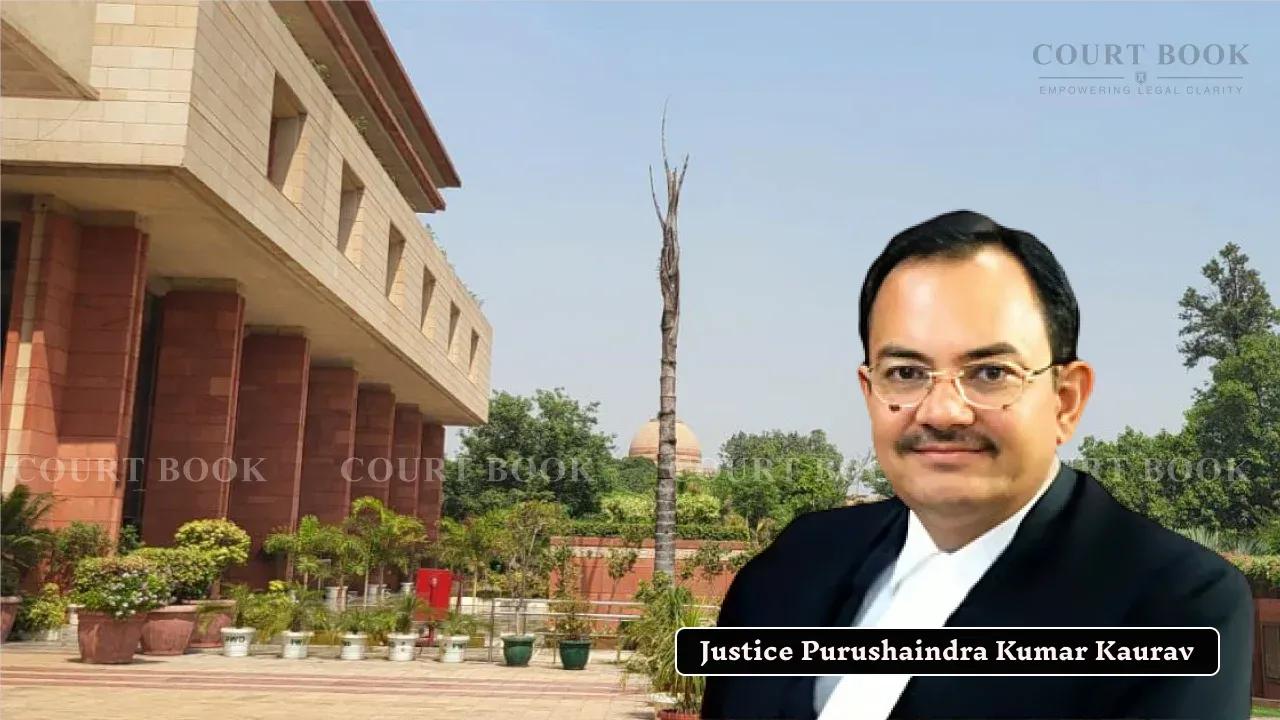
The Delhi High Court has held that mere accessibility of a website in Delhi cannot automatically establish territorial jurisdiction in intellectual property disputes. Justice Purushaindra Kumar Kaurav examined 17 commercial suits involving trademark infringement, copyright infringement, trade dress and passing off. The Court emphasised that plaintiffs must establish a genuine commercial connection with Delhi and returned all 17 suits after finding that territorial jurisdiction had not been established.
Background
The lead matter, ABD Maestro Private Limited v. Great Galleon Ventures Ltd., involved allegations of trademark, copyright and trade dress infringement.
ABD Maestro, a Mumbai-based company engaged in the alcoholic beverages business, claimed exclusive rights over its 'YELLO' mark, label and distinctive yellow trade dress. It alleged that Great Galleon Ventures' 'V21' vodka product used a deceptively similar yellow-and-black bottle design and overall presentation.
The plaintiff approached the Delhi High Court, relying on the defendant's website accessibility, alleged commercial presence in Delhi and its GST registration showing a Delhi business address.


However, the defendant's product image itself mentioned that it was for sale in Madhya Pradesh only.
Justice Kaurav examined whether website accessibility, online advertisements and alleged commercial transactions could establish territorial jurisdiction under Section 20 of the Code of Civil Procedure and the relevant provisions of the Trade Marks and Copyright Acts.
The Court clarified that an interactive website alone would not be sufficient. A genuine commercial transaction and purposeful targeting of customers within the jurisdiction must be established.
The judgment observed:
"Merely because the plaintiff's official website is accessible in Delhi would not amount to the plaintiff carrying on business in Delhi."
The Court also questioned the practice of arranging transactions through persons appointed by plaintiffs to create territorial jurisdiction. It emphasised that a party cannot manufacture a connection with a particular court through a strategically arranged purchase.
On the defendant's GST registration, the Court explained that the expression 'principal place of business' under GST law does not automatically establish that a company carries on business in Delhi for determining jurisdiction under the CPC.
The Court further stressed the importance of the appropriate forum, observing:
"Nobody has an inherent vested right to file a suit before a specific court. The plaintiff can validly insist that a violation of his right must be remedied. He cannot, however, insist that it must be remedied by a particular court."
Finding that territorial jurisdiction was not established in the ABD Maestro matter, the Court held that the plaint deserved to be returned for presentation before the competent court.
The Court consequently returned all 17 plaints under Order VII Rule 10 read with Section 151 of the CPC, granting liberty to the plaintiffs to seek appropriate directions under Order VII Rule 10A.
All pending applications were also disposed of.



