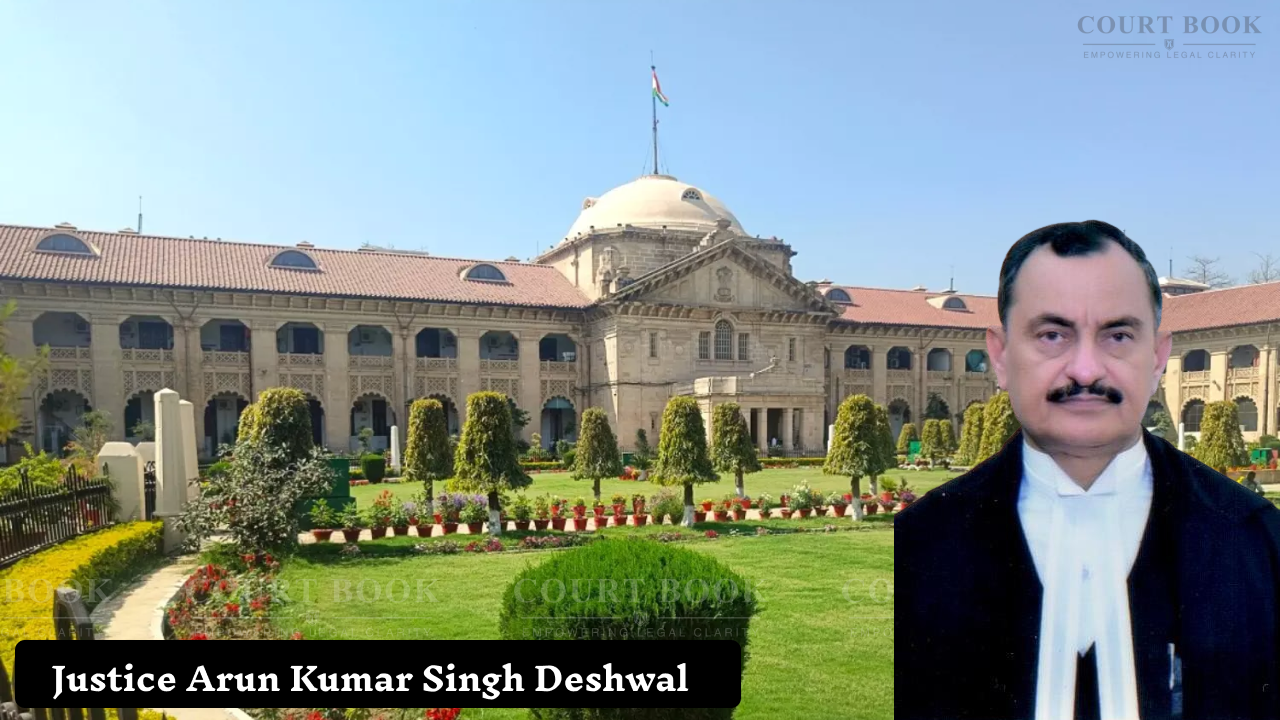
The Allahabad High Court has directed the Director General of Police (DGP), Uttar Pradesh, to consider making audio-video recording of witness statements under Section 180 of the Bharatiya Nagarik Suraksha Sanhita (BNSS) mandatory. The Court said such recording could make criminal investigations more transparent and assist courts while considering bail applications and other judicial proceedings.
The direction was issued by Justice Arun Kumar Singh Deshwal while hearing a bail application filed by Smt. Chandrakanta in connection with a criminal case registered at Basauni Police Station, Agra.
Background
The applicant sought bail in Case Crime No. 17 of 2026, registered under Sections 85, 80(2), 352, 115(2) and 351(3) of the Bharatiya Nyaya Sanhita (BNS), along with Sections 3/4 of the Dowry Prohibition Act.
During the hearing, the investigating officer, Assistant Commissioner of Police Anil Kumar, appeared before the Court pursuant to an earlier order. He informed the Court that audio-video recording had not been prepared while recording the first informant's statement under Section 180 BNSS.
The Court noted that the DGP's Circular No. 24 of 2025 and Circular No. 39 of 2026 permit audio-video recording during the recording of witness statements under Section 180 BNSS. The investigating officer could not provide an explanation and offered an unconditional apology.
Justice Deshwal observed that the investigating officer should not function merely as a person recording statements. Referring to the Uttar Pradesh Police Regulations, the Court stressed that an investigation must seek the truth and should not proceed with a predetermined view against or in favour of any person.
The Court further observed that investigation is meant to collect evidence rather than create material supporting an accusation. It referred to the Supreme Court's decisions in State of Uttar Pradesh v. Bhagwant Kishore Joshi and Vinay Tyagi v. Irshad Ali @ Deepak, which emphasise collection of evidence and fair investigation.
The Court stated:"The purpose of investigation is to collect the material not to create the materiel regarding the offence in question."
It also stressed that statements of independent witnesses should be considered wherever possible, rather than mechanically relying upon the complainant's version.
The Court issued several directions concerning criminal investigations. Investigating officers were directed to proceed to the place of incident promptly, record statements without unnecessary delay and preferably prepare audio-video recordings through the E-Sakshya App.
The Court also directed officers to seek statements from independent witnesses, follow prescribed procedures for identification parades, obtain relevant call detail records where necessary, and use forensic or cyber-cell assistance in cases involving alleged obscene videos.
The Court specifically directed the DGP, Uttar Pradesh, to consider making audio-video recording of statements under Section 180 BNSS mandatory and to circulate the guidelines among investigating officers.
On the bail application, the Court noted the applicant's submission that she was the mother-in-law of the deceased and that there were differences between the FIR and the subsequent statement recorded under Section 180 BNSS. The applicant also argued that the allegations against her were general and that there was insufficient material showing harassment for dowry before the death.
The State and the first informant opposed the bail application but did not dispute the factual submissions referred to by the Court.
After considering the circumstances, evidence, alleged involvement, the applicant's status as a woman, the condition of overcrowded jails and the pendency of criminal cases, the Court held that she was entitled to bail without expressing any opinion on the merits of the case. The bail application was accordingly allowed.
The Allahabad High Court directed that Smt. Chandrakanta be released on bail upon furnishing a personal bond and two sureties to the satisfaction of the concerned court, subject to specified conditions.
The Court also directed the Registrar (Compliance) to send a copy of the order to the Director General of Police, Uttar Pradesh, for compliance with the investigation-related direction.







-300x169.webp)