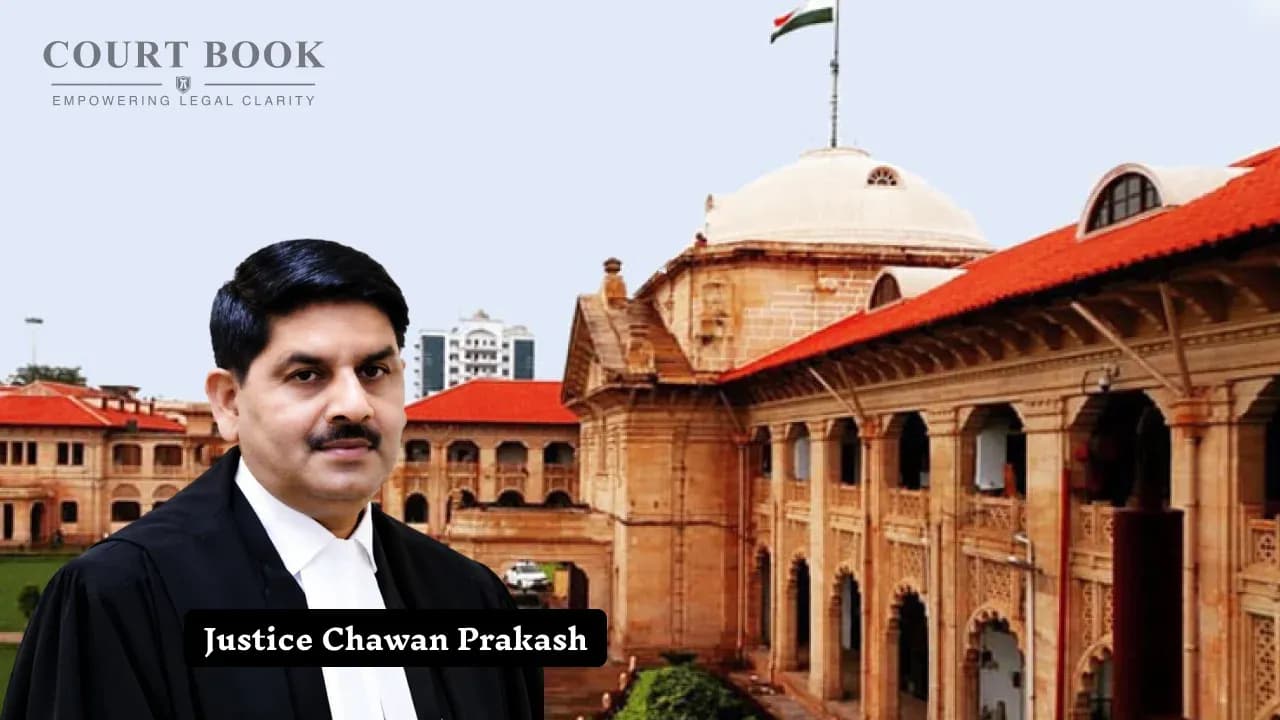
The Allahabad High Court has set aside a Prayagraj magistrate’s order taking cognizance in a dowry-related case. The order referred to provisions of the old Indian Penal Code and carried only initials instead of a full signature.
Background
Mohammad Waseem and two others approached the High Court under Section 528 of the Bharatiya Nagarik Suraksha Sanhita (BNSS) against the State of U.P. and another. An FIR was registered as Case Crime No. 17 of 2026 at Police Station Kareli, Prayagraj. It invoked several sections of the Bharatiya Nyaya Sanhita (BNS), 2023, and Sections 3 and 4 of the Dowry Prohibition Act. The police filed a charge sheet under the same laws. However, the Magistrate’s order of April 7, 2026 took cognizance (formally took note of the alleged offences to begin proceedings) under Sections 498A, 323 and 504 of the IPC, along with the Dowry Prohibition Act.
The applicants’ counsel argued that the order showed a complete lack of judicial thinking. He said the Magistrate had used repealed IPC provisions without checking the date of the alleged incident. He also pointed out that the order carried neither the officer’s name nor a full signature, which made it hard to obtain certified copies. The State’s counsel candidly accepted that the order had formal and procedural flaws. He agreed it did not clearly show how the law was applied after the shift from the IPC to the BNS.
Justice Chawan Prakash first stressed how serious the act of taking cognizance is. The Court said,
“Taking cognizance of an offence under Section 210 of the BNSS is a judicial act, not a mere administrative or ministerial routine. The taking of cognizance marks the initiation of judicial proceedings against an individual and affects their fundamental liberty.”
Turning to the order itself, the Court observed, “Such routine reliance on outdated templates, without regard to the statutory framework governing the case, highlights a manifest lack of care and non-application of mind.”
On the signature issue, the Court found that only initials had been affixed and the Magistrate’s name was missing. It referred to a High Court circular dated July 19, 2023, which directs presiding officers to write their full names below their signatures. The Court noted that the then Magistrate had not followed these directions and advised greater care in future.
The High Court allowed relief in these terms:
“Hence, the cognizance order dated 7.4.2026 is hereby set-aside. The matter is remitted to the Court of Additional Chief Judicial Magistrate, Court No.7, Prayagraj for passing the order afresh.”
The application under Section 528 BNSS was accordingly disposed of.
Case Details
- Case Title: Mohammad Waseem and 2 Others v. State of U.P. and Another
- Case Number: Application U/S 528 BNSS No. 44385 of 2026
- Judge: Justice Chawan Prakash
- Decision Date: October 12, 2026
Counsels:
- For the Applicants: Udbhav Tripathi, Uma Shankar Tripathi
- For the Opposite Parties/State: Jyoti Kumar Singh, AGA, assisted by Durgesh Kumar Tripathi, Brief Holder