

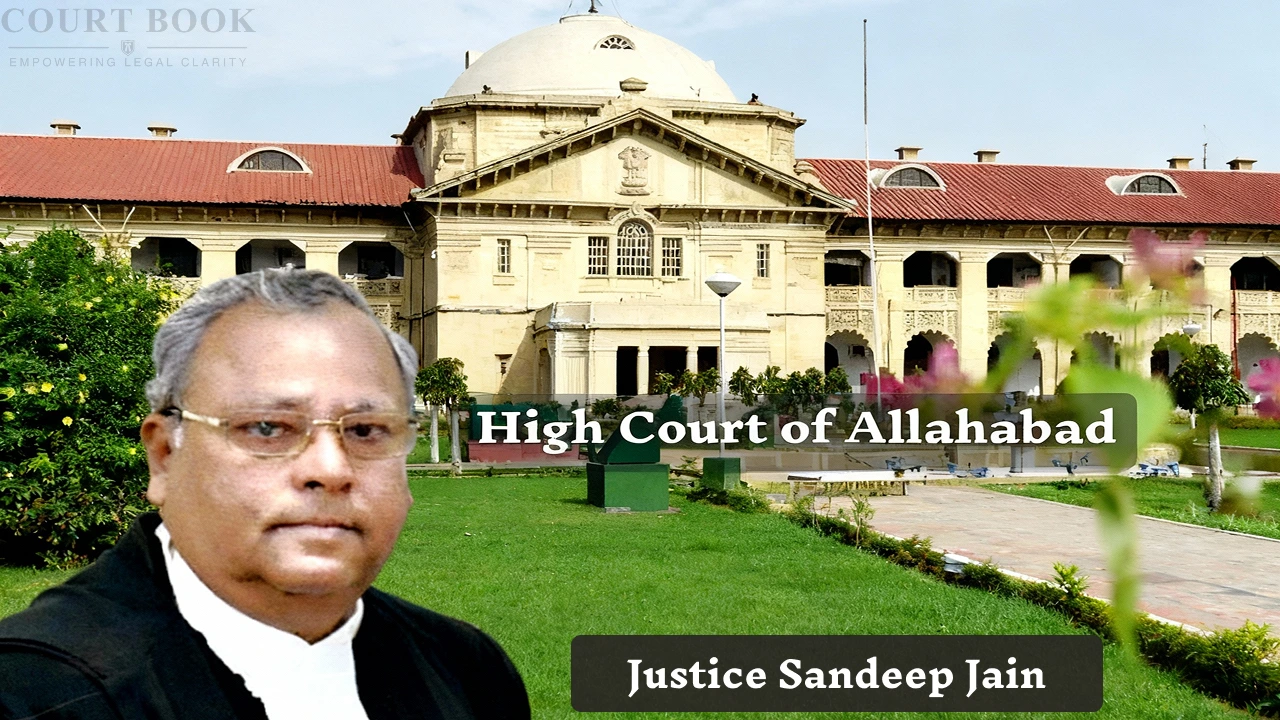
The Allahabad High Court has directed the Uttar Pradesh authorities and the father of two adult women to ensure that they are produced before the Court after a habeas corpus petition alleged that the women were being unlawfully restrained for converting to Islam and deciding to marry persons of their own choice. The Court clarified that its immediate concern was to verify whether the women were acting voluntarily and whether they were under any illegal detention.
Background of the Case
The habeas corpus petition was filed by Kunwar Sultan Ali and two others, claiming that the two women, aged about 20 and 35 years, had voluntarily embraced Islam after renouncing Hinduism and had independently decided to solemnize marriages according to their wishes. According to the petitioners, both women were adults of sound mind and had taken these decisions without any force, coercion, inducement or undue influence.
The petition further alleged that the women's father had lodged an FIR under Section 87 of the Bharatiya Nyaya Sanhita with the intention of preventing them from exercising their choice. It was also claimed that the father, with the assistance of local police authorities, had illegally confined the women after learning of their decision to change their religion and marry outside their faith.
Counsel for the petitioners also argued that the Uttar Pradesh Prohibition of Unlawful Conversion of Religion Act, 2021, was not attracted because there was no allegation or material suggesting that the conversion had been brought about through force, fraud, coercion, undue influence or allurement.
Court's Observations
Justice Sandeep Jain observed that, on a prima facie reading of the pleadings, both women appeared to be majors who were legally competent to make independent decisions regarding their faith, marriage, residence and future. The Court noted that if the assertions made in the petition were ultimately found to be correct, interference with such personal choices could amount to an intrusion into constitutionally protected rights relating to dignity, privacy, personal liberty and decisional autonomy.
The Court further emphasised that in a habeas corpus petition, its foremost responsibility is to determine whether the individuals concerned are acting of their own free will or are under illegal detention.
As the bench observed,
"The foremost duty of this Court in a petition for a writ of habeas corpus is to ascertain whether the corpus are acting of their own free will or are under any form of illegal detention or restraint."
Court's Decision
Without expressing any final opinion on the allegations, the High Court directed the State authorities and the women's father to produce both women before the Court on 6 August 2026. The Court also issued notice to the father and directed that, if the women were not produced on the scheduled date, the concerned police officials must file personal affidavits explaining the reasons for non-compliance and detailing the steps taken to secure their production.
The matter has been listed for further hearing on 6 August 2026.
Case Details
Case Title: Kunwar Sultan Ali and 2 Others v. State of U.P. and 3 Others
Case Number: Habeas Corpus Writ Petition No. 1079 of 2026
Judge: Justice Sandeep Jain
Decision Date: 30 July 2026


