

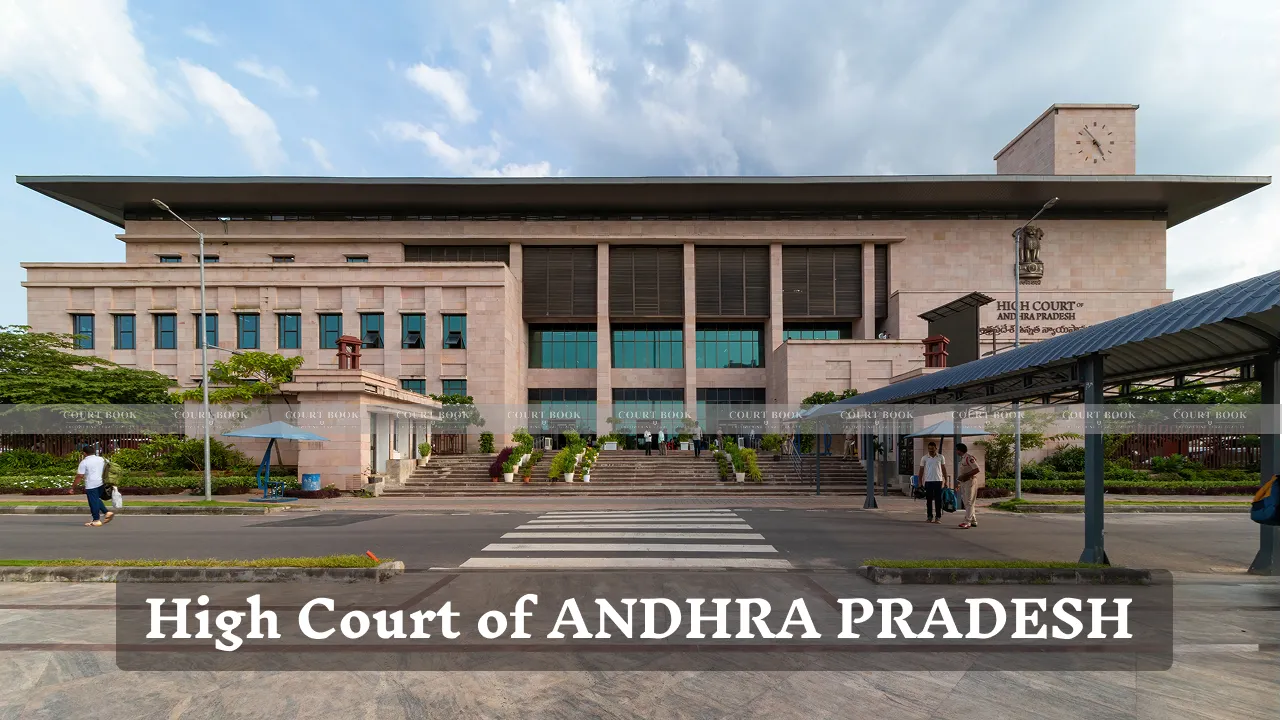
The Andhra Pradesh High Court has set aside a ₹5.27 crore electricity back-billing demand raised against Visakhapatnam Steel Plant, holding that the power distribution company acted without jurisdiction while assessing alleged under-recording of electricity consumption.
Justice Ninala Jayasurya allowed a writ petition filed by Rashtriya Ispat Nigam Limited (RINL), finding that the authorities relied on a provision that applies only when a meter is defective, whereas the dispute in the present case involved wiring defects and not a faulty meter.
Background of the Case
RINL operates a captive power plant to ensure uninterrupted electricity supply for its steel manufacturing operations. Apart from generating power for its own use, the company also exports surplus electricity to the state transmission utility.
In November 2001, RINL noticed differences between power readings recorded through its Supervisory Control and Data Acquisition (SCADA) system and the readings captured by the distribution company's meters.
Subsequent inspections revealed that certain secondary wires connected to the metering system had melted, resulting in lower recording of electricity consumption. Following the inspection, the distribution company issued an assessment notice and later raised a back-billing demand of ₹5.27 crore for the period between July and October 2001.
The company challenged the assessment, arguing that the meters themselves were functioning properly and that the issue arose from defects in wiring maintained by the electricity utility.
Court’s Observations
The High Court closely examined the inspection reports and the applicable terms and conditions governing electricity supply.
The Court noted that there was no finding anywhere on record that the meter itself was defective. Instead, the inspection reports indicated that melted wires had caused an imbalance in the recording process.
Justice Jayasurya observed that the distribution company had invoked Clause 22.3.3.3 of the Terms and Conditions of Supply, a provision meant for situations where a meter has become defective or ceased to function.
“The meter per se is not defective, but is functioning and recording less consumption due to melting of wires,”
the Court observed.
The Court also referred to maintenance obligations imposed on electricity suppliers and noted inspection findings that the meter box had become rusted, allowing rats and squirrels to enter, indicating poor upkeep of the equipment.
According to the Court, once it was accepted that the meter was not defective, the authorities could not invoke the clause used for assessing consumption in defective-meter cases.
Legal Analysis
The Court relied on earlier decisions, including judgments of the Supreme Court concerning disputes over electricity meters.
It held that when a dispute concerns the correctness of recorded consumption by a meter that is otherwise functional, the matter should be referred to the competent electrical authority under the law then in force.
The judgment emphasized that the dispute related to under-recording caused by wiring defects rather than a defective meter itself. Therefore, the assessment procedure adopted by the distribution company lacked legal authority.
Decision
Allowing the writ petition, the Andhra Pradesh High Court quashed the appellate order dated 23 September 2003 and the underlying assessment order dated 5 February 2002.
The Court held that the back-billing assessment of ₹5.27 crore was unsustainable and had been made without jurisdiction. It further directed that any amount already collected or adjusted from RINL pursuant to the impugned demand must either be refunded or credited in its future electricity bills.
The writ petition was accordingly allowed, with no order as to costs.
Case Details:
Case Title: Rashtriya Ispat Nigam Limited v. Eastern Power Distribution Company of Andhra Pradesh Ltd. & Others
Case Number: W.P. No. 5501 of 2004
Judge: Justice Ninala Jayasurya
Decision Date: 15 June 2026


