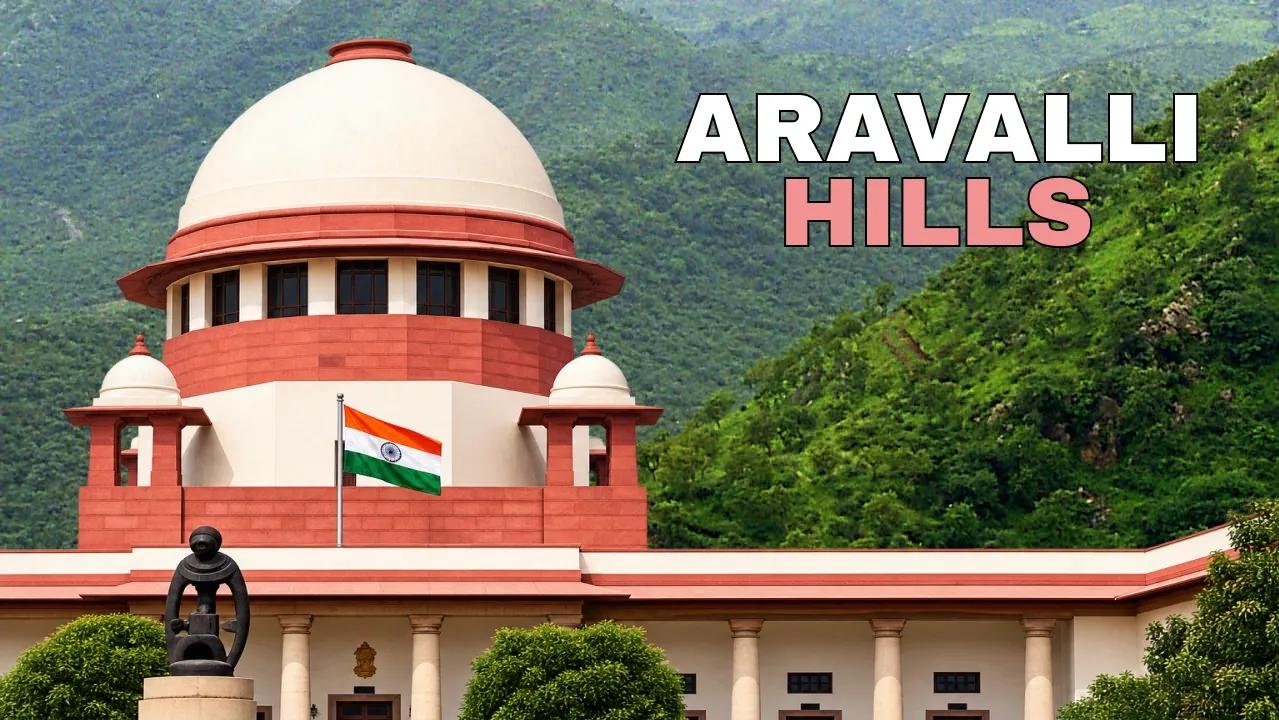
The matter was heard by a Bench comprising Chief Justice of India Surya Kant and Justices Joymalya Bagchi and V. Mohana. The Court also made it clear that no further extension would be granted. The Committee was directed to complete the exercise within the fixed deadline.
Background of the Case
The proceedings arise from the Supreme Court's suo motu case concerning the definition and demarcation of the Aravalli Hills and Ranges.
Earlier, the Court had directed the constitution of a High-Powered Committee comprising experts from fields including forestry, geology, biodiversity and environmental science. In its May 25, 2026 order, the Court had directed the Committee to submit its comprehensive report by August 31, 2026.
The Committee subsequently sought an extension until February 28, 2027, stating that more time was required to hear stakeholders and complete its assessment.
Supreme Court Questions Extension Request
During Monday's hearing, the Bench was not inclined to accept the request for a six-month extension. Chief Justice Surya Kant questioned the Committee's request for a date extending beyond his retirement.
"The Committee has basically asked for an adjournment till my retirement," CJI Surya Kant remarked during the hearing.
The Court instead directed the Committee to work within the existing proceedings and complete its final report by November 30. The Bench indicated that the Committee could submit issue-specific interim reports where necessary so that urgent questions did not have to await the entire exercise.
Court Stresses Stakeholder Consultation
The Supreme Court also directed the Committee to undertake a meaningful consultation with all concerned stakeholders. This includes affected communities and tribal groups in Rajasthan and Gujarat.
The direction comes against the background of the Court's earlier observation that the Aravalli issue requires an independent and comprehensive expert assessment before decisions concerning its definition and protection are finalised.
The Court's earlier orders had also recognised the competing interests of environmentalists, mining lease holders, villagers, mine workers, farmers and local communities while asking the Committee to consider relevant representations.
Decision
The Supreme Court rejected the High-Powered Committee's request for an extension until February 28, 2027.
It directed the Committee to submit its comprehensive report by November 30, 2026, and made clear that no further extension would be granted.