

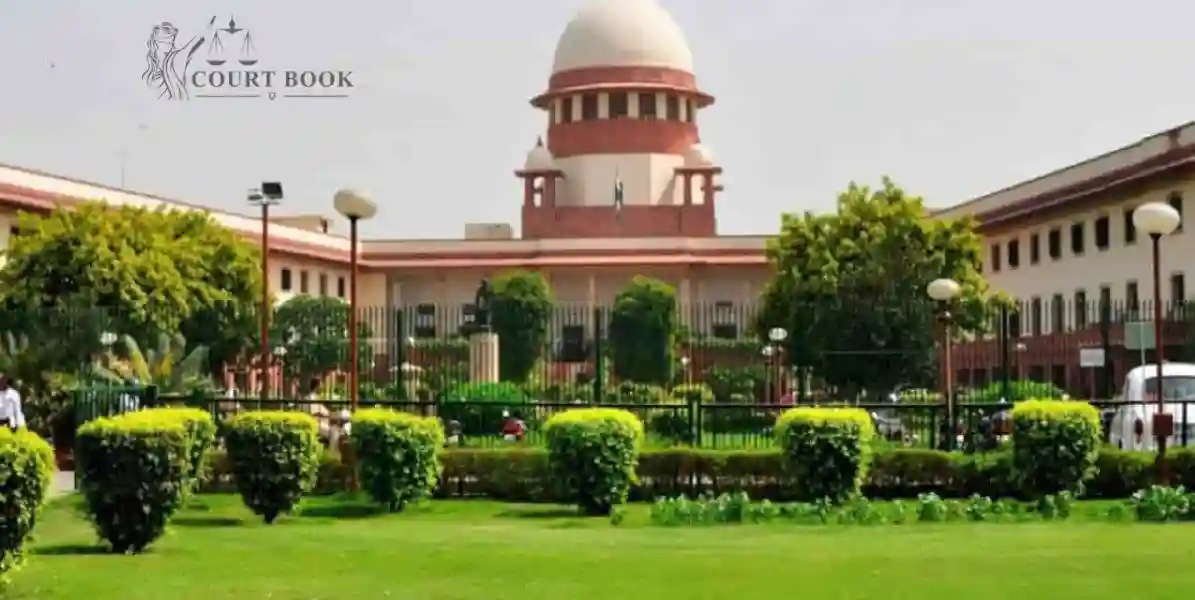
The Supreme Court granted one-time relief to thousands of law students facing the risk of losing their academic year due to shortage of attendance. The Court directed that students whose academic session was already underway when the Delhi High Court relaxed attendance norms should not be stopped from appearing in their final examinations or supplementary examinations for that academic session.
The order was passed by a three-judge Bench led by Justice Vikram Nath, Justice Sandeep Mehta and Justice R. Mahadevan.
Background of the Case
The matter traces back to a Delhi High Court judgment delivered on 3 November 2025. In that decision, the High Court asked the Bar Council of India (BCI) to reconsider mandatory attendance requirements for three-year and five-year LL.B. courses. It also directed that law colleges should not prevent students from taking examinations solely because of shortage of attendance while the attendance rules were being reviewed.
Following the judgment, the BCI issued directions to law colleges asking them not to detain students over attendance during the review period. According to the Supreme Court, this resulted in many students believing that attendance shortages would no longer prevent them from appearing in examinations.
Court's Observation
The Bench noted that uncertainty created by the Delhi High Court's decision and the BCI's subsequent communication gave students a genuine reason to believe they would not face academic consequences for attendance shortages during the ongoing session.
The Bench observed,
"The students who acted under a bona fide belief that mere shortage of attendance would not be an impediment to their appearing in the examinations... are entitled to the benefit of doubt as a one time measure only."
The Court also clarified that its earlier interim order dated 26 May 2026, which stayed the operation of the Delhi High Court's directions, was expressly prospective and should not prejudice students who had already acted during the period of uncertainty.
Court's Decision
Allowing interim relief, the Supreme Court directed that students whose academic session was ongoing when the Delhi High Court delivered its judgment on 3 November 2025 shall not be detained or barred from appearing in their final examinations because of shortage of attendance.
It further ordered that students who could not appear, either wholly or partly, in the final examinations must be permitted to take the supplementary examinations for that academic session.
The matter has been listed for final disposal on 25 August 2026.
Case Details
Case Title: Prakruthi Jain v. Bar Council of India (with connected matters)
Case Number: W.P.(C) No. 31/2025 (with W.P.(C) No. 32/2025, SLP(Crl.) No. 9450/2026 and connected matter)
Judge: Justice Vikram Nath, Justice Sandeep Mehta and Justice R. Mahadevan
Decision Date: 21 July 2026


