

The Bombay High Court has extended one-time protection to law students who were stopped from appearing in their semester-end examinations during the 2025–26 academic session solely because of attendance shortage.
A Division Bench of Justice Farhan P. Dubash and Justice R.I. Chagla held that the protection granted by the Supreme Court on July 21, 2026, was not restricted to final-year or final-semester law students. It applied to students whose academic session was ongoing on November 3, 2025.
Background of the Case
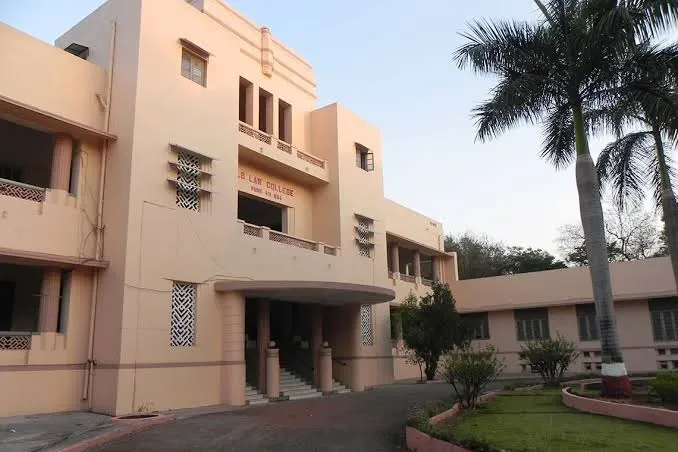
The petitions arose from students of Indian Law Society's (ILS) Law College, affiliated with Savitribai Phule Pune University. Around 41 students from three-year and five-year law courses had been prevented from appearing in their semester-end examinations because of attendance shortage. Their attendance was stated to range from 46% to 54.37%.
The dispute initially involved the interpretation of Rule 12 of the Bar Council of India’s Legal Education Rules and Ordinances 68 and 70 of the University. However, during the proceedings, the Supreme Court passed its July 21 order granting one-time protection to students affected by the uncertainty surrounding attendance rules.
Court's Observation
The High Court rejected the College’s argument that the Supreme Court’s reference to “final examinations” meant only examinations of final-year or final-semester students.
“The expression ‘final examination’ describes the examination concluding the concerned academic session,” the Bench observed, clarifying that it did not mean the final examination of the entire law course.
The Court also held that students did not have to individually prove that they had personally read or relied upon the Delhi High Court’s earlier judgment. The Supreme Court’s order had identified an objective class of students, and the High Court said it could not add another requirement.
The Bench further made clear that the relief did not dilute the ordinary attendance rules for future academic sessions. The protection was confined to 2025–26 and was strictly a one-time measure.
Decision
The Bombay High Court extended the Supreme Court’s one-time protection to similarly situated students who were prevented from appearing for examinations solely because of attendance shortage.
The University and College were directed to conduct supplementary examinations for students who could not appear wholly or partly, within four weeks of the judgment being uploaded. Students who clear the required examinations would be eligible for admission to the succeeding academic year 2026–27, subject to applicable rules.
The Court also confirmed the academic progression of students who had already passed their examinations pursuant to interim orders. It left the larger dispute concerning the interpretation of Rule 12 and Ordinances 68 and 70 open for consideration in an appropriate case.
Case Details
Case Title: Aniruddha Gaurav Gursal & Anr. v. State of Maharashtra & Ors.
Case Number: Interim Application No. 5058 of 2026 in Writ Petition No. 6027 of 2026 and connected matters
Judge: Justice Farhan P. Dubash and Justice R.I. Chagla
Decision Date: August 10, 2026


