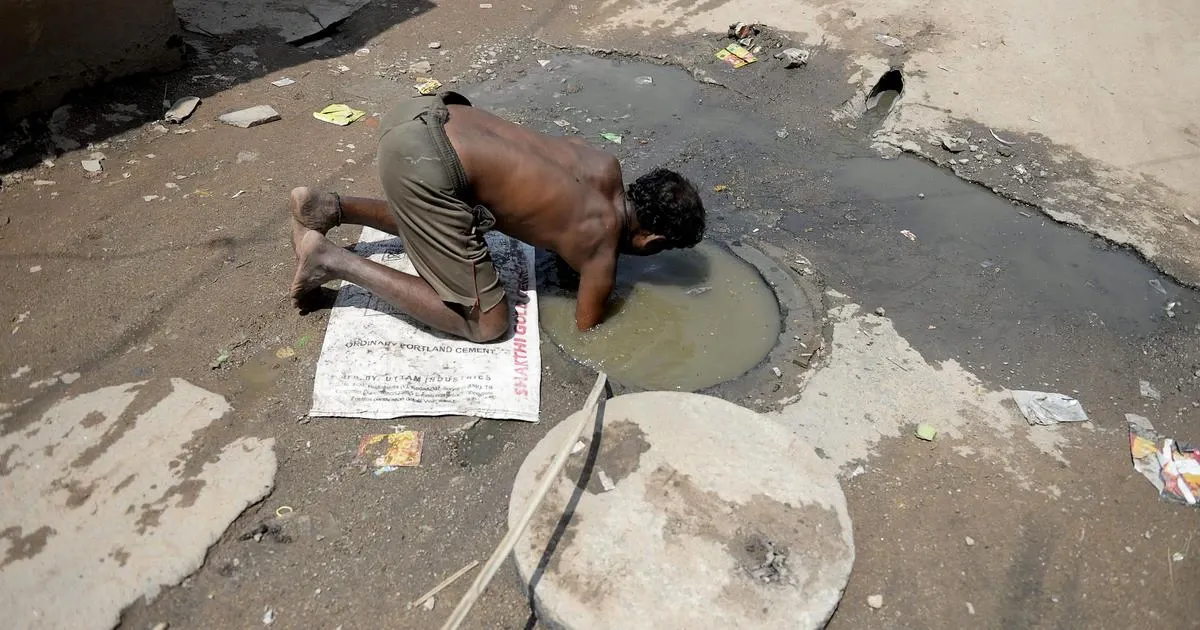
The Bombay High Court's Aurangabad Bench has directed the Maharashtra Government to pay ₹30 lakh each to the families of two men who died while cleaning a septic tank without protective safety equipment. The Court held that the State cannot avoid its responsibility to compensate victims of hazardous septic tank deaths, even if the work was carried out at a private property. It, however, clarified that the State would be free to recover the amount from the individual responsible for engaging the workers.
Background of the Case
The petition was filed by Sharda Maroti Chopwad and Bhaganbai Vyankati Ghumalwad, seeking compensation following the deaths of Maroti Rama Chopwad and Nagesh Vyankati Ghumalwad. According to the petition, both men died on 19 September 2021 while cleaning a septic tank at a private premises in Nanded district.
The families told the Court that the men had entered the septic tank without any protective gear and died due to asphyxia and drowning. They also sought rehabilitation benefits under the Prohibition of Employment as Manual Scavengers and their Rehabilitation Act, 2013 (PEMSR Act) after repeated representations for compensation remained unanswered.
Court's Observations
A Division Bench of Justice Nitin B. Suryawanshi and Justice Vaishali Patil-Jadhav observed that despite constitutional guarantees and statutory safeguards, deaths during sewer and septic tank cleaning continue to occur, reflecting the continuing failure to eliminate hazardous manual cleaning practices.
Referring to Supreme Court decisions, including Safai Karamchari Andolan and Balram Singh v. Union of India, the Bench noted that compensation for sewer and septic tank deaths has been enhanced to ₹30 lakh and that authorities have a duty to ensure effective implementation of the law.
The Court observed:
"The continued existence of manual scavenging is a serious blot on a civilized society and reflects the collective failure to completely eradicate this inhuman and degrading practice."
Addressing the State's argument that the incident occurred on private property, the Bench held that statutory obligations imposed under the 2013 Act remain enforceable. It said the State is liable to compensate the victims' dependents and may subsequently recover the amount from the private individual responsible for engaging them in hazardous work.
Court's Decision
Allowing the writ petition, the High Court directed the District Collector to submit a proposal for payment of ₹30 lakh each to the petitioners within four weeks. The State Government has been directed to process the proposal and release the compensation within the following eight weeks. If the payment is delayed beyond that period, it will carry 6% annual interest until realization.
The Bench also directed the authorities to examine the petitioners' eligibility for rehabilitation under Section 13 of the PEMSR Act, 2013 and provide appropriate rehabilitation benefits, if found eligible, within twelve weeks. With these directions, the writ petition was disposed of.
Case Details
Case Title: Sharda Maroti Chopwad & Anr. v. State of Maharashtra & Ors.
Case Number: Writ Petition No. 3359 of 2024
Court: Bombay High Court, Aurangabad Bench
Judges: Justice Nitin B. Suryawanshi and Justice Vaishali Patil-Jadhav
Decision Date: July 6, 2026



 Act (UAPA)-300x169.webp)