

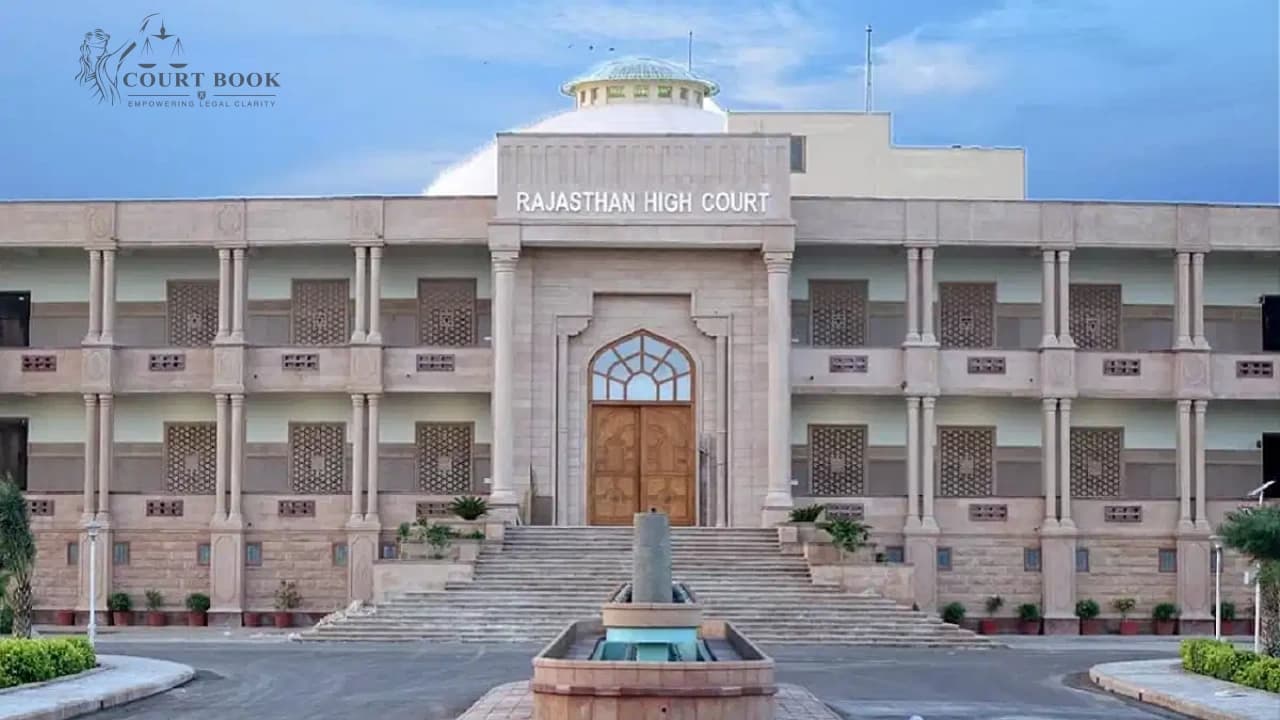
The Rajasthan High Court has ruled that compassionate appointment under the Rajasthan Compassionate Appointment of Dependents of Permanent Total Disabled Government Servants Rules, 2023, cannot be granted unless the disability falls within the specific categories prescribed under the law. The Division Bench dismissed the appeal filed by Harshit Solanki, whose father suffered a brain stroke resulting in 75% permanent disability.
Background of the Case
Harshit Solanki approached the High Court after his request for compassionate appointment was rejected. His father, a Personal Assistant in the State Insurance and Provident Fund Department, suffered a brain stroke in April 2023, leaving him with 75% permanent disability due to hemiplegia.
Solanki argued that the disability should be treated as an "accident" under the 2023 Rules and that the welfare legislation deserved a broad interpretation.
Court's Observations
The Division Bench of Justice Dr. Pushpendra Singh Bhati and Justice Sandeep Shah examined Rules 2(b) and 2(f) of the 2023 Rules, which define "Permanent Total Disabled Government Servant" and "Permanent Total Disability."


The Bench observed,
"Compassionate appointment is a statutory concession and not a matter of right."
It said eligibility must be determined strictly within the framework laid down by the Rules and cannot be expanded through judicial interpretation.
The Court noted that Rule 2(f) lists only eight specific categories of injuries and occupational accidents that qualify for compassionate appointment. According to the Bench, the law intentionally adopts an exhaustive definition rather than an inclusive one.
The judges further observed,
"A beneficial interpretation cannot override the plain language employed by the Rule," adding that courts cannot introduce a new category that the Legislature has consciously omitted.
Decision
Applying the statutory provisions, the High Court held that although the employee's disability was severe and unfortunate, it did not fall within any of the eight categories specified under Rule 2(f).
The Court therefore found no reason to interfere with the earlier order and dismissed the appeal, clarifying that the decision rested entirely on the statutory requirements governing compassionate appointment.
Case Details
Case Title: Harshit Solanki v. State of Rajasthan & Ors.
Case Number: D.B. Special Appeal Writ No. 1198/2025
Judges: Justice Dr. Pushpendra Singh Bhati and Justice Sandeep Shah
Decision Date: 2 July 2026



