

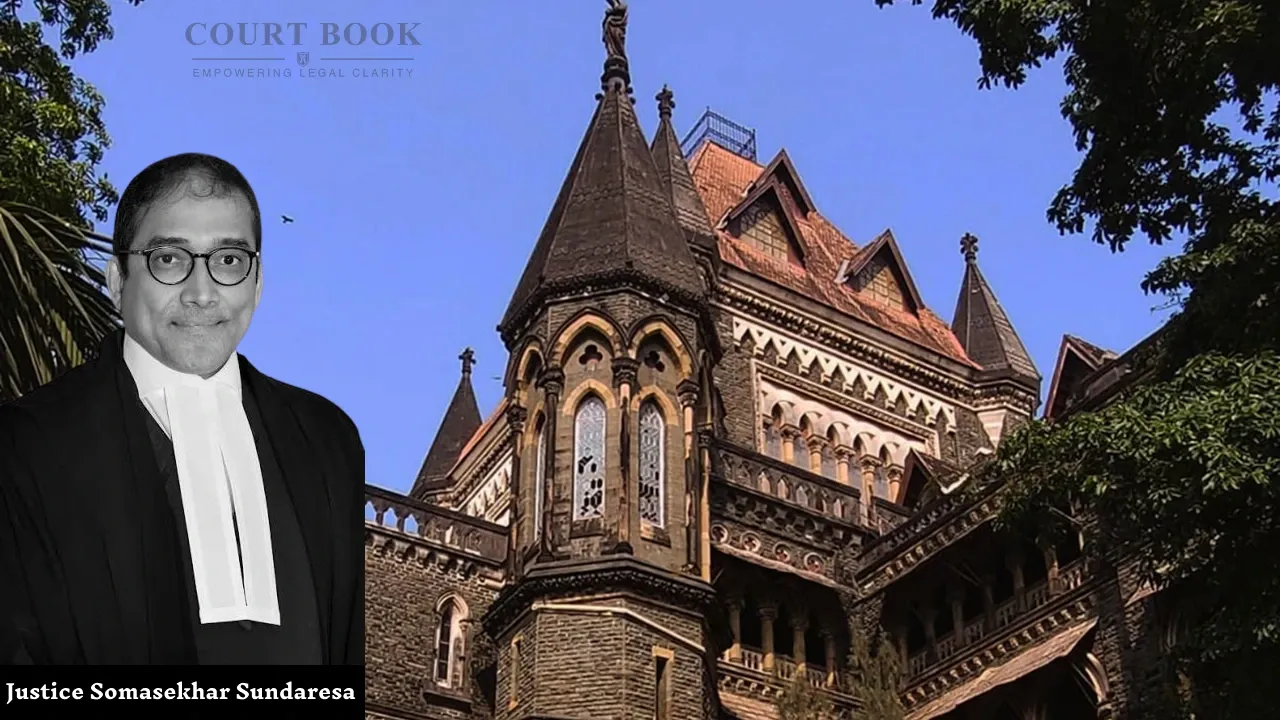
The Bombay High Court has set aside an arbitral award directing Mahaguj Collieries Ltd. to pay nearly ₹32.79 crore to Adani Enterprises Ltd., holding that the arbitral tribunal granted the relief without properly examining disputed facts or interpreting the contract between the parties. Justice Somasekhar Sundaresan ruled that the issues involved required a detailed trial and could not be decided through a summary partial award.
Background of the Case
The dispute arose from a Coal Mining Services Agreement (CMSA) executed between Mahaguj Collieries Ltd. and a consortium led by Adani Enterprises Ltd., which had been appointed as the Mine Developer-cum-Operator (MDO) for the Machhakata coal block in Odisha.
Under the agreement, the MDO incurred substantial expenditure, including payments towards land acquisition and rehabilitation. However, the Supreme Court's 2014 decision cancelling allocations of over 200 coal blocks rendered the mining project impossible to continue.
Following the cancellation, Adani initiated arbitration, claiming reimbursement of expenses incurred under the agreement. During the arbitration, the tribunal passed a partial award directing Mahaguj to pay about ₹32.79 crore towards land acquisition expenses. Mahaguj challenged that award before the High Court under Section 34 of the Arbitration and Conciliation Act, 1996.
Court's Observations
Justice Somasekhar Sundaresan noted that while the cancellation of the coal block undoubtedly made the agreement impossible to perform, that alone did not automatically entitle the claimant to reimbursement.
The Court observed,
"The CMSA does not lend itself to summary judgement, and instead, points to the need for the Learned Arbitral Tribunal to have conducted adjudication."
The High Court found that the tribunal relied heavily on a 2014 letter issued by Mahaguj acknowledging the expenditure incurred by the MDO. According to the Court, that letter merely confirmed that expenses had been incurred; it did not amount to an admission that Mahaguj was legally liable to reimburse those amounts.
The judgment further explained that determining whether Mahaguj had received any "advantage" under Sections 56 and 65 of the Indian Contract Act required interpretation of the agreement, assessment of evidence, and examination of the parties' contractual obligations. These questions, the Court said, could not be resolved through a summary proceeding.
Tribunal's Approach Found Unsustainable
The High Court held that the arbitral tribunal had invoked Sections 56 and 65 of the Contract Act without analysing how their legal requirements applied to the facts of the dispute.
The bench observed,
"The summary judgement in the Impugned Award... does not lend itself to a reasonable and rational means of adjudicating the dispute."
Justice Sundaresan also noted that the agreement contained detailed provisions regarding land acquisition costs, reimbursement mechanisms, and the Coal Mining Service Fee. Reconciling these contractual clauses required proper evidence and interpretation rather than an immediate monetary award.
The Court clarified that even if the claimant had incurred expenditure, it was still necessary to determine whether those payments constituted a recoverable loss or whether Mahaguj had actually received any corresponding legal benefit.
Jurisdiction Issue
Mahaguj had argued that the dispute should have been decided under the Coal Mines (Special Provisions) Act, 2015.
The High Court rejected this objection, agreeing with the arbitral tribunal that the special tribunal established under that law deals with disputes involving new allottees of cancelled coal blocks and former allottees. Since the present dispute was between Mahaguj and its mining contractor, the arbitral tribunal retained jurisdiction to hear the matter.
Decision
Allowing Mahaguj's petition, the Bombay High Court set aside the arbitral award dated February 1, 2018, holding that it was based on a summary approach despite the existence of substantial disputed questions requiring adjudication.
The Court clarified that it had not expressed any opinion on the ultimate merits of the parties' claims. It held that the contractual dispute regarding reimbursement and the consequences of the cancelled coal block allocation remains open for fresh arbitration, if the parties choose to pursue it.
Case Details
Case Title: Mahaguj Collieries Ltd. v. Adani Enterprises Ltd.
Case Number: Commercial Arbitration Petition No. 483 of 2018 (with Notice of Motion No. 1066 of 2018)
Judge: Justice Somasekhar Sundaresan
Decision Date: June 25, 2026


