

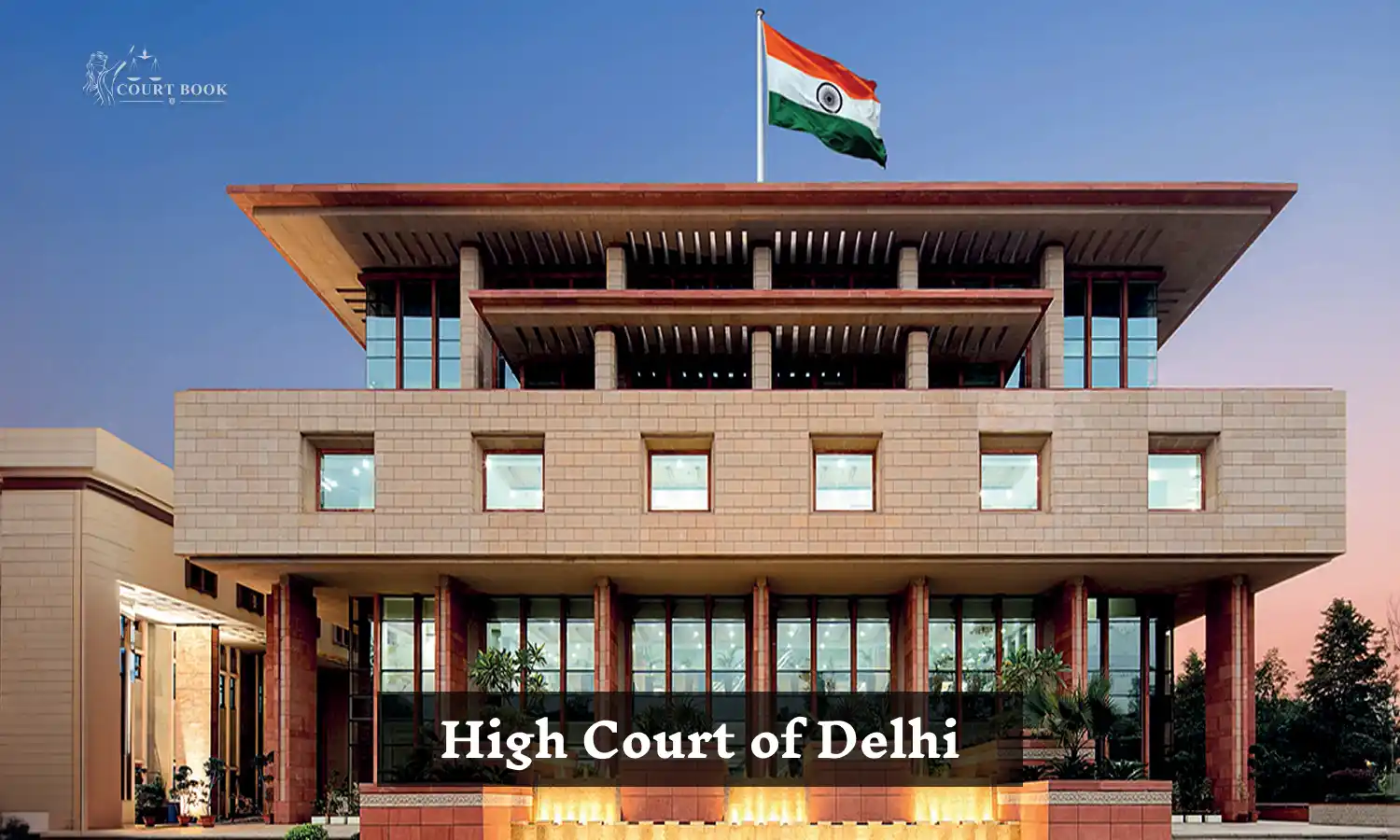
The Delhi High Court has referred a significant legal question concerning the deadline for filing written statements in civil suits to a Larger Bench, questioning whether the 120-day limit under its Original Side Rules is absolute or can be extended in exceptional circumstances. A Division Bench of Justice Vivek Chaudhary and Justice Renu Bhatnagar made the reference while hearing an appeal in Yogesh Taneja (Since Deceased Through LRs) v. Vijay Taneja (Since Deceased Through LRs).
The Bench examined whether the principles laid down by the Supreme Court for extending the time to file written statements under the Code of Civil Procedure (CPC) could also apply to Rule 4 of Chapter VII of the Delhi High Court (Original Side) Rules, 2018.
Background
The dispute arose from a civil suit initially registered as a commercial suit. On May 5, 2025, a Single Judge held that the matter was not a commercial dispute and directed that it proceed as an ordinary civil suit.
After the defendants failed to file their written statement within the prescribed period, the Joint Registrar (Judicial) closed their right to file it on January 20, 2026. A subsequent Chamber Appeal was dismissed on July 23, 2026, with the Single Judge holding that the written statement had not been filed within the outer limit of 120 days.
The appellants challenged that order before the Division Bench, arguing that the procedural rule should be interpreted in a manner that allows courts to grant extensions in appropriate cases.
The Bench compared Rule 4 of the Delhi High Court Rules with Order VIII Rule 1 of the CPC. It noted that the Supreme Court, in Kailash v. Nanhku and Salem Advocate Bar Association v. Union of India, had treated the corresponding CPC provision as directory, meaning that courts could extend the deadline in exceptional cases.
The Bench disagreed with the approach adopted in earlier Delhi High Court Division Bench decisions, including Ram Sarup Lugani, Manhar Sabharwal and Delhi Gymkhana Club. Those rulings had treated the 120-day limit under the Original Side Rules as mandatory.
The Bench observed:
"Thus, applying the same principle, the only possible interpretation is that Rule 4 of DHC Rules is also directory in nature, leaving the same discretion with the High Court, as is available to any other Courts to which Order VIII Rule 1 CPC applies."
The judges also examined the relationship between the powers of the court and those of the Registrar. They reasoned that the rule gives the court authority to extend the filing period, while the Registrar's role in closing the right to file the written statement is ministerial in nature.
On the maintainability of the Chamber Appeal, the Bench considered the Supreme Court's decision in State of Orissa v. Commissioner of Land Records and Settlement and questioned whether the earlier Delhi High Court ruling in Rahul Gupta v. Pratap Singh correctly reflected the law on review of orders passed by a delegated authority.
The Bench observed:
"Since we are humbly unable to agree with the earlier Division Bench judgments of this court, as detailed above, the following questions are being referred to Larger Bench for consideration:"
On October 8, 2026, the Division Bench referred three questions to a Larger Bench. These concern whether Supreme Court precedents on filing written statements apply to Rule 4 of the Delhi High Court Rules, the respective powers of the court and Registrar, and whether Rahul Gupta v. Pratap Singh is consistent with the Supreme Court's ruling on delegated authority.
The Bench directed that the matter be placed before the Chief Justice for consideration of constituting a Larger Bench.


