

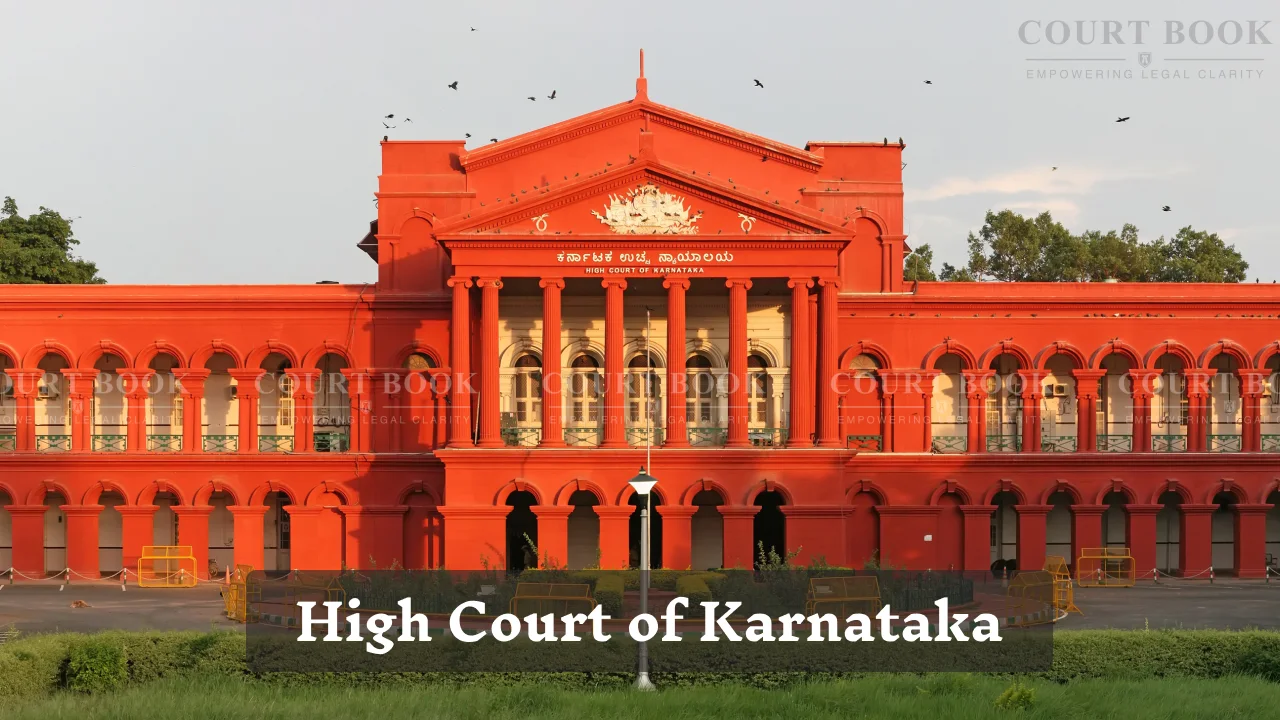
The Karnataka High Court has struck down provisions of the Karnataka Scheduled Castes and Scheduled Tribes (Reservation of Seats in Educational Institutions and of Appointments or Posts in the Services under the State) Act, 2022, which increased reservation for Scheduled Castes (SCs) from 15% to 17% and for Scheduled Tribes (STs) from 3% to 7%. The Division Bench held that the increase, which raised total reservation for backward classes to 56%, violated the constitutional guarantees of equality.
The judgment was delivered on October 12, 2026, by Chief Justice Vibhu Bakhru and Justice K.S. Hemalekha in two connected writ petitions challenging the validity of the Karnataka law.
Background
The Karnataka Government introduced the enhanced reservation following recommendations made by the commission headed by former High Court judge Justice H.N. Nagamohan Das. The commission recommended increasing SC reservation to 17% and ST reservation to 7%, citing their representation in public services and the socio-economic conditions of the communities.
The State enacted the legislation in January 2023, increasing the overall reservation from 50% to 56%, while retaining the existing 32% reservation for other backward classes.
Mahendra Kumar Mitra challenged the legislation through a public interest litigation in W.P. No. 200448 of 2025. Separately, three civil engineering graduates challenged the increased reservation applicable to government recruitment in W.P. No. 25515 of 2025.
The petitioners argued that the enhanced quota exceeded the constitutionally recognised 50% ceiling and was inconsistent with Supreme Court decisions governing reservation. The State defended the legislation, relying on commission reports and arguing that exceptional circumstances justified the increase.
The High Court examined the constitutional framework governing reservation, including Articles 14, 15 and 16, which protect equality before the law, permit specified affirmative action and guarantee equality of opportunity in public employment.
The Bench rejected the argument that the size of the backward-class population, by itself, justified exceeding the 50% ceiling. It emphasised that reservation must maintain a balance between affirmative action and the constitutional guarantee of equality.
The Court observed:
“The ceiling limit of 50% has to be understood as circumscribing the power of the State to provide for reservation within the said parameters, notwithstanding the numerical strength of the backward classes.”
The Bench also considered whether the reports relied upon by Karnataka established extraordinary circumstances sufficient to justify exceeding the ceiling. It found that evidence of inadequate representation, population growth and the marginalisation of particular communities did not, in the circumstances of the case, establish the required justification for breaching the limit.
The judgment clarified that difficulties faced by disadvantaged communities could support consideration of internal reservation, but did not automatically justify increasing the overall reservation beyond 50%.
On the State's reliance on the Constitution (103rd Amendment) Act, 2019, which introduced reservation for economically weaker sections, the Court did not accept that the amendment had removed the 50% ceiling applicable to the reservation at issue.
The Bench also examined the constitutional requirement to consult the National Commission for Scheduled Castes and the National Commission for Scheduled Tribes on major policy matters affecting these communities.
It noted that the State had not consulted either commission before enacting the legislation. The Court held that correspondence sent after enactment could not substitute for prior, meaningful consultation.
The judgment stated:
“Consultation, to be meaningful and effective, must precede the decision.”
However, the Bench found it unnecessary to examine this challenge further because it had already concluded that the impugned provisions violated the constitutional guarantees of equality.
The Karnataka High Court allowed the petitions and struck down Section 3 of the Act insofar as it took aggregate reservation beyond the 50% ceiling, holding that it violated Articles 14 and 15 of the Constitution.
It also struck down Section 4 as unconstitutional for violating Articles 14 and 16.


