

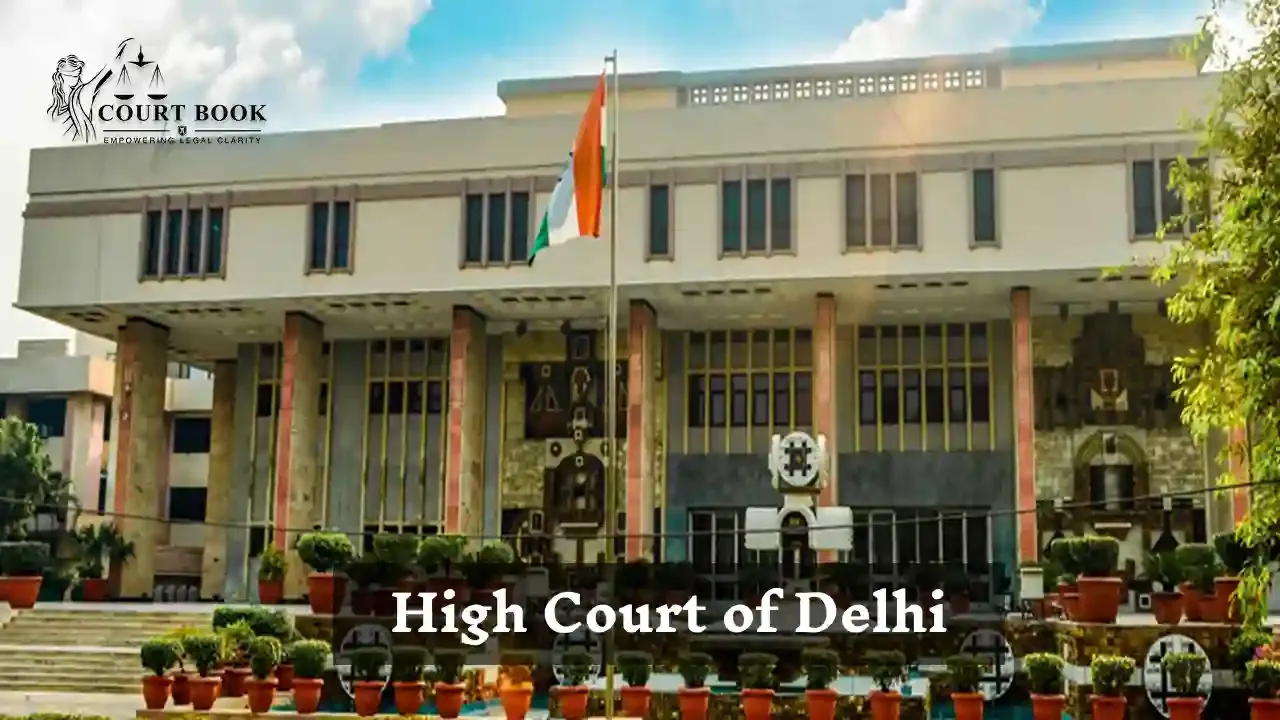
The Delhi High Court has set aside the conviction of the surviving accused in a nearly four-decade-old case involving the death of a married woman who suffered fatal burn injuries in 1988. The Court held that the prosecution failed to prove its case beyond reasonable doubt after finding that the alleged dying declarations and surrounding evidence were not sufficiently reliable to sustain a conviction.
Background of the Case
The appeals challenged a 2002 judgment of the trial court, which had convicted the accused under Sections 302 and 498-A read with Section 34 of the Indian Penal Code. The trial court had sentenced them to life imprisonment for the murder charge along with separate punishment for cruelty.
According to the prosecution, Kamlesh sustained severe burn injuries on October 30, 1988, at her matrimonial home in Delhi. She later died the same day in hospital. The prosecution alleged that she was subjected to cruelty over dowry demands and was deliberately set on fire by her in-laws.
During the pendency of the appeals, Raj Pal (husband) and Phoolwati (mother-in-law) died, resulting in the appeals abating against them.
Court Examines the Dying Declarations
A Division Bench of Justice Navin Chawla and Justice Ravinder Dudeja closely examined the three alleged dying declarations relied upon by the prosecution.
The Bench noted that the first version recorded in the medical records stated that the burns were sustained while cooking. Later statements allegedly implicated the accused.
The Court observed that when multiple dying declarations exist, the Court must carefully test their consistency and reliability before relying on them.
The Bench said:
“The Court should be on guard to see that the statement of the deceased was not a result of tutoring, prompting, or a product of imagination.”
Concerns Over the Evidence
The High Court found several circumstances that created doubt about the prosecution's case.
It observed that the statement allegedly made by the deceased to her aunt was doubtful because medical records had already declared her unfit to give a statement at the relevant time. The Court also noted that another important relative, who could have corroborated the prosecution's version, was never examined during the trial.
The Bench further pointed out that the dying declaration recorded by the Sub-Divisional Magistrate also raised concerns. According to the Court, the SDM did not seek clarification regarding the contradiction between the initial hospital record mentioning accidental burns and the later statement blaming the accused. The Court also found that the possibility of tutoring by relatives before the statement was recorded could not be completely ruled out.
Discussing the manner in which the statement was recorded, the Bench remarked that several questions appeared to be leading in nature, which further reduced the confidence that could safely be placed in the declaration.
Parents' Testimony Weighed by the Court
The Court also considered the evidence of the deceased's parents.
Her father stated that his daughter was happy in her matrimonial home and that there had been no dowry demands. Her mother also did not support the prosecution's allegations.
The Bench observed:
“The parents of the deceased have supported the appellants' case... This also casts a doubt on the case of the prosecution.”
Decision
After evaluating the entire evidence, the High Court concluded that the prosecution had failed to establish the charges beyond reasonable doubt.
The Bench observed:
“The alleged dying declarations made by the deceased are not wholly reliable and have an element of doubt. The other surrounding circumstances alleged by the prosecution also do not form a complete chain... Therefore, we hold that the prosecution has been unable to establish the charge against the appellants beyond reasonable doubt.”
Accordingly, the Court allowed the appeals of the surviving appellants, set aside the judgment of conviction dated October 4, 2002, and the order on sentence dated October 7, 2002, acquitting them of all charges.
Their personal bonds and sureties were also discharged.
Case Details
Case Title: Raj Pal & Anr. v. State (Govt. of NCT of Delhi)
Case Number: CRL.A. 909/2002 and CRL.A. 938/2002
Judge: Justice Navin Chawla and Justice Ravinder Dudeja
Decision Date: 02 July 2026


