

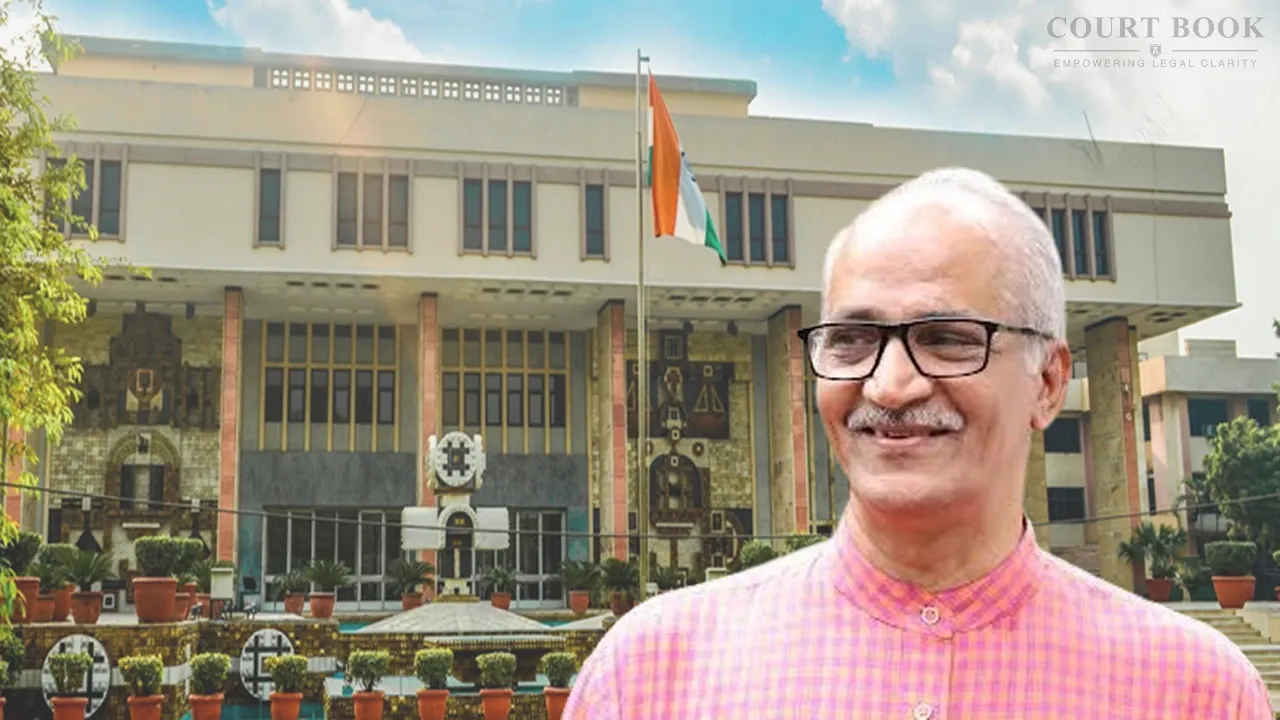
The Delhi High Court on Friday (29 May) dismissed a public interest litigation (PIL) challenging the nomination of BJP leader C. Sadanandan Master to the Rajya Sabha, holding that the Constitution grants broad discretion in such appointments and that courts cannot interfere merely because a petitioner disagrees with the assessment of a nominee's qualifications.
A Division Bench comprising Chief Justice Devendra Kumar Upadhyaya and Justice Tejas Karia found no merit in the challenge and observed that the allegations against the nominated member were speculative and unsupported by evidence.
Background of the Case
The petition was filed by advocate Subhash Theekkadan, who questioned the nomination of C. Sadanandan Master to the Rajya Sabha under Article 80(3) of the Constitution.
The petitioner argued that Article 80(3) permits the nomination of individuals who possess special knowledge or practical experience in fields such as literature, science, art, and social service. According to the plea, Sadanandan Master, an active politician and BJP functionary, did not possess the qualifications contemplated by the constitutional provision.
The PIL sought quashing of the nomination and also requested the court to direct the Union Government to establish transparent guidelines for future nominations.
Court’s Observations
Rejecting the challenge, the Bench noted that Article 80(3) uses the phrase “in respect of such matters as the following,” indicating that the listed categories are illustrative rather than exhaustive.
The court observed,
“The discretion vested in the Hon’ble President of India extends to the nomination of persons possessing special knowledge or practical experience in the fields expressly mentioned therein or in cognate fields relatable thereto.”
The judges further emphasized that terms such as “special knowledge” and “practical experience” are inherently broad and evaluative. Once constitutional discretion has been exercised, courts cannot sit in appeal over that assessment unless there is absolutely no connection between the nominee’s background and the categories contemplated by the Constitution.
Addressing the petitioner’s demand for a more structured nomination process, the court said the Constitution itself does not prescribe any specific procedure or mechanism for identifying nominees.
“The constitutional text of Article 80 neither prescribes any specific procedure for identifying persons to be nominated nor furnishes any further definitional elaboration,” the Bench noted.
Political Background Not a Disqualification
The High Court also rejected the argument that a political background automatically disqualifies a person from being nominated under Article 80(3).
The Bench stated, “The mere circumstance that a nominated member has previously contested elections does not, by itself, render such person ineligible for nomination.”
It added that the categories mentioned in Article 80(3) are broad enough to include individuals with political experience, provided they possess special knowledge or practical experience relatable to the fields covered by the provision, including social service.
Decision
Finding that the petitioner had failed to place any concrete material before the court to demonstrate that C. Sadanandan Master lacked the qualifications required under Article 80(3), the Bench concluded that the challenge rested on assumptions rather than evidence.
The court held that the concerns raised were “speculative in nature and devoid of substance” and dismissed the writ petition.
“No material has been placed before this Court to establish that Respondent No. 3 is not a distinguished person, who has not earned distinction in his field of activity,” the Bench observed while refusing to interfere with the nomination.
The PIL was accordingly dismissed without costs.
Case Details:
Case Title: Subhash Theekkadan v. Union of India & Others
Case Number: W.P.(C) 2600/2026
Judges: Chief Justice Devendra Kumar Upadhyaya and Justice Tejas Karia
Decision Date: May 29, 2026


