

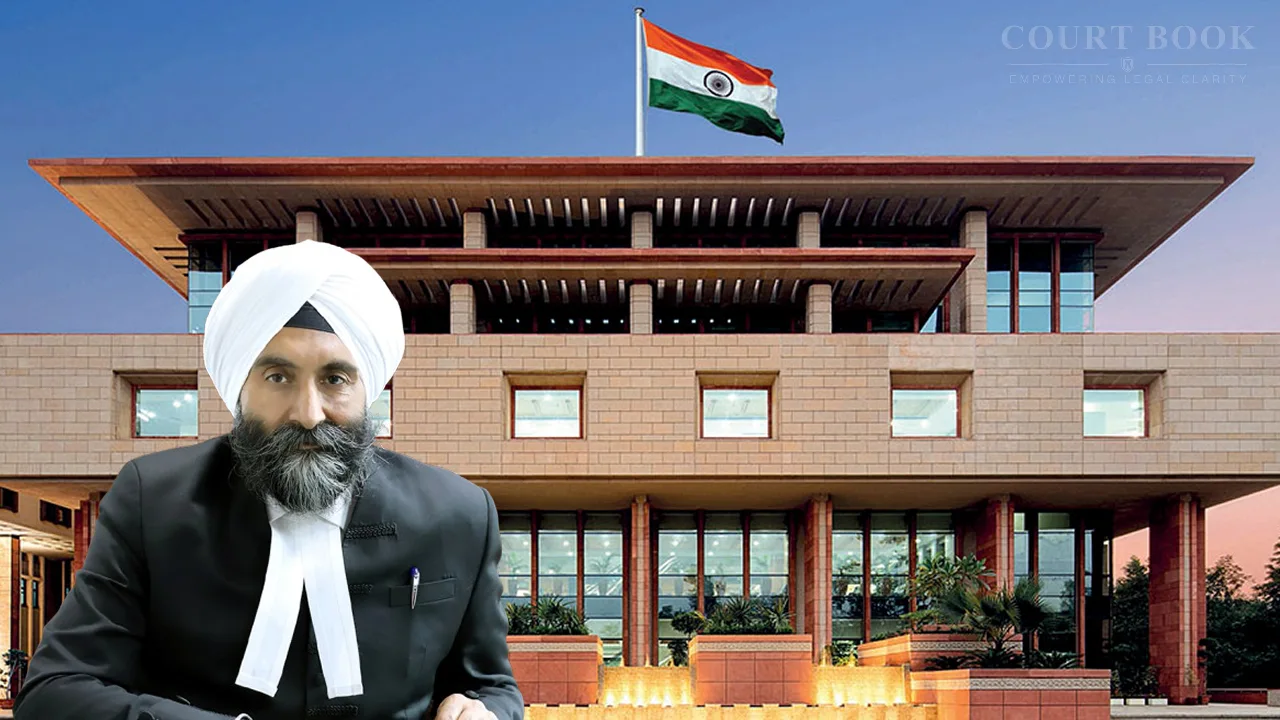
In a significant judgment, the Delhi High Court has acquitted retired Major General Anand Kumar Kapur in a disproportionate assets case registered by the Central Bureau of Investigation (CBI), holding that the prosecution failed to establish its case beyond reasonable doubt. The Court also found that the sanction for prosecution was legally invalid and that the appellant had been denied a fair opportunity to present his defence during trial.
Justice Jasmeet Singh allowed both criminal appeals, setting aside the 2016 conviction, sentence and the consequential confiscation of assets ordered by the trial court.
Background of the Case
Major General Anand Kumar Kapur (Retd.) challenged the judgment dated September 27, 2016, by which a Special Judge at Patiala House Courts convicted him under Sections 13(1)(e) and 13(2) of the Prevention of Corruption Act, 1988 for allegedly possessing assets disproportionate to his known sources of income. He had been sentenced to one year of rigorous imprisonment, fined ₹50,000, and faced confiscation of assets worth ₹2.22 crore.
The CBI case originated from an FIR registered in October 2007 alleging that during the check period from November 14, 1971 to October 10, 2007, the officer had accumulated assets beyond his known income.
Court Observations
The High Court held that a fair trial is an inseparable part of Article 21 of the Constitution and observed that procedural timelines cannot override the accused's right to effectively defend himself.
The bench observed:
"Procedural timelines cannot eclipse the constitutional guarantee of a fair trial under Article 21 of the Constitution of India. The right of an accused to effectively present his defence is not an empty formality but a substantive safeguard forming part of the principles of natural justice."
Justice Jasmeet Singh found that although the prosecution had nearly six months to lead evidence, the defence was effectively given only three days to examine nine witnesses. Four defence witnesses were examined, but the remaining witnesses, including the appellant himself, could not be examined after the trial court closed the defence evidence because of a lawyers' strike. The High Court held that this caused serious prejudice to the appellant and compromised the fairness of the trial.
The Court further remarked that the trial court focused solely on meeting the Supreme Court's timeline for concluding the case without adequately balancing the accused's right to a meaningful defence.
Another major ground on which the conviction failed was the validity of the prosecution sanction.
The High Court noted that important documents, including the appellant's detailed explanations regarding his assets, income and financial transactions, were not placed before the sanctioning authority because the investigating officer considered them "not relevant."
Rejecting this approach, the Court held that an investigating officer cannot decide which defence material should or should not be shown to the sanctioning authority.
The bench observed that the authority responsible for granting sanction must independently examine the complete record, including material favourable to the accused, before deciding whether prosecution should be permitted. By withholding relevant documents, the investigating agency deprived the authority of making an informed decision, rendering the sanction legally unsustainable.
Findings on Disproportionate Assets
The Court also undertook a detailed re-evaluation of the financial calculations made by the trial court.
It found several errors in the computation of income and assets, including the treatment of interest income, rental receipts, business income, loans and other financial transactions. The judgment held that documentary evidence such as bank records, income tax returns and TDS certificates had not been properly appreciated while determining whether the appellant possessed disproportionate assets.
After reassessing the evidence, the High Court concluded that the prosecution had failed to prove that the appellant had accumulated assets disproportionate to his known sources of income beyond reasonable doubt.
Decision
Allowing both appeals, the Delhi High Court concluded that the prosecution sanction was invalid, the appellant had not received a fair opportunity to lead defence evidence, and the evidence was insufficient to sustain the conviction.
Case Details:
Case Title: Major General Anand Kumar Kapur (Retd.) v. CBI
Case Number: CRL.A. 1099/2016 & CRL.A. 86/2017
Judge: Justice Jasmeet Singh
Decision Date: 01 July 2026


