

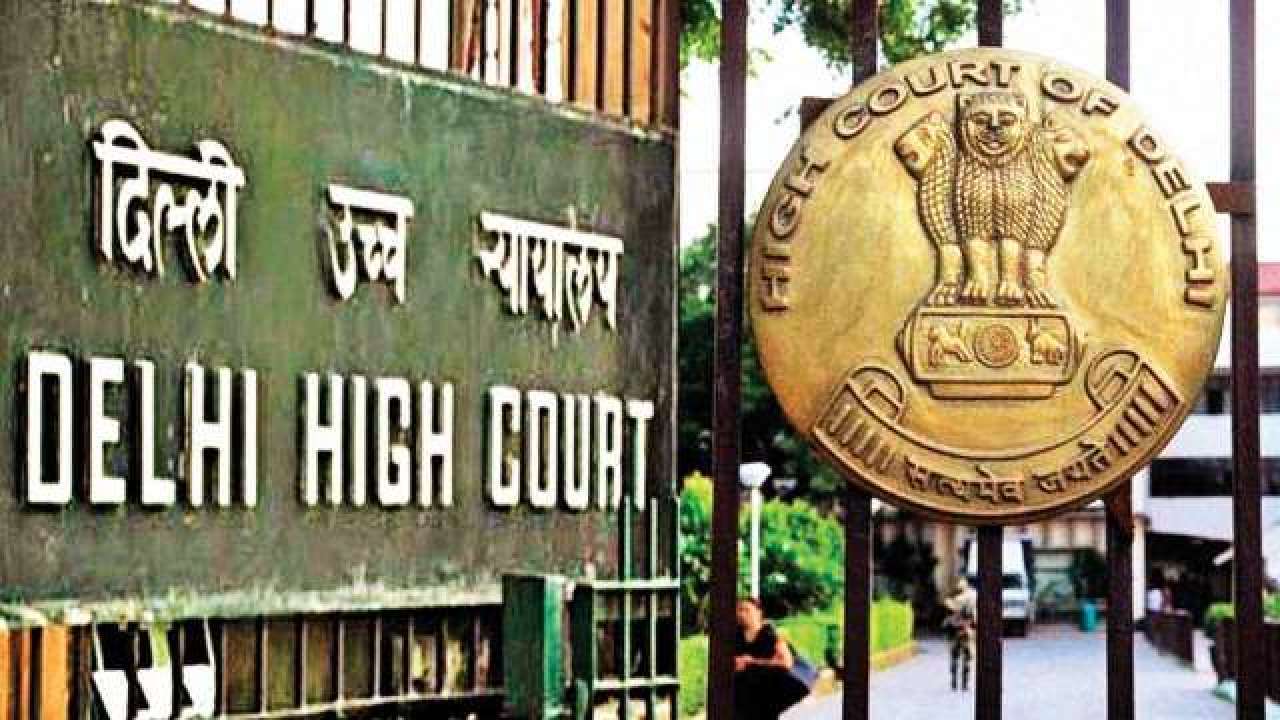
The Delhi High Court has rejected a partition suit filed by a woman seeking a share in agricultural land that belonged to her late father, holding that succession had already opened in 2002 when the Delhi Land Reforms Act governed inheritance of such land. The Court ruled that the 2005 amendment to the Hindu Succession Act could not be applied retrospectively to reopen rights that had already been settled.
Background of the Case
The suit was filed by Santra Devi, who sought partition, declaration and permanent injunction regarding agricultural land situated in Village Siraspur, Delhi. She claimed that the land formed part of a Hindu Undivided Family (HUF) and that, as one of the legal heirs of her father, Late Brahm Dutt, she was entitled to an equal share.
The defendants challenged the suit under Order VII Rule 11 of the Code of Civil Procedure, arguing that the plaint deserved to be rejected because the plaintiff had no legal right over the agricultural land. They contended that after Brahm Dutt's death in November 2002, succession was governed by Section 50 of the Delhi Land Reforms Act, under which the land devolved upon his two sons as the male lineal descendants.
Justice Mini Pushkarna noted that the plaintiff herself had admitted in the plaint that the property was agricultural land and that it remained governed by the Delhi Land Reforms Act until the village was urbanised in 2017.
Since Brahm Dutt died in 2002, the Court held that succession opened before the Hindu Succession (Amendment) Act, 2005 came into force. Therefore, the rights of inheritance had already crystallised under the Delhi Land Reforms Act.
The Court observed:
"Succession had already taken place on 30th November, 2002, and as per Section 50 of the DLR Act, bhumidhari rights came to be possessed only by his two sons."
Referring to earlier decisions of the Delhi High Court and the Supreme Court, the Court reiterated that the 2005 amendment extending equal inheritance rights to daughters in agricultural land operates prospectively and does not reopen successions that had already taken effect before 9 September 2005.
HUF Plea Found Unsupported
The plaintiff also argued that the property belonged to a Hindu Undivided Family and that her father was its Karta. However, the Court found that this assertion was unsupported by material facts or documents.
Justice Pushkarna observed that merely describing a property as HUF property is not enough. A litigant must specifically plead how and when the HUF came into existence and how the property became part of it.
The Court observed:
"Only a bald assertion that the property is part of an HUF has been made."
The Court further noted that there was no pleading explaining whether the HUF existed before 1956 or whether the property had later been brought into the common family pool. No documentary material was produced to support the claim that the land was HUF property.
No Cause of Action Disclosed
The Court held that the plaint failed to disclose a valid cause of action. It observed that a bare assertion of an HUF, without supporting material facts, could not create enforceable rights.
Quoting settled legal principles, the Court said that clever drafting cannot be used to create an illusory cause of action merely to avoid rejection of a plaint under Order VII Rule 11 of the CPC.
The Court also rejected the plaintiff's reliance on the Supreme Court's decision in Vineeta Sharma v. Rakesh Sharma, holding that the judgment dealt with coparcenary rights in HUF property and was not applicable because the plaintiff had failed to establish that the disputed agricultural land was HUF property.
Court's Decision
Allowing the defendants' application under Order VII Rule 11 of the Code of Civil Procedure, the Delhi High Court rejected the plaint and disposed of the suit.
The Court concluded that the subsequent acquisition of the land by the Delhi Metro Rail Corporation or the urbanisation of the village in 2017 could not alter inheritance rights that had already vested under the Delhi Land Reforms Act when the succession opened in 2002.
Case Details
Case Title: Santra Devi v. Santosh Kaushik & Others
Case Number: CS(OS) 188/2024 & I.A. 31975/2024
Judge: Justice Mini Pushkarna
Decision Date: 30 May 2026


