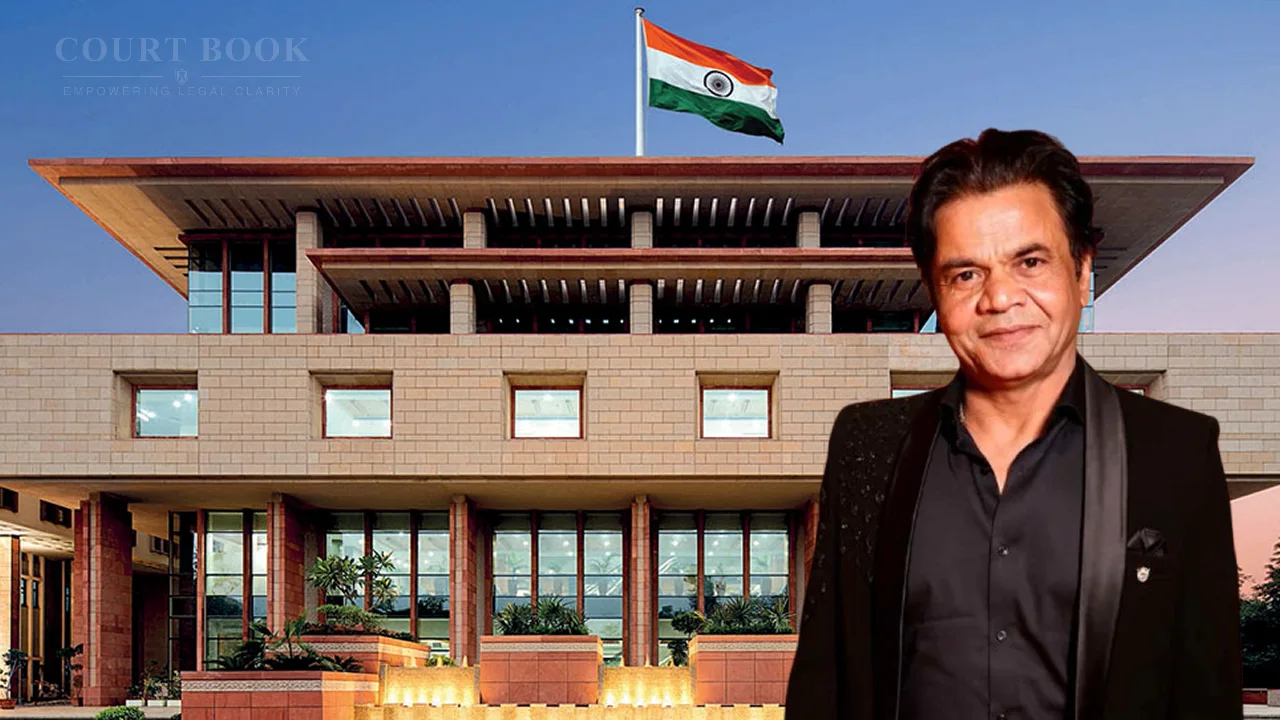
The Delhi High Court has refused to quash seven cheque dishonour cases against actor Rajpal Naurang Yadav and co-petitioner Radha Rajpal Yadav, holding that they could not reopen criminal proceedings years after their conviction by relying on a later settlement agreement. While upholding the convictions under Section 138 of the Negotiable Instruments Act, the Court granted limited relief by adjusting ₹2.25 crore already paid to the complainant while recalculating the fine.
Background of the Case
The dispute arose from a series of agreements executed in 2010 between Murli Projects Pvt. Ltd. and Shree Naurang Godavari Entertainment Ltd., a company associated with Rajpal Yadav, for financing the film Ata Pata Lapata. According to the record, Murli Projects invested ₹5 crore, while the parties later entered into multiple supplementary agreements extending repayment timelines and revising the outstanding amount. Security cheques issued under these arrangements subsequently became the subject of seven complaints under Section 138 of the Negotiable Instruments Act after they were dishonoured.
The petitioners argued that the cheques were only security instruments and that a later consent agreement executed in 2013, followed by a consent decree in 2016, had replaced the earlier liability. They contended that the original cheque bounce complaints no longer survived once the parties entered into the fresh settlement.
Revision Petitions Held Time-Barred
Justice Swarana Kanta Sharma first examined the challenge to the conviction recorded by the trial court in 2018 and affirmed by the Sessions Court in 2019.
Take CourtBook Everywhere
Access your account on the go with our mobile app.



The Court noted that the revision petitions had been filed after an extraordinary delay of 1,894 days. It found that the explanation offered by the petitioners—that they had remained under the mistaken belief that their conviction had already been challenged—was unsupported by the record and failed to constitute sufficient cause.
The Court observed:
“The explanation offered is devoid of bona fides and falls short of the standard required for condoning such an inordinate delay.”
Accordingly, the applications seeking condonation of delay were dismissed, and the criminal revision petitions challenging the conviction were also rejected.
Court Rejects Plea to Quash Cheque Bounce Cases
The High Court then considered the petitions seeking quashing of the seven complaint cases.
The petitioners relied on the 2013 consent agreement, arguing that the subsequent settlement had extinguished the earlier cause of action and that, if the settlement failed, the complainant could only pursue remedies based on the fresh settlement cheques or civil proceedings.
The Court was not persuaded.
It held that the complaints had already culminated in convictions years earlier, making it impermissible to invoke the High Court's inherent powers merely to indirectly challenge those convictions. The Court further noted that the consent terms themselves contemplated withdrawal of the pending criminal complaints only upon full payment under the settlement, a condition that admittedly was never fulfilled.
Observations on Conduct During Proceedings
The judgment also records the Court's observations regarding the conduct of petitioner Rajpal Yadav during the proceedings.
The Court noted that multiple opportunities had been granted to facilitate an amicable settlement and that the sentence had even been suspended on assurances that payments would be made. However, according to the Court, the promised settlement was never completed.
Referring to a statement made during the final hearing, the bench recorded that the petitioner stated he was unwilling to make any further payment and would rather undergo imprisonment.
Justice Sharma remarked:
“Law is not a script that can be rewritten at the will of an actor.”
The Court also declined the request for release on probation, observing that the circumstances did not justify such discretionary relief.
Sentence Modified Only to Adjust Amount Already Paid
While finding no error in the Sessions Court's judgment dated 29 May 2024, the High Court noted that the petitioners had deposited an additional ₹2.25 crore during the pendency of the proceedings, which had already been released to the complainant.
The Court held that this amount deserved adjustment while computing the fine.
Accordingly, Rajpal Naurang Yadav was directed to undergo simple imprisonment for three months in each of the seven complaint cases and pay a fine of ₹1.05 crore in each case, with default imprisonment of six months. The substantive sentences will run concurrently.
Radha Rajpal Yadav was directed to pay a fine of ₹5,51,380 in each complaint case, with default imprisonment of three months. The sentences in all seven cases will also run concurrently.
Except for the modification in the quantum of fine to account for the amount already paid, the Sessions Court's judgment was affirmed.
Decision
The Delhi High Court dismissed the revision petitions as barred by limitation, upheld the convictions under Section 138 of the Negotiable Instruments Act, refused to quash the cheque dishonour complaints, and modified the sentence only to the extent of adjusting ₹2.25 crore already paid by the petitioners towards the outstanding liability.
Case Details:
Case Title: Sh. Rajpal Naurang Yadav & Anr. vs. M/s Murli Projects Pvt. Ltd. & Anr.
Case Number: CRL.M.C. 4870/2024 & connected matters; CRL.REV.P. 797/2024 to 803/2024
Judge: Justice Swarana Kanta Sharma
Decision Date: 10 July 2026


-300x169.webp)

-300x169.webp)