

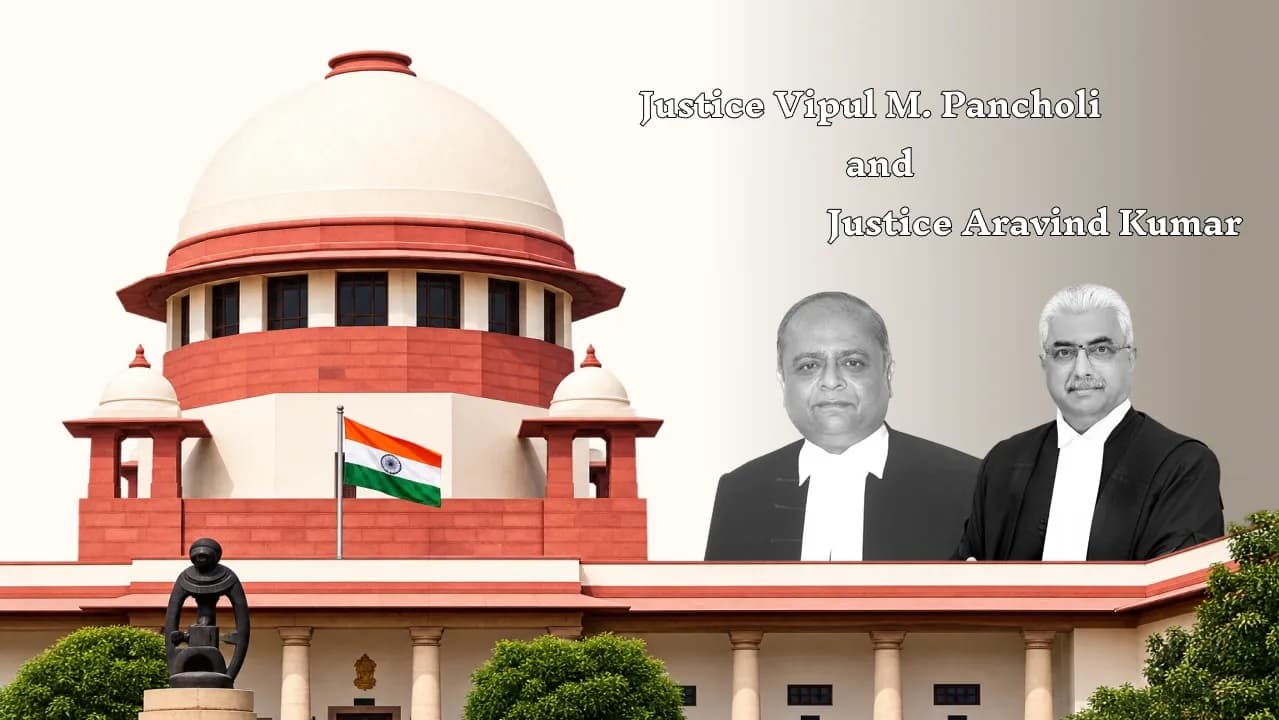
The Supreme Court on September 10, allowed an appeal filed by the Indian Kayaking and Canoeing Association and directed the Jammu & Kashmir authorities to issue the necessary relieving order, No Objection Certificate (NOC) and permission to government employee Bilquis Mir so that she can join the Indian National Kayaking and Canoeing Team as Coach/Chief Coach for the 2026 Asian Games.
A bench of Justice Aravind Kumar and Justice Vipul M. Pancholi set aside the Jammu & Kashmir and Ladakh High Court judgment that had dismissed the Association’s writ petition. The Supreme Court held that although a government employee has no automatic right to deputation or foreign travel, the authorities must still consider such requests fairly, reasonably and within a reasonable time.
Background of the Case
The Indian Kayaking and Canoeing Association, a recognised National Sports Federation, had selected Mir for the coaching programme of the Indian National Kayaking and Canoeing Team ahead of the Asian Games 2026.
The Association first requested the Jammu & Kashmir authorities on February 3, 2026, to make her services available for the National Coaching Camp. Reminders followed on March 1 and April 2. With no decision forthcoming, the Association approached the High Court on April 30 seeking permission, relieving orders and an NOC for Mir.


The High Court’s Single Judge initially granted provisional permission on May 6, subject to the final outcome of the case. However, the Government later issued an order dated June 19 refusing permission, referring among other things to pending departmental proceedings, previous foreign travel and issues concerning required clearances.
By then, Mir had also lost an opportunity to officiate at the ICF Canoe Sprint World Cup in Hungary, which was scheduled for May 8 to 10.Supreme Court’s Observations
The Supreme Court agreed with the High Court on one limited point: neither a government employee nor an organisation seeking the employee’s services can claim an absolute right to deputation or foreign travel.
However, the Court drew a distinction between having no guaranteed right to approval and having no right to a fair and timely decision.
" The absence of an absolute right to obtain a favourable administrative decision cannot be equated with the absence of a right to fair, reasonable, non-arbitrary and timely consideration of a request," the Court observed.
The bench noted that the request was not for an indefinite private engagement. It concerned the preparation of an Indian national team for a recognised international sporting event. According to the Court, this time-sensitive context was important while considering the authorities’ response.
The Court pointed out that the first request was made on February 3, followed by reminders, but no decision was taken before the Association had to approach the High Court. It said that in matters involving sporting events with fixed schedules, administrative delay can itself defeat the purpose of the request.
The Supreme Court also examined the effect of the High Court’s May 6 interim order. It held that an operative order of a constitutional court remains binding unless it is modified, stayed or clarified by the competent court.
"An executive authority cannot, during the subsistence of a judicial direction, render that direction ineffective merely by taking an administrative decision inconsistent with it," the bench said.
The Court further found that the June 19 Government Order mainly dealt with foreign travel and did not independently address the continuing request to release Mir for the National Coaching Programme.
It also rejected treating the pending departmental inquiry as an automatic disqualification. The Court clarified that such proceedings could continue independently in accordance with law.
Supreme Court’s Decision
The Supreme Court allowed the appeal and set aside the High Court judgment insofar as it denied relief concerning Mir’s current national sporting assignment.
It also set aside the June 19 Government Order to the extent that it denied permission, NOC and relieving orders for the national sporting assignments. The Jammu & Kashmir authorities were directed to issue the required documents forthwith and, in any event, by September 15, 2026.
The permission will enable Mir to join and discharge the remaining coaching assignment and accompany and assist the Indian National Team in connection with the Asian Games 2026. The Court directed that her absence during the assignment would not be treated as unauthorised absence.
The Court clarified that its order does not create any general right for government employees to seek deputation, foreign travel or release for outside assignments, nor does it affect any departmental proceedings against Mir.
The High Court’s direction requiring the Government of India to develop an enforceable framework for such sporting assignments was also left undisturbed.



