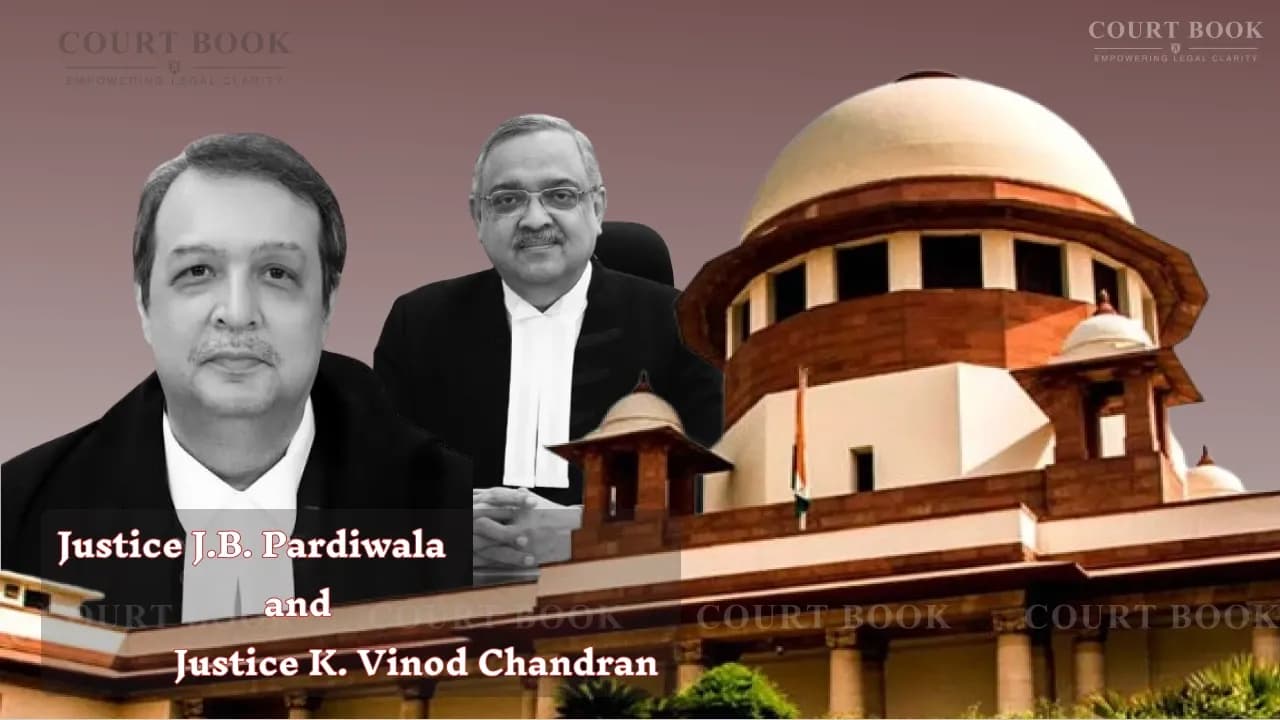
A Bench of Justice J. B. Pardiwala and Justice K. Vinod Chandran allowed Criminal Appeal No. 1223 of 2022 on September 8, 2026, giving the appellants the benefit of doubt.
Background of the Case
The case arose from a quarrel between two families over the blockage of a drain, which had allegedly caused waterlogging outside the deceased's house. According to the prosecution, the dispute escalated into a physical confrontation during which one accused allegedly fired at the deceased, while the other allegedly fired at members of the opposing family.
Five persons had initially faced prosecution. Three were acquitted, while two were convicted. Their convictions under Section 302 read with Section 34 of the Indian Penal Code and Section 27 of the Arms Act were upheld by the High Court, leading to the appeal before the Supreme Court.
The Supreme Court closely examined the testimony of the alleged eyewitnesses, most of whom were close relatives of the deceased. The Court noted differences concerning the manner in which the injured persons and the deceased were taken away from the scene.
The First Information Statement stated that the deceased's body was taken to the police station, while one of the eyewitnesses spoke of the body being taken to the hospital. The Court found that the inquest report and investigating officer supported the former version.
The evidence of two alleged injured eyewitnesses also came under scrutiny. Several details stated by them during their evidence had not appeared in their earlier statements to the police. The medical evidence, meanwhile, did not fully support the extent of injuries described by the witnesses.
The Bench also pointed to significant gaps in the investigation. The police did not prepare a map of the alleged scene of occurrence, despite the importance of locations such as the handpump and buffalo shed to the eyewitness accounts.
The alleged weapons were not recovered, and the firearm licence said to belong to one accused was not produced. The Court observed that the licence could have helped establish the nature of the firearm and permitted further forensic examination.
"Due to the discrepancies and the inconsistencies, we are unable to place faith on the oral testimony of eyewitnesses. In that circumstance, the reasonable doubt regarding a hypothesis of innocence assumes relevance."
The post-mortem doctor stated that the fatal gunshot injury could have allowed the deceased to survive for three to six hours. The Supreme Court considered this significant because the body was taken to the police station rather than the hospital.
The Bench also noted that the surrounding circumstances did not establish the prosecution version with sufficient certainty. While the Court clarified that relatives cannot be treated as unreliable merely because of their relationship with the deceased, it held that the inconsistencies in this case required closer scrutiny.
Finding that the circumstances did not rule out a reasonable possibility of innocence, the Supreme Court gave both appellants the benefit of doubt and acquitted them.
The Court directed that they be released forthwith if they remained in custody, unless required in another case. If they were on bail, their bail bonds were ordered to stand cancelled.
The criminal appeal was accordingly allowed.