

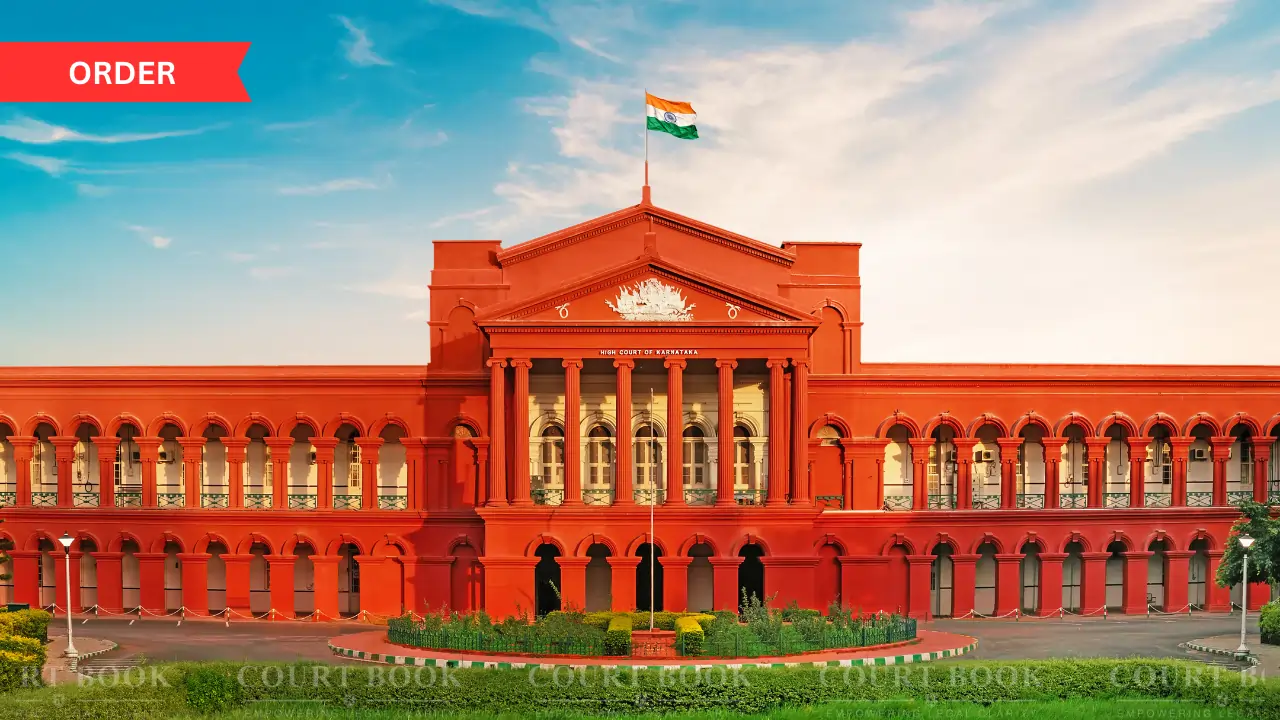
The Karnataka High Court has ruled that a private employer cannot ordinarily invoke the High Court's writ jurisdiction to stop a workers' union from going on strike during pending conciliation proceedings. Instead, the employer must approach the Industrial Tribunal, which has the authority under the Industrial Relations Code, 2020, to decide whether a proposed strike violates the statutory prohibition.
Justice Anant Ramanath Hegde delivered the judgment on July 24, 2026, while dismissing a writ petition filed by Bosch Automotive Electronics India Pvt. Ltd. against the Robert Bosch Automotive Electronics Employees Union.
Background of the Case
The dispute arose after the employees' union submitted a charter of demands on February 23, 2026, and issued a strike notice proposing to begin the strike on or after March 9, 2026. The company approached the Deputy Labour Commissioner, following which conciliation proceedings commenced on March 3, 2026.
The company argued that because conciliation proceedings were still pending, Section 62(1)(d) of the Industrial Relations Code, 2020 prohibited any strike during that period and for seven days thereafter. It also contended that such a strike would become illegal under Section 63 of the Code and sought directions from the High Court restraining the union from proceeding with the proposed strike.
An interim order had earlier restrained the union from proceeding with the strike while the petition remained pending.
Company's Arguments
The employer maintained that no effective statutory remedy was available during ongoing conciliation proceedings and therefore the writ petition was the only practical remedy. It also argued that the recognised trade union was bound by the Industrial Relations Code and that the High Court could intervene to prevent violation of statutory provisions.
The union, however, opposed the petition, arguing that it was not a "State" or a public authority under Article 12 of the Constitution. It submitted that disputes relating to industrial relations must be resolved through the statutory framework provided under the Industrial Relations Code and that the writ petition itself was not maintainable.
Court's Observations
Justice Hegde examined whether a writ petition could be maintained against a private trade union and whether an employer had any remedy during pending conciliation proceedings.
The Court observed that the maintainability of a writ depends upon whether the respondent performs a public duty. Since the workers' union was neither a State instrumentality nor a body discharging public functions, the ordinary writ jurisdiction could not be invoked against it.
The bench observed,
"The writ petition against respondent No.2-workers' Union to restrain the proposed strike during the pendency of conciliation proceeding, as a general rule is not maintainable."
At the same time, the Court clarified that the Industrial Relations Code itself provides a remedy. It held that while Section 62 prohibits strikes during pending conciliation proceedings, the Industrial Tribunal has jurisdiction to determine whether a proposed strike violates that statutory prohibition without examining the merits of the underlying industrial dispute.
The Court explained that the Tribunal's role is limited to deciding whether the strike falls foul of Section 62 and granting appropriate interim protection during the prohibited period. Such proceedings do not require adjudication of the broader labour dispute pending before the Conciliation Officer.
Justice Hegde further observed,
"The Tribunal... can decide the question of the validity of the strike or lock-out during the conciliation proceedings."
Court's Decision
Dismissing the writ petition as not maintainable, the Karnataka High Court granted liberty to Bosch Automotive Electronics India Pvt. Ltd. to approach the competent Industrial Tribunal under the Industrial Relations Code, 2020, if the statutory prohibition under Section 62(1)(d) continued to operate.
The Court directed that any such proceedings before the Tribunal must remain confined to examining whether the proposed strike violates Section 62(1)(d) and should not extend to deciding the merits of the industrial dispute itself. It also ordered that the period during which the High Court's interim stay against the strike remained in force would be excluded while calculating the statutory time under Section 62.
All questions concerning the substantive industrial dispute were left open for adjudication before the appropriate forum.
Case Details
Case Title: Bosch Automotive Electronics India Pvt. Ltd. v. Addl. Labour Commissioner & Robert Bosch Automotive Electronics Employees Union
Case Number: Writ Petition No. 8044 of 2026 (L-RES)
Judge: Justice Anant Ramanath Hegde
Decision Date: July 24, 2026


