The Supreme Court has held that a financier’s contractual right to repossess a vehicle cannot be exercised outside the safeguards prescribed by law and the Reserve Bank of India (RBI). The Court found that the repossession of a commercial vehicle at around 1 a.m., without the required seven-day notice and by breaking its steering lock, did not comply with the applicable contractual and regulatory requirements.
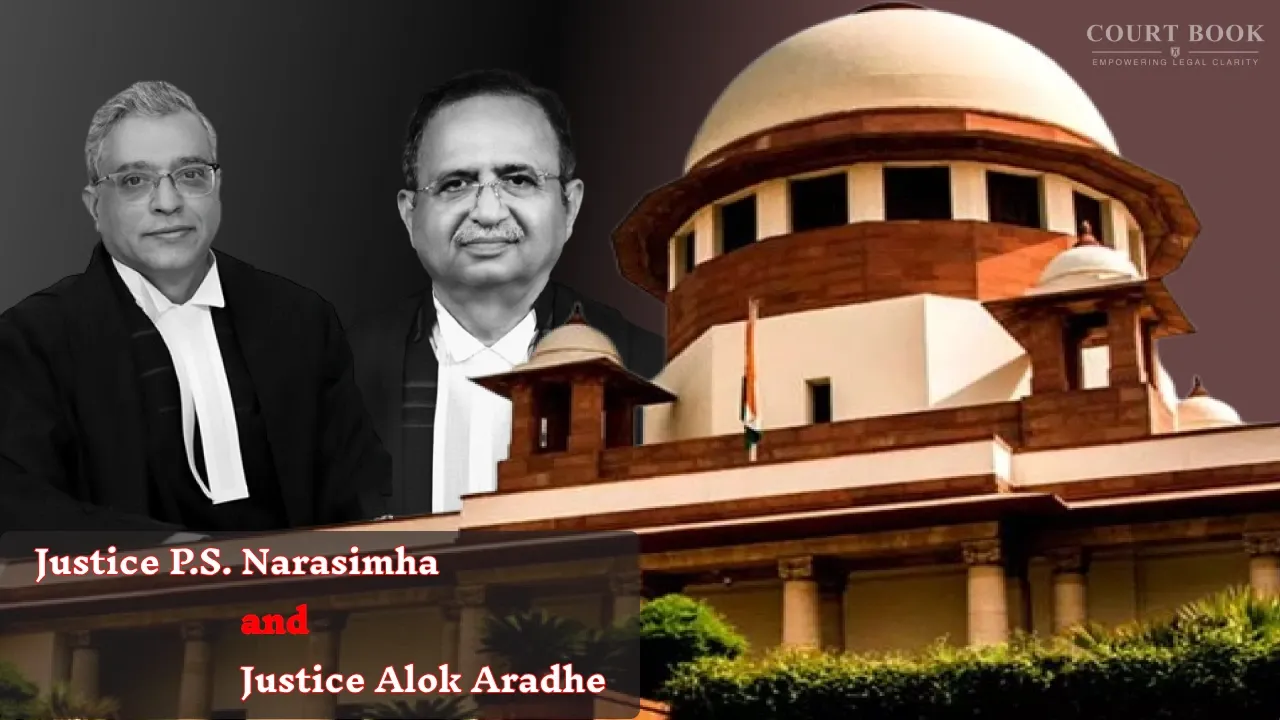
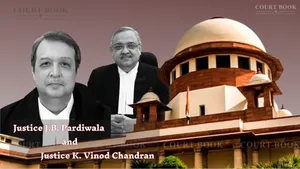
The judgment was delivered in Hari Dutta Sharma v. State of U.P. & Ors., on September 16, 2026. The Bench comprised Justice Pamidighantam Sri Narasimha and Justice Alok Aradhe.
Background of the Case
Hari Dutta Sharma had obtained a commercial vehicle loan from Cholamandalam Investment and Finance Company Limited in March 2019 for a Tata SFC 407 truck. The sanctioned loan was ₹10,40,080.75, of which ₹9.36 lakh was initially disbursed. The loan was repayable in 75 monthly instalments and was secured by hypothecation of the vehicle. A supplementary loan was later extended in June 2021.
After repeated defaults, the financier issued demand and other notices. The vehicle had also earlier been repossessed but was released after Sharma paid ₹86,726 and assured the company that he would regularise the account.
According to Sharma, on April 9, 2023, at about 1 a.m., unidentified persons broke the vehicle’s steering lock while it was parked at a godown in Ayodhya and drove it away. He lodged a lost article report and an e-FIR, believing that the vehicle had been stolen. He later learnt through a legal notice that the company claimed to have taken possession of the vehicle and sold it on August 31, 2023, for ₹4.50 lakh.
The Allahabad High Court dismissed his writ petition on April 4, 2025, noting the loan default and the delay in approaching the Court. Sharma then approached the Supreme Court.
Supreme Court Examines Repossession Clause
The Supreme Court examined Article 11 of the loan agreement, which dealt with repossession. The clause contemplated a seven-day notice before possession could be taken. It also contained provisions concerning post-repossession notice and sale of the vehicle.
The Court held that the clause, as drafted, gave the financier excessive unilateral discretion, including the ability to waive notice and enter places where the vehicle might be located.
The Bench observed:
“A contractual term which permits one party unilaterally to dispense with the procedural safeguards designed to protect the other cannot be regarded as being in conformity with either the RBI Guidelines or the general contractual requirement of fairness.”
The Court concluded that Article 11 was not consistent with the RBI Guidelines or the Indian Contract Act, 1872.
Court Finds Repossession Was Not Lawful
On the facts, the Supreme Court found that no seven-day notice had been issued before the vehicle was repossessed. It further noted the appellant’s unrebutted case that the steering lock had been broken at about 1 a.m.
The Court also took note of the fact that the possession memorandum did not carry Sharma’s signature. It held that these circumstances showed that the vehicle had been taken without following the required legal procedure.
The Court further rejected the High Court’s approach on delay, noting that Sharma had lodged a report on the very day of the incident and had subsequently pursued legal remedies. It also noted that traffic challans continued to be issued in respect of the vehicle even after the company claimed to have sold it.
Supreme Court’s Decision
The Supreme Court quashed and set aside the Allahabad High Court’s order. Since the vehicle had already been sold, the Court did not set aside the sale. However, it held that the appellant was entitled to compensation after finding that the manner of repossession had affected his livelihood and violated Articles 14 and 21 of the Constitution.
The Court directed Cholamandalam Investment and Finance Company Limited to close both loan accounts and refund the ₹4.50 lakh sale proceeds to Sharma, along with 6% annual interest from the date of sale until payment.
It also awarded ₹10 lakh as compensation for mental agony and loss of livelihood and imposed ₹50,000 in costs. The RBI was separately directed to take effective steps to ensure compliance by NBFCs and scheduled commercial banks with its applicable recovery guidelines.





-300x169.webp)


-300x169.webp)