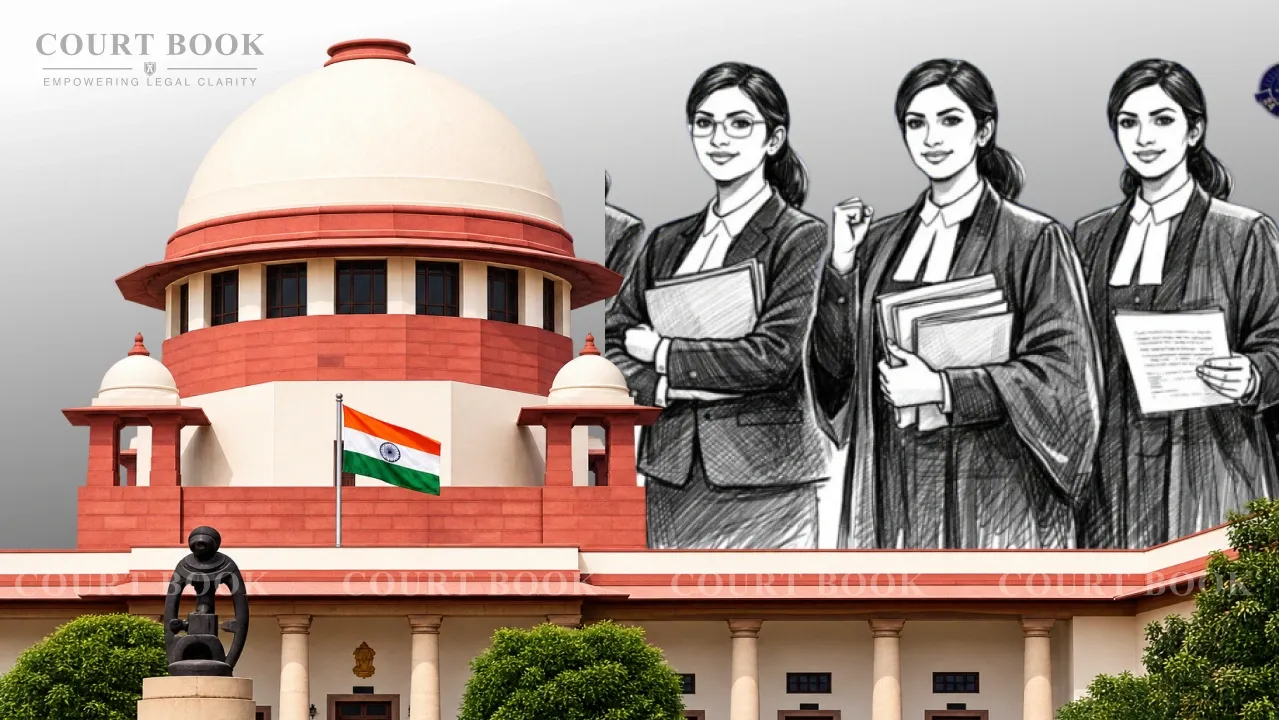
The Supreme Court has clarified the procedure for co-opting women members to State Bar Councils (SBCs), while explaining who can be considered eligible under its earlier directions. The order was passed on September 9, 2026, in Swati Sinha & Ors. v. Union of India & Ors.
In its December 8, 2025 order, the Court had directed that 30% of the total seats in State Bar Councils should be represented by women, with 20% filled through election and 10% through co-option. Subsequently, on August 4, 2026, it directed that two women candidates for co-option should be either former women Judges of the jurisdictional High Court or senior women members of the Bar having fair standing and belonging to the concerned State, States or Union Territories.
The applications sought changes to the August 4 directions, including a proposal that elected SBC members should select the two women members through a transparent process. Questions were also raised about unsuccessful women candidates, the meaning of “senior”, and the eligibility of former High Court Judges.
The Court clarified that women advocates who contested SBC elections but were unsuccessful are also eligible for co-option. It further explained:
"The use of the word “senior” ... is not to be construed as only those persons who are designated as ‘senior advocates’."
According to the Court, the term refers to a woman who has practised for a substantially long period and is found suitable by elected SBC members and shortlisted by the concerned Chief Justice.
The Court also held that Article 220 does not prevent former High Court Chief Justices or Judges from being co-opted into the respective State Bar Councils, since such membership does not require them to resume practice before the High Court.
For Tripura, the Court noted that only one woman member would be co-opted because its State Bar Council has 15 members.
The Miscellaneous Applications were accordingly disposed of.



 chief. Eknath Shinde – Shiv Sena leader-300x169.webp)