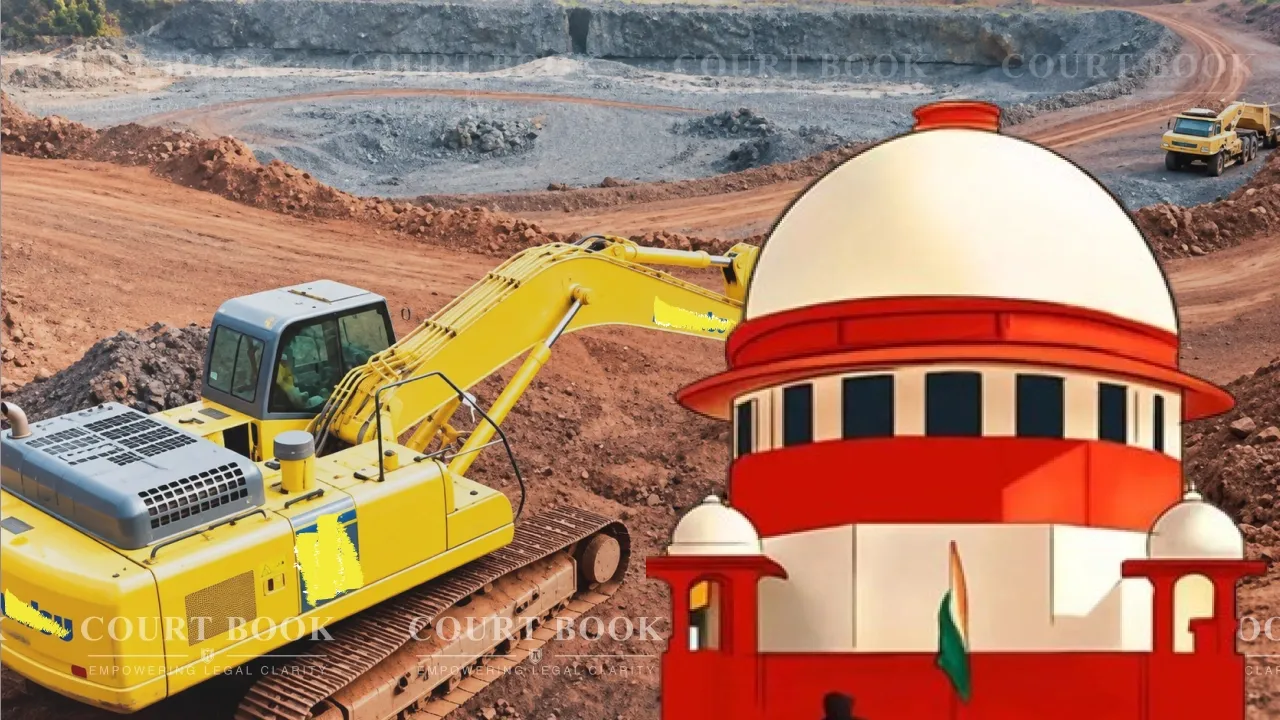
The Supreme Court laid down a detailed set of conditions governing the sale of iron ore lying with lessees whose mining leases in Karnataka have expired, and also permitted mining companies to combine leases of different categories with adjoining virgin forest land for future auctions.
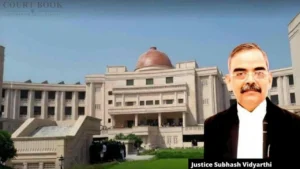
A bench of the Chief Justice of India, Justice Joymalya Bagchi and Justice V. Mohana passed the order in the long-running PIL filed by Samaj Parivartana Samudaya against the State of Karnataka over illegal mining, along with a connected special leave petition.
Senior Advocate Shyam Divan, who has been assisting the court as amicus curiae, placed a note before the bench sorting the scores of pending applications into six broad categories, drawing on a recent report of the Central Empowered Committee. Monday's order dealt with two of these categories - mineral left over from expired leases, and amalgamation of mining blocks for auction.
On the first issue, the amicus pointed out that mining rules require an erstwhile lessee to remove excavated ore within six months of a lease expiring, failing which it becomes government property. But since lessees had earlier been barred from selling ore on their own under a court-monitored e-auction system, he suggested a way out — letting them sell the mineral, or claim its value if strict conditions were met.
The court accepted all eleven conditions suggested by the amicus as the governing framework. In simple terms, a lessee can sell leftover mineral, or claim its value, only if:
- The lessee had already approached the court seeking permission to sell the mineral before the lease expired, or immediately after.
- The lease falls under Category A or Category B, as classified by the court's 2013 judgment.
- For Category B leases, the CEC-approved Rehabilitation & Resettlement (R&R) plan has been fully implemented.
- Mining operations have been formally approved to resume, as per the court's 2012 and 2013 orders.
- The Mine Progressive Annual Plan (MPAP) has been approved by the CEC.
- For Category B leases, the guarantee money for the R&R plan and compensation has been deposited with the Monitoring Committee.
- The mineral being sold was already recorded in returns filed with the Indian Bureau of Mines before the lease expired.
- The lessee held valid Environmental and Forest Clearances at the time the lease expired.
- The total mineral already sold plus what remains to be sold does not exceed 5% of the stock declared to the IBM before September 2011.
- The sale does not involve mineral extracted or processed from overburden dumps.
- The sale does not involve mineral lying in stockyards, which is governed separately by a 2012 court order.
"We find merit in, and accordingly accept and approve all the eleven conditions... as the governing framework for permitting sale or disposal of mineral excavated during the subsistence of expired mining leases," the bench recorded, adding that no relaxation would be granted except by its own order.
Karnataka's Advocate General was given two weeks to respond on applications concerning one particular lease where all conditions were claimed to be fulfilled. The remaining disputed applications were sent back to the CEC for fresh scrutiny.
On amalgamation, the amicus proposed letting leases of Category A, B and C be merged with virgin forest patches into single compact blocks for auction, provided no mining touched the forest portion without clearance under the Forest (Conservation) Act. Advocate Prashant Bhushan opposed this, arguing it would open ecologically sensitive forest land to mining and let a handful of large firms corner the industry.
The bench allowed amalgamation but ring-fenced the forest land.
"Virgin forest land stands on a distinct footing, and its inclusion within an amalgamated block cannot be treated as clearing the way for mining therein," it held, adding that a composite lease would not confer any right to mine portions lacking clearances.
The court also permitted transfer of earlier clearances to new auction-purchasers under Section 8B of the mining law, and disposed of related applications accordingly. It separately closed an application concerning a leased plot's revenue-versus-forest status, asking the Karnataka High Court to decide the question within three months.
The matter is next listed for September 29, 2026.
Case Details
Case Title: Samaj Parivartana Samudaya & Ors. v. State of Karnataka & Ors.
Case Number: Writ Petition (Civil) No. 562/2009; SLP(C) Nos. 3585-3586/2024
Judge: Hon’ble the Chief Justice, Justice Joymalya Bagchi and Justice V. Mohana
Decision Date: September 8, 2026