The Chhattisgarh High Court has set aside a ₹6,12,360 compensation award granted to Smt. Nanda Soni following the death of her father, holding that a married daughter does not fall within the statutory definition of a “dependant” under the Employees’ Compensation Act, 1923, in the circumstances of the case.
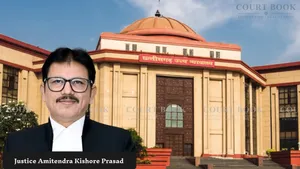
Justice Naresh Kumar Chandravanshi delivered the judgment on September 2, 2026, while deciding two cross-appeals arising from the same Labour Court award. The Court allowed the employer’s appeal and dismissed Nanda Soni’s appeal seeking enhancement of compensation and interest.
Background of the Case
The dispute arose from the death of Padum Bahadur Soni, who was alleged to have been working with M/s Suraj Pulses Industries. On April 26, 2015, a factory boundary wall collapsed on him during the course of employment. He suffered serious injuries and died the same day.
His wife, Suraji Bai Soni, initially filed a compensation claim under Section 22 of the Employees’ Compensation Act. The employer denied that Padum Bahadur had been employed by the establishment.
During the proceedings, Suraji Bai died on May 10, 2021. Her married daughter, Nanda Soni, sought substitution in her place. Although the employer objected, arguing that a married daughter could not be treated as a dependant under the Act, the Labour Court allowed the substitution in May 2022. It subsequently awarded ₹6,12,360 with 10% annual interest from the date of filing of the claim.
Both sides approached the High Court. Nanda sought higher compensation-related interest and penalty, while the employer challenged the award itself.
Court’s Observation
The High Court examined Section 2(1)(d) of the Employees’ Compensation Act, which defines who can be treated as a “dependant”. The provision specifically includes an unmarried daughter, while a married daughter can fall within the specified category only in limited circumstances, such as where she is a minor and adopted, or widowed and a minor.
The Court found that Nanda was undisputedly a married daughter and that there was no evidence showing that she came within any of the exceptions provided by the statutory definition.
"The right to claim statutory compensation under the Act of 1923 is limited to the statutory 'dependants' of the deceased workman. Had an award been passed in favour of Suraji Bai Soni during her lifetime, the compensation amount would have formed part of her estate, and the Appellant could have claimed the same in the capacity of a legal representative. However, since the Original Claimant died during the pendency of the claim proceedings prior to the passing of any award, the cause of action did not survive to the Appellant, who is not a 'dependant' under Section 2(1)(d) of the Act of 1923."
The Court also noted that compensation ordinarily becomes due from the date of the accident and that Section 4A(3) provides for 12% interest where compensation is not paid within the prescribed period. However, since the award itself was found legally unsustainable because of Nanda’s status, the Court held that the questions concerning enhanced interest and penalty did not require separate adjudication.
Decision
The High Court answered the additional question of law against the claimant and held that the compensation award in favour of Nanda Soni was legally unsustainable.
Accordingly, the Court allowed MAC No. 1494 of 2022 filed by M/s Suraj Pulses Industries, quashed and set aside the Labour Court’s September 13, 2022 judgment and award, and dismissed MAC No. 1311 of 2022 filed by Nanda Soni seeking enhancement.
The Court further directed that any compensation amount, along with accrued interest, lying deposited with the Labour Court be returned to the employer after due verification in accordance with law.