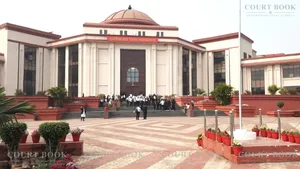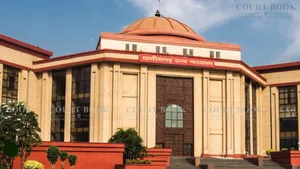
The Chhattisgarh High Court has ruled that the interception of telephone communications involving Shri Ravi Shankar Ji Maharaj was not carried out in accordance with the statutory safeguards prescribed under the law. While setting aside the interception authorisation, the subsequent approval of the Ministry of Home Affairs and the Review Committee's decision, the Court declined to quash the FIR, charge sheet or the pending criminal proceedings, holding that the trial may continue on the basis of other legally admissible evidence.
Background of the Case
The petition was filed under Section 528 of the Bharatiya Nagarik Suraksha Sanhita (BNSS), seeking quashing of the CBI FIR, charge sheet and criminal proceedings arising out of an investigation into alleged irregularities involving private medical colleges. During the hearing, however, the petitioner narrowed the challenge and chose not to press for quashing of the criminal case. Instead, the focus shifted solely to the legality of the interception authorisation dated June 28, 2025, the Ministry of Home Affairs' confirmation order dated July 4, 2025, and the Review Committee's proceedings dated September 15, 2025.
Court's Observations
The Division Bench comprising Chief Justice Ramesh Sinha and Justice Ravindra Kumar Agrawal examined the safeguards governing interception of communications under the Telecommunications Act, 2023 and noted that these protections are rooted in the constitutional right to privacy.
The Court observed that interception of private communications is an exception to the right to privacy guaranteed under Article 21 of the Constitution and therefore must strictly comply with the procedure established by law.
The Bench observed,
"Telephone interception is an exception to the fundamental right to privacy guaranteed under Article 21 of the Constitution and, therefore, the statutory conditions authorising such intrusion must receive strict construction."
After examining the interception order, the Court found that it failed to record the mandatory jurisdictional requirements such as the existence of a public emergency or public safety interest. It further held that merely reproducing statutory language without recording specific reasons reflected a mechanical exercise of power.
The Bench also rejected the respondents' explanation regarding the Ministry of Home Affairs' confirmation order, observing that a confirmation order cannot retrospectively validate an interception period that preceded the original authorisation.
Decision
Allowing the petition in part, the High Court held that the interception authorisation dated June 28, 2025, the Ministry of Home Affairs' confirmation order dated July 4, 2025, and the Review Committee's proceedings dated September 15, 2025, insofar as they related to the petitioner, were legally unsustainable and liable to be set aside. The Court further directed that copies of intercepted messages be destroyed if no legal impediment exists.
At the same time, the Court clarified that invalidating the interception process did not automatically invalidate the criminal prosecution because the investigating agency had relied upon additional documentary, electronic and witness evidence.
Consequently, it refused to quash the FIR, charge sheet, summoning order and pending trial, directing the Special Judge to proceed on the basis of the remaining legally admissible material.
Case Details
Case Title: Shri Ravi Shankar Ji Maharaj v. CBI & Ors.
Case Number: CRMP No. 1504 of 2026
Judge: Chief Justice Ramesh Sinha and Justice Ravindra Kumar Agrawal
Decision Date: 03 August 2026