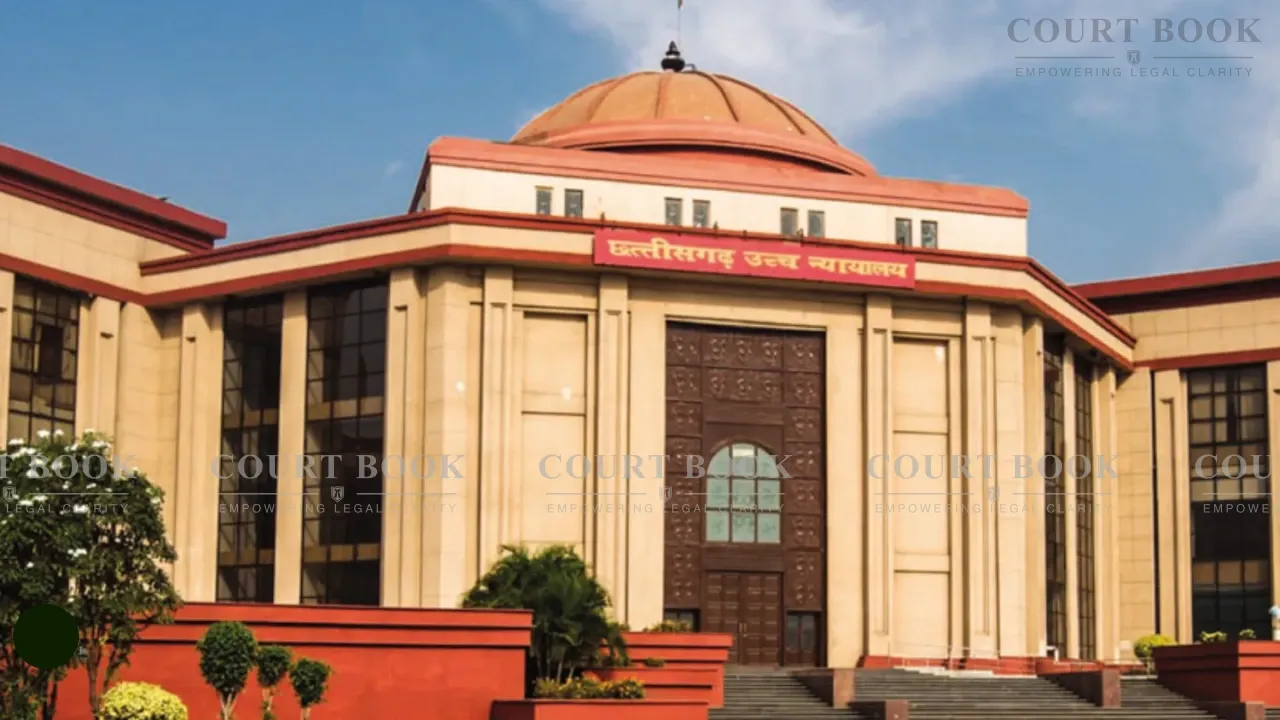
The Chhattisgarh High Court has dismissed a petition filed by a NEET (UG) 2026 candidate who claimed that his Optical Mark Recognition (OMR) answer sheet had been tampered with, resulting in significantly lower marks. The Division Bench held that allegations of manipulation must be supported by credible evidence and cannot rest only on the candidate's personal comparison of the question booklet with the scanned OMR sheet.
Background of the Case
The petitioner, Aryan Agrawal, appeared for the NEET (UG) 2026 examination after it was rescheduled following the earlier cancellation of the test due to the alleged paper leak. He later downloaded the scanned copy of his OMR sheet and claimed that several answers shown in it were different from those he had actually marked during the examination.
According to the petition, he expected to score over 600 marks based on his own assessment but was awarded only 200 marks. He sought directions to the National Testing Agency (NTA) to produce the original OMR sheet, award marks based on it, and correct the evaluation.
The NTA opposed the plea, arguing that the petitioner had not first approached the prescribed grievance redressal mechanism available for NEET-related disputes before filing the writ petition before the High Court.
Court's Observations
Chief Justice Ramesh Sinha and Justice Ravindra Kumar Agrawal noted that the petitioner's allegations were founded mainly on his own comparison of the question booklet with the scanned OMR sheet and a self-prepared chart.
The Bench observed,
“Serious allegations involving tampering of official examination records cannot be accepted merely on the basis of suspicion, conjecture or subjective belief, particularly when no substantive evidence has been placed before the Court.”
The Court also pointed out that the petitioner had failed to use the grievance redressal mechanism created by the examination authorities before invoking the High Court's jurisdiction under Article 226 of the Constitution. In the absence of material showing that the remedy was ineffective or unavailable, the Court held that the prescribed process should have been followed first.
Referring to an earlier decision of the same High Court, the Bench reiterated that unsupported allegations regarding discrepancies in OMR sheets do not justify interference by constitutional courts. It further distinguished an interim order of the Bombay High Court relied upon by the petitioner, observing that it did not lay down any binding legal principle applicable to the present case.
Decision
Concluding that the petitioner had failed to establish any arbitrariness, illegality, mala fide conduct or procedural irregularity in the evaluation process, the High Court declined to direct production of the original OMR sheet or order re-evaluation.
Accordingly, the writ petition was dismissed without any order as to costs.
Case Details
Case Title: Aryan Agrawal v. National Testing Agency (NTA) & Others
Case Number: WPC No. 3949 of 2026
Judge: Chief Justice Ramesh Sinha and Justice Ravindra Kumar Agrawal
Decision Date: 30 July 2026








 chief. Eknath Shinde – Shiv Sena leader-300x169.webp)

-300x169.webp)