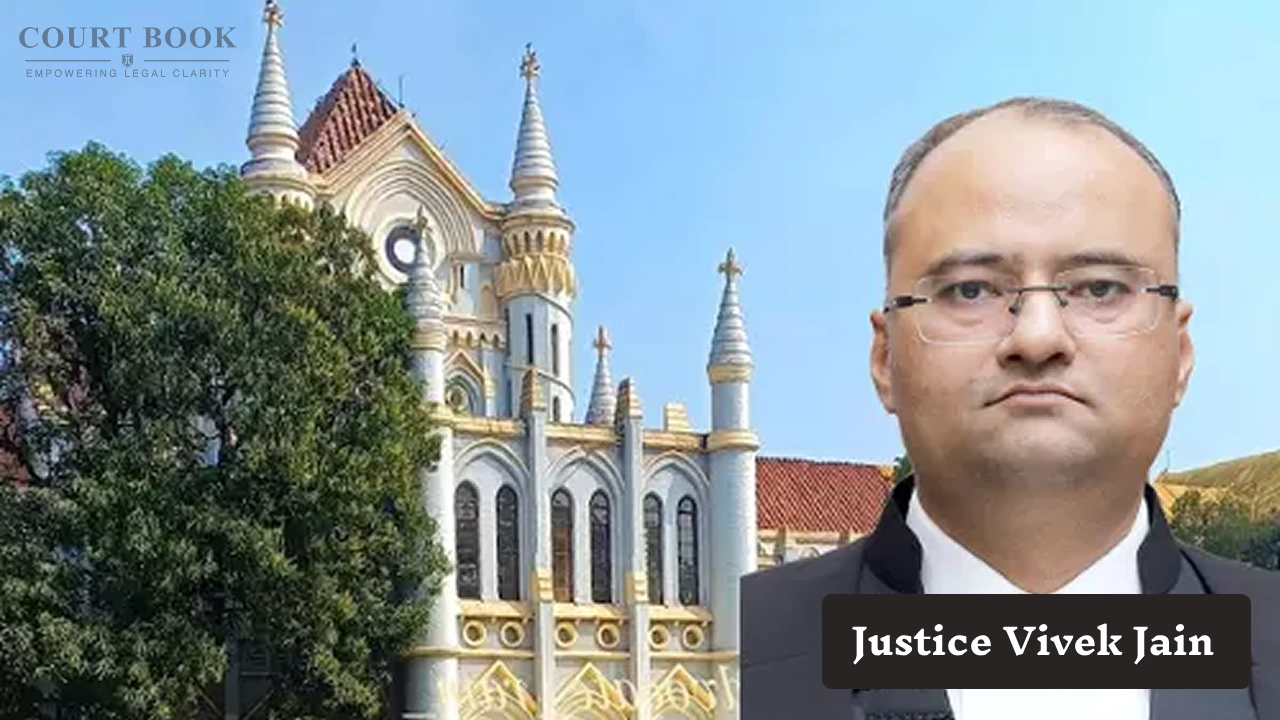
The Madhya Pradesh High Court has held that merely because brothers inherit property jointly from their father, it cannot automatically be presumed that they constitute a Joint Hindu Family or that properties later acquired by any of them become joint family properties.
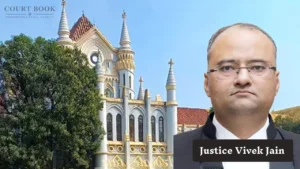
Justice Vivek Jain delivered the judgment in Krishni Devi and Others v. Baladatt (Dead) Through LRs Smt. Uma and Others, First Appeal No. 280 of 2003, pronounced on August 31, 2026. The judgment was reserved on August 13, 2026. The case concerned succession to agricultural land and the validity of a Will executed shortly before the death of one of the brothers.
Background of the Case
The dispute arose between a sister and her brothers over agricultural properties following the death of Rameshwar Prasad, who died issueless on March 29, 1998. The plaintiffs challenged a Will executed by him on March 24, 1998, and sought a declaration that the document was null and void. They also claimed ownership rights over several lands and sought a permanent injunction against interference with their possession.
The properties involved fell into two groups. Five survey numbers had been inherited from the parties’ father, Vrindavan, while another five survey numbers had been acquired in Rameshwar Prasad’s name during his lifetime. The plaintiffs claimed that the brothers had continued as a Joint Hindu Family and alleged that the properties acquired in Rameshwar Prasad’s name were purchased using money contributed by the brothers.
The defendants disputed this claim, arguing that there was no evidence establishing a Joint Hindu Family or coparcenary. They also relied on the Will executed by Rameshwar Prasad in favour of defendant No.1. The Trial Court, however, decreed the suit and held the Will to be a “sham and null and void document.” The defendants thereafter challenged the Trial Court’s judgment and decree before the Madhya Pradesh High Court.
High Court Examines the Will
The High Court first considered the Will executed by Rameshwar Prasad five days before his death. The Will was unregistered but notarised and carried the signatures of two attesting witnesses. One of the attesting witnesses was the son-in-law of defendants Nos. 1 and 2 and was closely related to the beneficiaries of the Will, while the other stated that he had met Rameshwar Prasad by chance at the court premises.
The Court also noted discrepancies regarding the relationship disclosed by the beneficiary witness. Referring to the Supreme Court’s decision in Kavita Kanwar v. Pamela Mehta, it considered these circumstances while examining the Will.
The Court observed:
“Therefore, this Court has no hesitation in upholding the finding of the Trial Court where learned Trial Court has held the will to be sham and null and void document. To that extent, the findings of the Trial Court are upheld.”
No Automatic Presumption of Joint Hindu Family
On the property dispute, the High Court disagreed with the Trial Court’s view that jointly inherited property necessarily established a Joint Hindu Family or coparcenary.
The Court held that after a father’s death, successors may hold inherited property jointly with defined but unpartitioned shares. Joint ownership in revenue records, by itself, does not establish a coparcenary.
The Court further noted that the plaintiffs had not pleaded the existence of a Joint Hindu Family in their plaint and had produced no documentary evidence showing the alleged financial contributions towards properties purchased in Rameshwar Prasad’s name.
Relying on Appasaheb Peerappa Chamdgade v. Devendra Peerappa Chamdgade, the Court reiterated that there is no presumption of a Joint Hindu Family and that the initial burden lies on the person claiming the property to be joint family property.
Decision
The High Court held that the five properties acquired in Rameshwar Prasad’s own name during his lifetime belonged to him individually. His share in the properties inherited from their father was to devolve upon his successors under the Hindu Succession Act.
Accordingly, the Court modified the Trial Court’s decree and directed that Rameshwar Prasad’s share in the inherited properties, as well as the properties acquired in his own name, be divided equally among the two plaintiffs and defendant No.1, with each receiving a 1/3rd share.
The parties were directed to approach the concerned authority for consequential partition under Section 54 of the Code of Civil Procedure. The appeal was partly allowed and disposed of.
Case Title: Krishni Devi and Others v. Baladatt (Dead) Through LRs Smt. Uma and Others
Case Number: First Appeal No. 280 of 2003
Judge: Justice Vivek Jain
Decision Date: August 31, 2026




-300x169.webp)