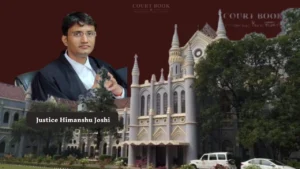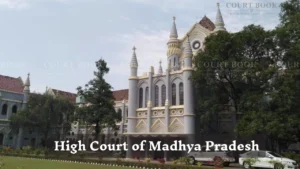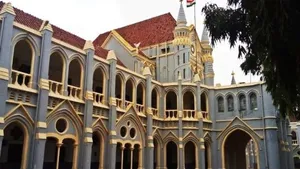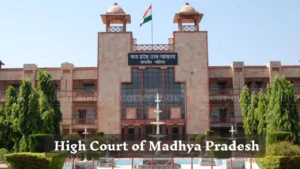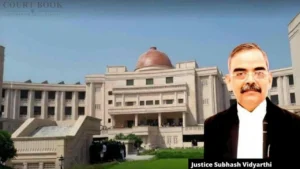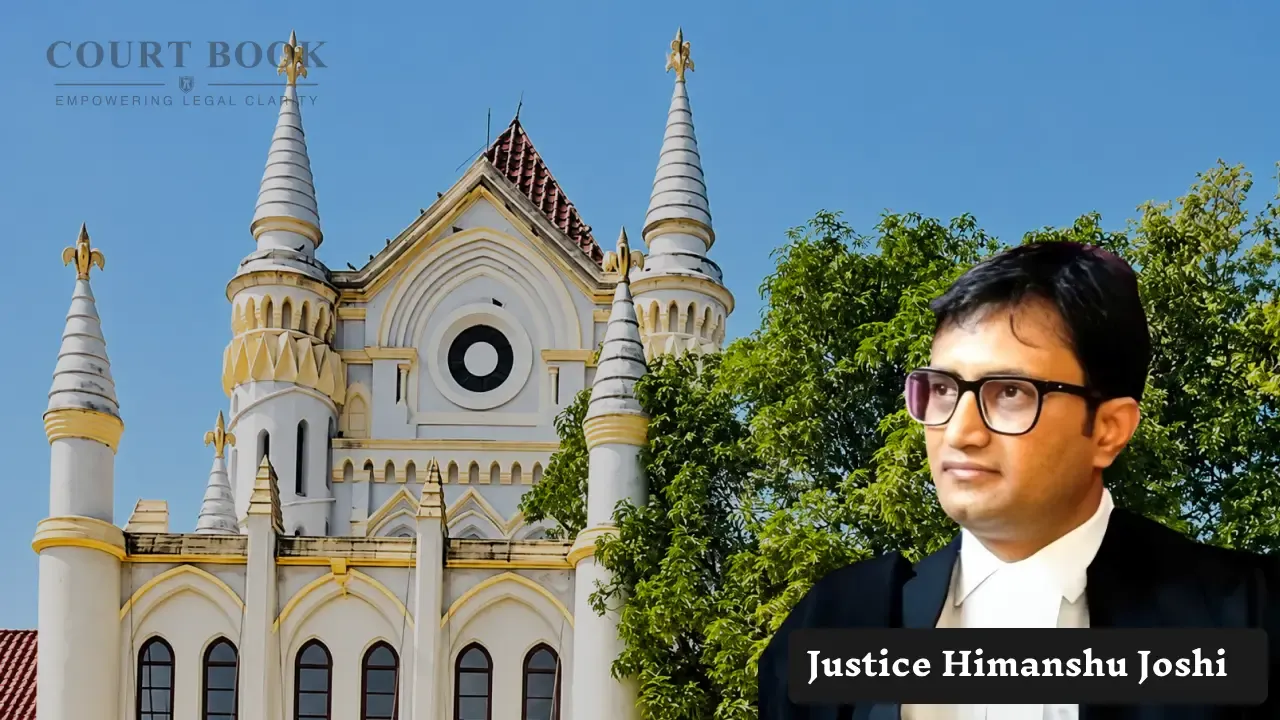
The Madhya Pradesh High Court at Jabalpur has refused to quash criminal proceedings arising from allegations concerning religious practices at Ganga Jamuna Higher Secondary School in Damoh. Justice Himanshu Joshi dismissed three petitions challenging the same FIR, holding that the allegations and investigation material could not be treated as inherently absurd or incapable of constituting the offences alleged.
The common order was passed on August 4, 2026, in three connected matters arising from Crime No. 498/2023 registered at Kotwali Police Station, Damoh.
Background
The FIR, registered as Crime No. 498/2023 at Kotwali Police Station in Damoh on June 7, 2023, was initially registered under Sections 295-A, 120-B and 506 Part-II of the Indian Penal Code. During the investigation, Sections 75 and 87 of the Juvenile Justice (Care and Protection of Children) Act, 2015, along with Sections 3 and 5(1) of the Madhya Pradesh Freedom of Religion Act, 2021, were also added.
The connected petitions were filed by Shailendra Kumar Jain, Anas Athar, Rustam Ali and Abdul Wasim Bari. While Jain and Bari sought quashing of the FIR, Anas Athar and Rustam Ali challenged the FIR as well as subsequent proceedings, including the orders relating to cognizance and framing of charges.
The FIR contained allegations concerning the dress code and religious practices followed by girl students at Ganga Jamuna Higher Secondary School. It specifically referred to allegations that Hijab and Dupatta were part of the prescribed dress from Class VI onwards, that wearing Hijab was compulsory, and that students were allegedly stopped from wearing Tilak and Kalawa. The FIR also referred to compulsory Urdu teaching and prayers during assembly, with allegations that these practices were imposed through threats or coercion.
The petitioners argued that merely requiring students to wear Hijab or a particular dress could not, by itself, amount to religious conversion or an attempt to convert under the Madhya Pradesh Freedom of Religion Act. They also challenged the investigation on the ground that Section 4 of the Act imposed requirements concerning who could make a complaint. In addition, they argued that Sections 75 and 87 of the Juvenile Justice Act were not attracted to their respective roles.
The High Court agreed with one limited proposition: merely wearing a particular dress, by itself, cannot automatically constitute an offence under the Freedom of Religion Act.
However, the Court noted that the prosecution case went beyond the allegation of Hijab. It included allegations concerning compulsory dress, restrictions on certain religious symbols, religious practices and prayers, as well as alleged threats and coercion.
"Whether these allegations are true, whether they were voluntary or compulsory, whether they were motivated by an intention to convert and whether the statutory ingredients are ultimately established are matters which depend upon appreciation of evidence."
The Court held that the prosecution could not, at that stage, be declared void solely on the ground that the FIR was lodged by the enquiry committee or investigating officer. It said the issue required consideration in the context of the statutory scheme and the material collected during investigation.
The Court also took note of the progress of the trial. According to the State, 32 of the 33 prosecution witnesses had already been examined.
The High Court said this was a relevant circumstance while considering whether its extraordinary power to quash proceedings should be exercised, while making it clear that it was not expressing any opinion on the merits of the evidence.
The Court further observed that the defence raised by the petitioners involved disputed questions of fact, including their individual roles and the significance of statements and other evidence. Such issues, it said, belonged before the trial court.
The Madhya Pradesh High Court dismissed all three petitions—M.Cr.C. No.1001/2026 filed by Shailendra Kumar Jain, M.Cr.C. No.49886/2023 filed by Anas Athar and Rustam Ali, and M.Cr.C. No.52398/2025 filed by Abdul Wasim Bari.