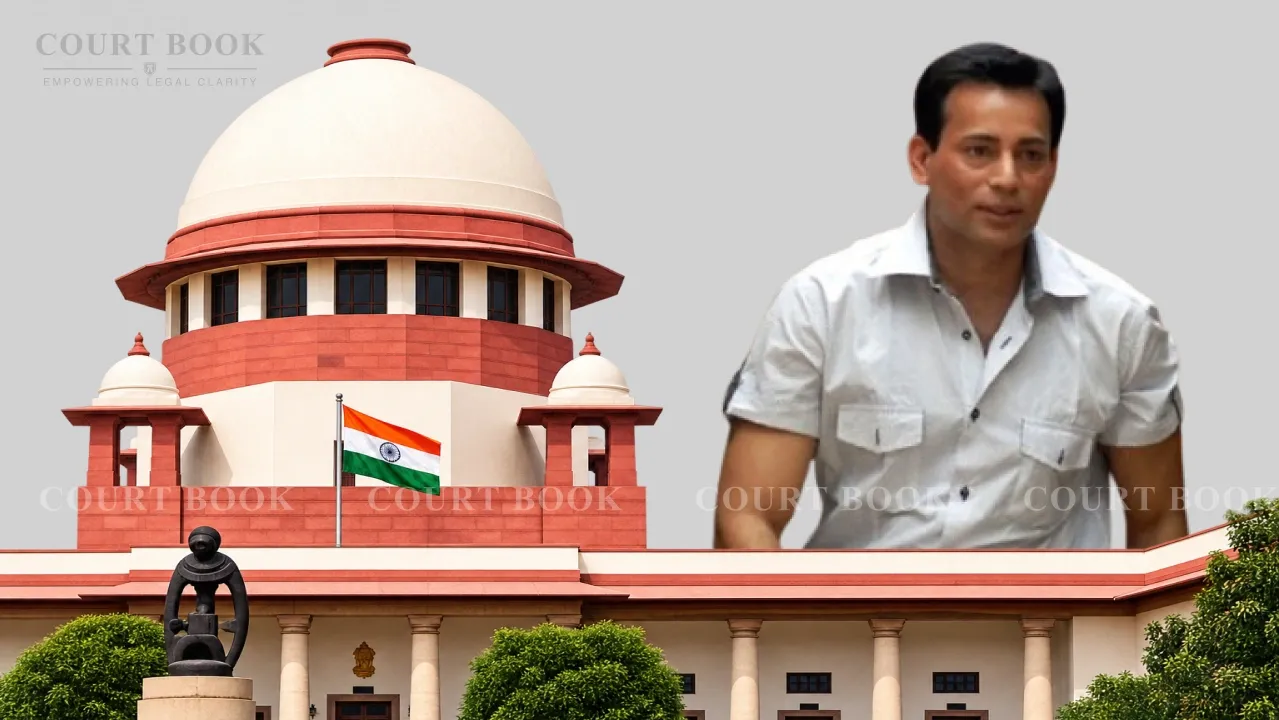
The Supreme Court on September 10, dismissed Abu Salem’s plea seeking release from prison on the ground that he had completed the 25-year imprisonment limit linked to the assurance given by India to Portugal at the time of his extradition.
A Bench of Justice Vikram Nath and Justice Sandeep Mehta considered whether Salem’s undertrial custody and jail-earned remission could be added while calculating the 25-year period. The Court ultimately declined to grant the relief sought. The proceedings and earlier hearings confirm that the dispute centred on the manner in which the 25-year period was to be calculated.
Background of the Case
Salem was extradited from Portugal to India in November 2005. Before his extradition, the Government of India had assured Portugal that he would not be awarded the death penalty or imprisoned for more than 25 years.
He was subsequently convicted and sentenced to life imprisonment in cases including the 1993 Mumbai serial blasts.
In 2022, the Supreme Court had held that the assurance given to Portugal had to be honoured and that the question of his release would arise after completion of 25 years in custody. The Court had also clarified that his detention in Portugal in connection with a passport-related case could not simply be counted towards that period.
Salem argued that the calculation should include the period he spent as an undertrial as well as remission earned for good conduct in prison.
His counsel, Senior Advocate Rishi Malhotra, submitted that the trial court had directed that the undertrial period be set off against the sentence. He also argued that earned remission should be taken into account while calculating the period of imprisonment.
During the proceedings, the Supreme Court examined whether such remission could legally reduce the 25-year period arising from the extradition assurance.
The Supreme Court dismissed Salem’s plea seeking release on the basis that he had already completed the 25-year period.
The plea followed proceedings before the Bombay High Court, which had held that the 25-year period had not yet expired and that earned remission could not be used to bring forward the date arising from the extradition arrangement. The High Court had calculated the relevant period from Salem’s extradition to India in 2005.
The Supreme Court’s dismissal leaves the relief sought by Salem unavailable on the calculation advanced in the present proceedings.





-300x169.webp)


-300x169.webp)