The Supreme Court has referred to a larger Bench the question of whether authorities under the Employees’ Provident Funds and Miscellaneous Provisions Act, 1952 can exercise discretion over the levy of damages under Section 14B.
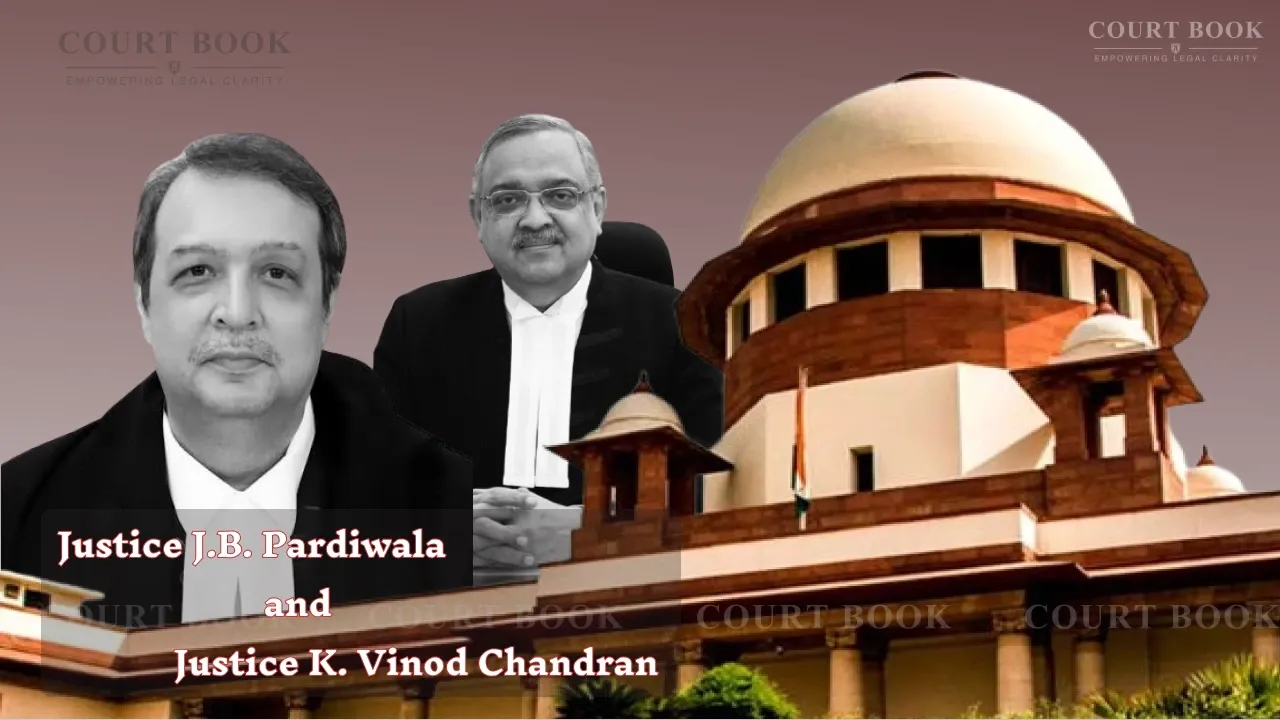
A Bench of Justice J.B. Pardiwala and Justice K. Vinod Chandran passed the order on September 9, 2026, in M/s Kerala Industrial Infrastructure Development Corporation v. Central Board of Trustees and Anr. The matter concerns several connected appeals involving provident fund liabilities arising during insolvency resolution.
Background
The appeals arose from orders concerning provident fund and gratuity dues of workmen and employees in insolvency proceedings. The dispute included whether such dues could be treated under the distribution mechanism provided by the Insolvency and Bankruptcy Code or had to be paid separately by the Successful Resolution Applicant.
The Supreme Court noted earlier decisions holding that provident fund and gratuity dues payable up to the commencement of insolvency are outside the liquidation estate and must be paid in accordance with the applicable law. The Court also referred to its earlier decision in State Bank of India v. Murari Lal Jalan & Florian Fritsch (Consortium) concerning payment of provident fund dues by the resolution applicant.
A key issue before the Bench was the interpretation of Section 14B, which deals with damages for default in payment of provident fund contributions.
The Court examined the provision before and after its 1988 amendment. It noted that Section 7Q separately provides for statutory interest, while Section 14B concerns damages imposed by way of penalty. According to the Bench, the amended provision uses the expression “may recover”, leaving the authority with discretion on whether a penalty should be imposed at all.
"The discretion is still left with the authority to decide as to whether there should be an imposition of penalty at all," the Court observed while examining the amended Section 14B.
The Bench said it was therefore doubtful about an earlier coordinate Bench decision which had treated the imposition of damages under Section 14B as automatic. The question of whether the authority has discretion to levy the penalty itself was consequently directed to be considered by a larger Bench.
The Supreme Court directed the Registry to place the matter before the Chief Justice of India for consideration by a larger Bench. It clarified that the reference would not affect the appellants’ right to approach the Central Board seeking reduction or waiver of damages under the relevant statutory provision.
The Court also directed the appellants to pay the outstanding EPF dues, along with Section 7Q interest, in four quarterly instalments beginning December 15, 2026. The remaining interest arising from the deferred payments is to be paid by October 15, 2027. Any default in an instalment would permit the EPFO to proceed with recovery.
The matter is referred to a larger Bench, the Court concluded while issuing the above directions.
Case Details
Case Title: M/s Kerala Industrial Infrastructure Development Corporation v. Central Board of Trustees and Anr.
Case Number: Civil Appeal No. 7724 of 2023 with connected appeals
Judge: Justice J.B. Pardiwala and Justice K. Vinod Chandran
Decision Date: September 9, 2026