

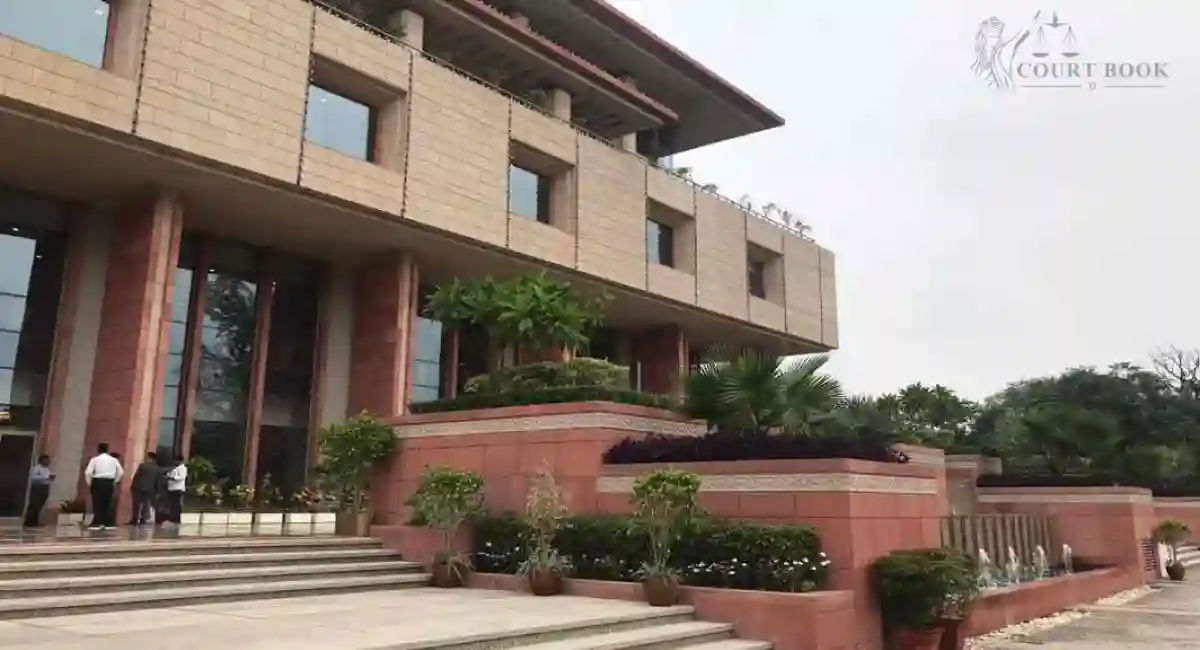
The Delhi High Court has dismissed a petition filed by Indian citizens who studied medicine at foreign institutions and sought permission to appear for the Foreign Medical Graduate Examination (FMGE), holding that they did not meet the applicable requirements for the examination.
A Division Bench comprising Chief Justice Devendra Kumar Upadhyaya and Justice Tejas Karia delivered the judgment on September 3, 2026. The Court also upheld the requirement that foreign medical degrees must be authenticated through Indian Embassy attestation or the prescribed apostille process.
Background of the Case
The petitioners had pursued medical studies at different foreign institutions and later obtained a medical qualification from Micronesia Medical College. They had initially applied for the FMGE in June 2023 but were not permitted to take the examination because their qualification had not been attested or authenticated as required.
For the December 2023 FMGE, they relied on a qualification issued by Belize Medical University. The National Board of Examinations in Medical Sciences subsequently found that certificates from two different institutions had been submitted for the same period of study. The petitioners challenged their exclusion before the High Court.
Court's Observations
The Bench rejected the challenge to Regulation 4(1) of the Screening Regulations, 2002. It held that the National Medical Commission, as an expert body, could prescribe requirements concerning foreign medical qualifications and that judicial interference was not warranted unless the regulation was shown to be completely arbitrary.
On the requirement of authentication, the Court said that attestation or apostille serves the purpose of verifying a foreign medical qualification.
"The requirement of authentication of a document submitted by any candidate claiming eligibility on the basis of such document is necessary so as to enable the examination conducting body to exclude those candidates from appearing in the examination who seek their appearance on the basis of fake or false educational qualifications."
The Court also distinguished its earlier decision in Rohit Naresh Agarwal v. Union of India, observing that the earlier case concerned a different eligibility provision and did not govern the present dispute.
Decision
The Bench found the National Board's decision reasonable, particularly because the petitioners had relied on qualifications from different foreign institutions covering the same period of study. The Court held that such fragmented medical education could not be treated as a valid Primary Medical Qualification for FMGE eligibility in the circumstances of the case.
The writ petition and pending applications were dismissed, with the Court directing that there would be no order as to costs.
Case Details
Case Title: Brij Sharadbhai Bhatt and Ors. v. National Medical Commission and Ors.
Case Number: W.P.(C) 11266/2025
Judge: Chief Justice Devendra Kumar Upadhyaya and Justice Tejas Karia
Decision Date: September 3, 2026


