

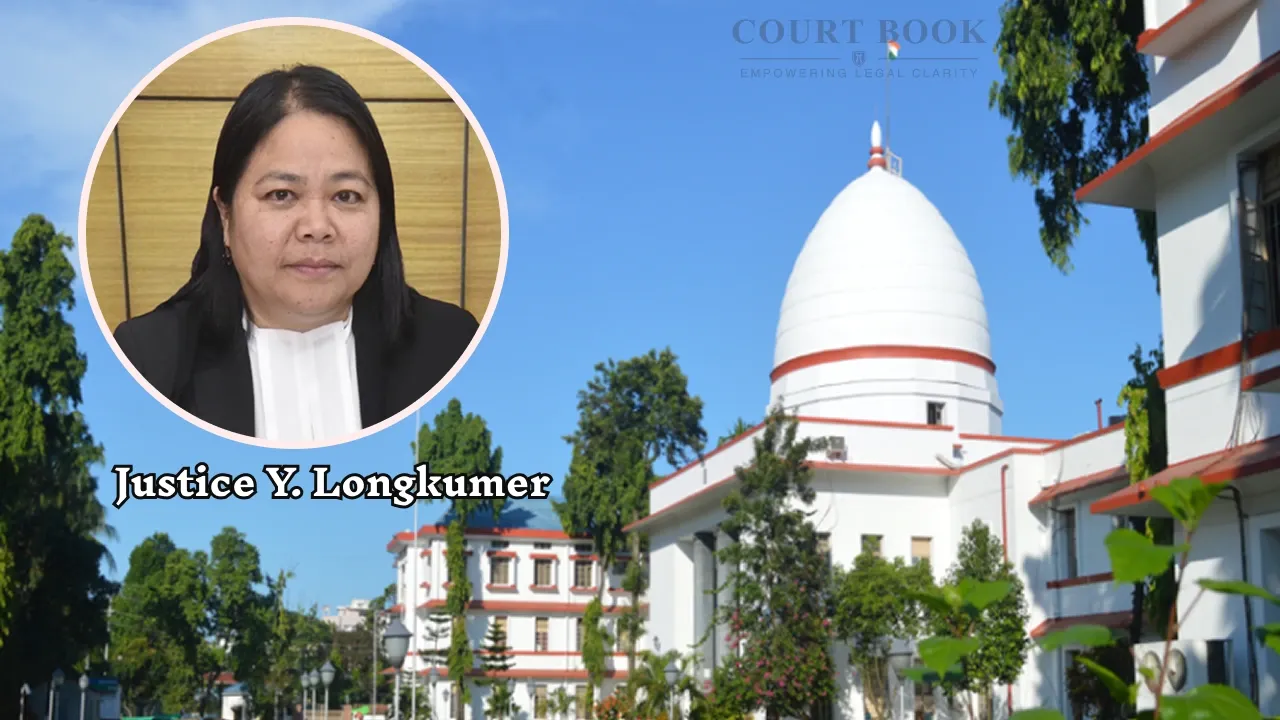
The Gauhati High Court has refused to interfere with a trial court's decision barring plaintiffs from leading evidence in a long-pending civil suit, holding that repeated delays cannot be overlooked merely because the parties later changed their lawyer. The Court observed that litigants must actively pursue their own cases and cannot expect endless opportunities without showing a convincing reason for the delay.
Background of the Case
The dispute arose from Title Suit No. 88/2019 before the Civil Judge (Senior Division), Dibrugarh. The plaintiffs sought a declaration that a sale deed executed on May 4, 2017, was obtained by taking advantage of the poor health and mental condition of the original plaintiff.
During the pendency of the suit, the original plaintiff passed away in 2021, following which his legal heirs were substituted as plaintiffs. However, the proceedings continued to face repeated delays at the stage of filing the plaintiffs' evidence.
The trial court ultimately closed the plaintiffs' evidence in September 2024 after noting that they had failed to file their affidavits despite several opportunities. A later application seeking recall of that order was also rejected, prompting the legal heirs to approach the High Court.
Petitioners' Stand
Before the High Court, the petitioners argued that the delay was not deliberate. They claimed that their earlier advocate had returned the case papers shortly before the scheduled hearing, leaving them with insufficient time to engage another lawyer. They also pointed to personal difficulties, including the advanced age of one plaintiff and the medical condition of another, as reasons for the delay.
Relying on earlier judgments, the petitioners requested one final opportunity to place their evidence on record, even if it was subject to payment of costs.
Court's Observations
Justice Yarenjungla Longkumer examined the trial court record and found that the plaintiffs had already been granted as many as eleven adjournments between 2022 and 2024 for filing their evidence.
The Court observed,
"The petitioners/plaintiffs cannot be allowed to file their evidence-on-affidavit as a matter of right at this belated stage."
The Bench further noted that while courts possess the discretion to extend time in appropriate cases, such discretion must be exercised cautiously where repeated adjournments have already been granted.
The Court also emphasized that every case depends on its own facts and that the precedents cited by the petitioners were distinguishable because those matters involved different circumstances.
Addressing the explanation offered by the plaintiffs, the Court observed,
"This Court is not able to find any exceptional cause shown by the plaintiffs/petitioners for the delay in the filing of their evidence-on-affidavit."
It further noted that although the suit had been instituted in 2019, the plaintiffs had still not completed their evidence by 2024 despite receiving multiple opportunities. At such an advanced stage, reopening the evidence would only prolong the proceedings.
Decision
Finding no legal infirmity in the orders passed by the trial court, the Gauhati High Court dismissed the petition and declined to set aside the orders closing the plaintiffs' evidence.
The Court held that no exceptional circumstances had been established to justify interference under its supervisory jurisdiction and allowed the trial to proceed from its existing stage.
Case Details
Case Title: On the Death of Sayed Maqsud Ahmed, His Legal Heirs v. Khurshid Ali Ahmed
Case Number: CRP(IO) No. 291 of 2025
Judge: Justice Yarenjungla Longkumer
Decision Date: 17 June 2026


