

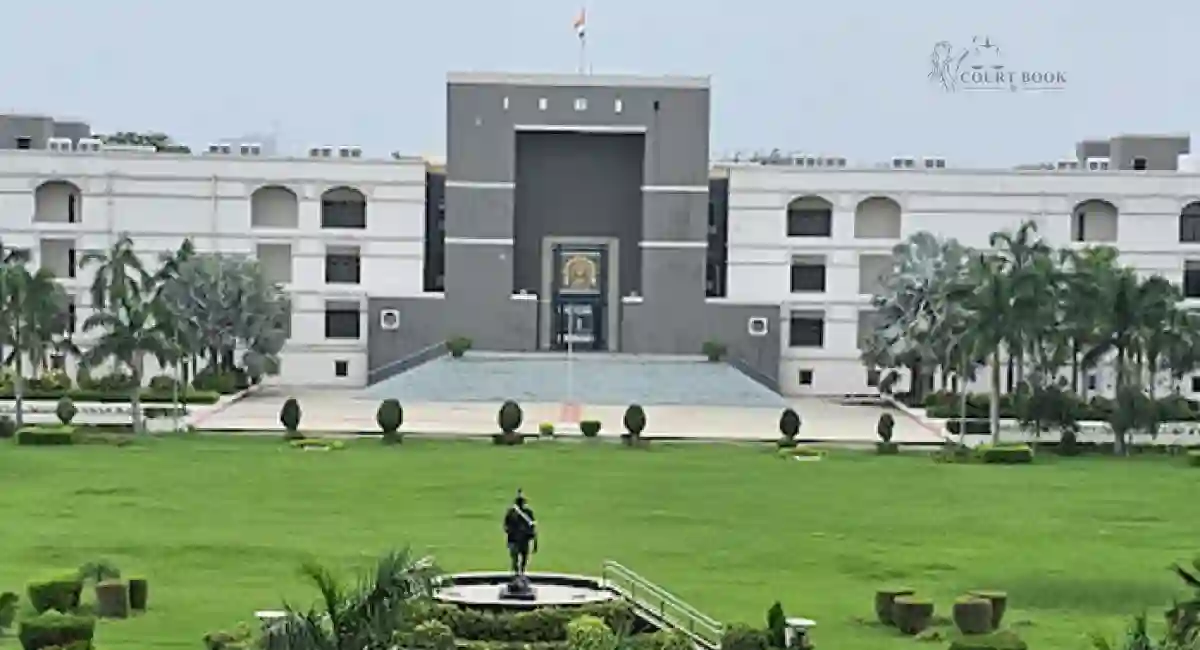
The Gauhati High Court has quashed criminal proceedings against Abhishek Kar, a Madhya Pradesh-based YouTuber, who was accused of making derogatory remarks about Assamese women during a podcast discussion.
In a detailed judgment delivered on February 9, 2026, Justice Pranjal Das ruled that the statements, though controversial, did not meet the legal ingredients required to prosecute him under the Bharatiya Nyaya Sanhita (BNS), the Information Technology Act, or the Assam Witch Hunting Act.
Read also:-Bombay HC Disposes Unmarried Woman’s Abortion Plea, Cites Supreme Court Ruling on MTP Rights
“The statement taken on its face value does not attract the ingredients of the penal provisions,” the Court observed.
Background of the Case
The case arose from a video published on a YouTube channel in January 2025. In the video, Abhishek Kar spoke about alleged “tantric practices” in Assam, referring to a village where, according to folklore, women could supposedly transform men into animals and back.
An FIR was lodged by Inspector Rakesh Kalita at the CID Cyber Police Station, Assam. The police registered CID Cyber P.S. Case No. 01/2025 under Sections 196(1), 197(1), and 353(2) of the BNS, along with Section 67 of the Information Technology Act and Section 4 of the Assam Witch Hunting (Prohibition, Prevention and Protection) Act, 2015.
Investigators alleged that Kar’s remarks were defamatory toward Assamese women and promoted misinformation harmful to social harmony. Although Kar later issued a public apology, a charge sheet was filed in September 2025.
Kar then approached the High Court seeking quashing of the FIR and subsequent proceedings.
Read also:-Calcutta High Court Refuses to Quash Forgery Case Linked to 1963 Land Deed, Orders Police Prob
What the Petitioner Argued
Senior counsel appearing for Kar argued that his client had no intention to hurt the sentiments of Assamese women or promote hatred. The defense relied on several Supreme Court rulings, including:
• Amish Devgan v. Union of India
• Bilal Ahmed Kaloo v. State of Andhra Pradesh
• State of Haryana v. Bhajan Lal
The petitioner’s counsel maintained that even if the statements were taken at face value, they did not fulfill the legal requirements of promoting enmity between communities or spreading obscene material.
Court’s Observations
Justice Das carefully examined the FIR, the charge sheet, and the alleged offending statement.
No Promotion of Enmity
The Court noted that Sections 196 and 197 of the BNS deal with promoting enmity between different communities or making assertions harmful to national integration.
Read also:-Bombay High Court Flags Flawed Tree-Felling Notices, Closes Pune Coconut Trees Case
Referring to the Supreme Court’s ruling in Bilal Ahmed Kaloo, the Court emphasized that for such offences to apply, there must be at least two identifiable communities involved.
“Merely inciting the feeling of one community without reference to another cannot attract the provisions,” the judgment noted.
The High Court found that Kar’s statement did not promote hatred between two communities. Nor did it make claims that any group was disloyal to the Constitution or should be denied rights.
No Obscenity Under IT Act
The prosecution had also invoked Section 67 of the Information Technology Act, which penalizes publishing obscene material electronically.
The Court said that while the remarks were “controversial,” they did not amount to legally defined obscenity.
“Controversial remarks do not necessarily amount to obscenity,” the bench observed.
Assam Witch Hunting Act Not Attracted
The State had further relied on Section 4 of the Assam Witch Hunting Act, which criminalizes identifying or branding a person as a “witch.”
Justice Das examined the definition of “witch” under the Act. The Court held that Kar’s comments did not label any individual or group as a witch in the legal sense defined by the statute.
“One of the essential ingredients is that the person must be portrayed as having the power to harm society at large. Such an element is missing,” the Court said.
Read also:-Karnataka High Court Quashes Cheque Bounce Conviction After Finding Serious Gaps in Trial
Decision
After reviewing all materials, the High Court concluded that the allegations, even if accepted in full, did not make out a criminal offence.
“There was no justification for registering the case under the said penal provisions,” the Court held.
Accordingly, the Court allowed the criminal petition and quashed:
• CID Cyber P.S. Case No. 01/2025
• Charge Sheet No. 01/2025 dated September 8, 2025
• Corresponding Sessions Case No. 180/2025
With this, the proceedings against Abhishek Kar came to an end.
Case Title: Abhishek Kar v. State of Assam
Case No.: Criminal Petition No. 986/2025
Decision Date: 09 February 2026
Download Judgment

