

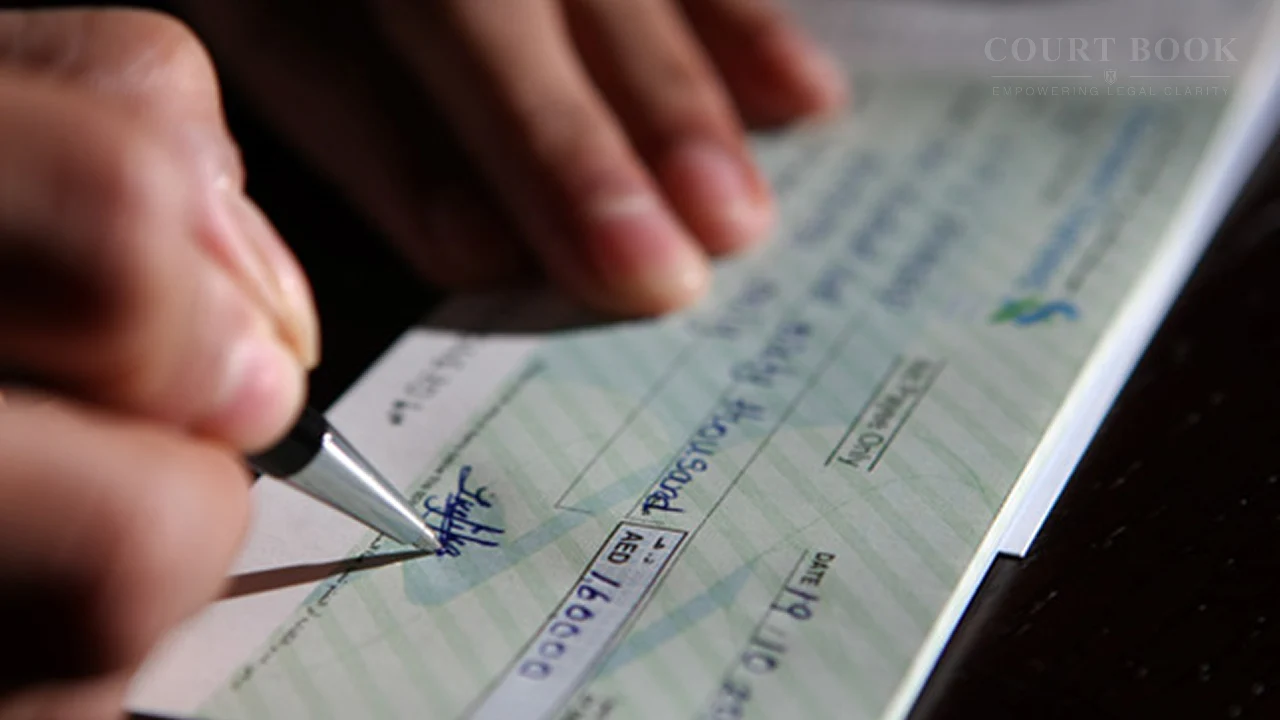
In a significant ruling, the Karnataka High Court has set aside the conviction of a Bengaluru man in a cheque bounce case, holding that the lower courts failed to properly examine crucial contradictions and evidence. The court observed that the prosecution story lacked credibility and that the accused had successfully raised a probable defence under the Negotiable Instruments Act.
The decision was delivered by Justice Ravi V. Hosmani on January 6, 2026, in a criminal revision petition filed by K.V. Vijay Kumar, who had earlier been convicted under Section 138 of the Negotiable Instruments Act.
Read also:-Bombay HC Disposes Unmarried Woman’s Abortion Plea, Cites Supreme Court Ruling on MTP Rights
Background of the Case
The case arose from a private complaint filed by V. Madaiah, who alleged that Vijay Kumar had borrowed ₹5 lakh as a hand loan in June 2013. According to the complainant, the amount was to be repaid within three months, and a cheque dated September 10, 2013, was issued as security.
However, when the cheque was presented, it was returned unpaid due to “insufficient funds.” After a legal notice went unanswered, the complainant initiated criminal proceedings under Section 138 of the Negotiable Instruments Act.
The trial court convicted the accused in 2016. This was later upheld by the Sessions Court in 2021, prompting the accused to approach the High Court in revision.
Read also:-Calcutta High Court Refuses to Quash Forgery Case Linked to 1963 Land Deed, Orders Police Prob
Key Arguments Before the High Court
The accused challenged the conviction on multiple grounds, asserting that:
• The cheque in question was not issued for a personal loan.
• It was one among several cheques handed over to a third party, R. Venkateshappa, in connection with a chit fund transaction.
• The complainant had no direct financial dealings with him.
• The complainant failed to prove his financial capacity to lend ₹5 lakh in cash.
• The key intermediary, Venkateshappa, was never examined as a witness.
The defence also pointed out that the complainant had contradicted himself during cross-examination and admitted that the accused never directly asked him for a loan.
Court’s Observations
After examining the record, the High Court found serious inconsistencies in the prosecution’s case.
Justice Ravi V. Hosmani noted that although the accused admitted his signature on the cheque, that alone was not enough to prove a legally enforceable debt.
“The accused has raised a probable defence supported by documentary evidence. The courts below failed to properly assess whether the presumption under Sections 118 and 139 of the NI Act stood rebutted,” the court observed.
The judge pointed out several red flags:
• The complainant could not explain the source of ₹5 lakh in cash.
• He admitted that the accused never personally sought a loan.
• He failed to examine the key person - R. Venkateshappa - despite admitting his central role.
• The complainant was unaware of basic details about the accused, including his address and occupation.
• Earlier replies sent by the accused had clearly explained the cheque’s connection to a chit transaction.
The court held that these gaps seriously weakened the prosecution case.
Read also:-Bombay High Court Flags Flawed Tree-Felling Notices, Closes Pune Coconut Trees Case
High Court’s Decision
Allowing the revision petition, the High Court set aside both the trial court and appellate court judgments.
“The findings of the courts below suffer from perversity and lack proper appreciation of material evidence,” the bench held.
The court concluded that the accused had successfully rebutted the statutory presumption and that the complainant failed to prove the existence of a legally enforceable debt.
Accordingly:
• The conviction under Section 138 of the NI Act was quashed
• The accused was acquitted
• All bail and surety bonds were discharged
Case Title: K.V. Vijay Kumar vs V. Madaiah
Case Number: Criminal Revision Petition No. 36 of 2022


