

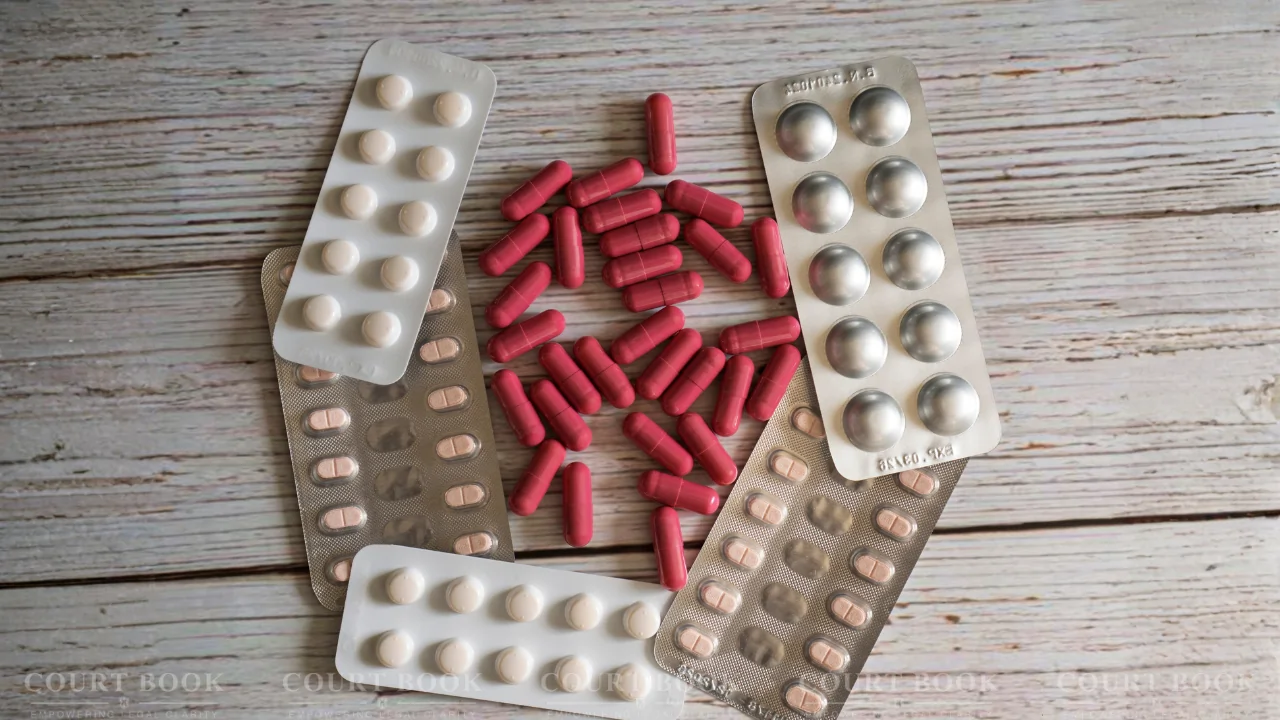
The Nagpur Bench of the Bombay High Court has quashed criminal proceedings against the directors of a pharmaceutical company after finding serious violations in mandatory drug testing timelines. The court held that the delay in laboratory analysis defeated the very purpose of the Drugs and Cosmetics Act and compromised the accused’s legal rights.
Background of the Case
The case arose from a drug inspection conducted on 12 July 2022 at a medical store in Gadchiroli. Officials collected samples of RTZOL-DSR capsules, manufactured by Oscar Remedies Pvt. Ltd., for quality testing.
The samples were forwarded to the Government Analyst on 14 July 2022. However, the chemical analysis report was issued only on 18 January 2023, well beyond the 60-day limit prescribed under Rule 45 of the Drugs and Cosmetics Rules, 1945.
Based on this report, the Drug Inspector filed a criminal case against the company’s directors before the Chief Judicial Magistrate, Gadchiroli. The accused approached the High Court seeking quashing of the proceedings.
Key Issue Before the Court
The central question before the court was whether the prosecution could continue when the mandatory timeline for drug analysis had been breached and no valid extension had been obtained within time.
Rule 45 clearly requires that:
• Drug samples must be tested within 60 days, and
• Any delay must be justified by seeking prior extension with reasons.
Court’s Observations
Justice M.M. Nerlikar noted that the Government Analyst sought an extension after the 60-day period had already expired, which defeated the purpose of the rule.
The court observed:
“The analysis of the sample within a period of sixty days is necessary to ensure the standard of quality and the accuracy of the report.”
The judge also relied on an earlier Bombay High Court ruling in Swapnil Liladhar Mane vs State of Maharashtra, where delayed testing was held to be fatal to prosecution.
Read also:-Supreme Court Steps In as ₹150 Crore Transactions Surface During Stalled Corporate Insolvency
The court pointed out several lapses:
• No timely extension was sought.
• No clarity on whether the extension was ever granted.
• Delay of nearly four months in informing the manufacturer after receiving the test report.
• Failure of authorities to act with urgency despite public health implications.
Importantly, the court noted that such delays deprive the accused of their statutory right to challenge the test results by sending samples to a Central Laboratory.
Court’s Decision
Allowing the petition, the High Court quashed the criminal proceedings against the company and its directors.
The bench ruled:
“By not adhering to the time limit under Rule 45, the entire prosecution stands vitiated and cannot be sustained.”
The court also issued strict directions to the Food and Drugs Administration, including:
• Ensuring test reports are completed within 60 days
• Taking disciplinary action against erring officers
• Creating additional testing facilities if workload is high
• Establishing an online tracking system for sample testing
• Ensuring real-time monitoring of drug analysis
Read also:-Delhi HC Allows Cash Transfer for School Uniforms, Clears Govt Policy Under RTE Act
The Commissioner of Food and Drugs Administration has been directed to comply with these directions within three months and submit a compliance report.
Final Outcome
With these observations, the Bombay High Court allowed the writ petition, quashed the criminal case, and issued systemic directions to prevent future lapses in drug testing procedures.
Case Title: Ashwani Lamba & Ors. v. State of Maharashtra
Case Number: Criminal Writ Petition No. 967 of 2024
Decision Date: 17 January 2026


